Why This Fails Locally
Most of the housing across this stretch of the valley went up between 1944 and 1993, with the median build year sitting at 1977 and the bulk of the stock dating to the 1960s and 70s across the seven areas we cover - East Wenatchee, South Wenatchee, Sunnyslope, Cashmere, Entiat, Waterville, and Leavenworth. That matters for one reason: a torsion spring or extension spring installed in a house from that era is decades past its rated cycle count, and the steel doesn't care how well the rest of the house has aged.
Wenatchee sits in a cold-moderate climate band, not the deep-freeze extremes you get further north, but enough of a swing between summer heat and winter cold that steel spring coils and galvanized cable expand and contract every season. On an older door, that cycling is what turns a slightly worn spring into a snapped one, usually on the coldest morning of the week when the metal is tightest and least forgiving. Newer doors with sealed bearings and factory-balanced springs shrug this off. A 1968 door on its original hardware does not.
This isn't a one-house problem. With 4,894 owner-occupied houses among 10,166 households spread across this service area, a large share of garages share the same build era and the same aging hardware, which is why emergency calls cluster in the same pattern every cold spell.
What the Fix Involves
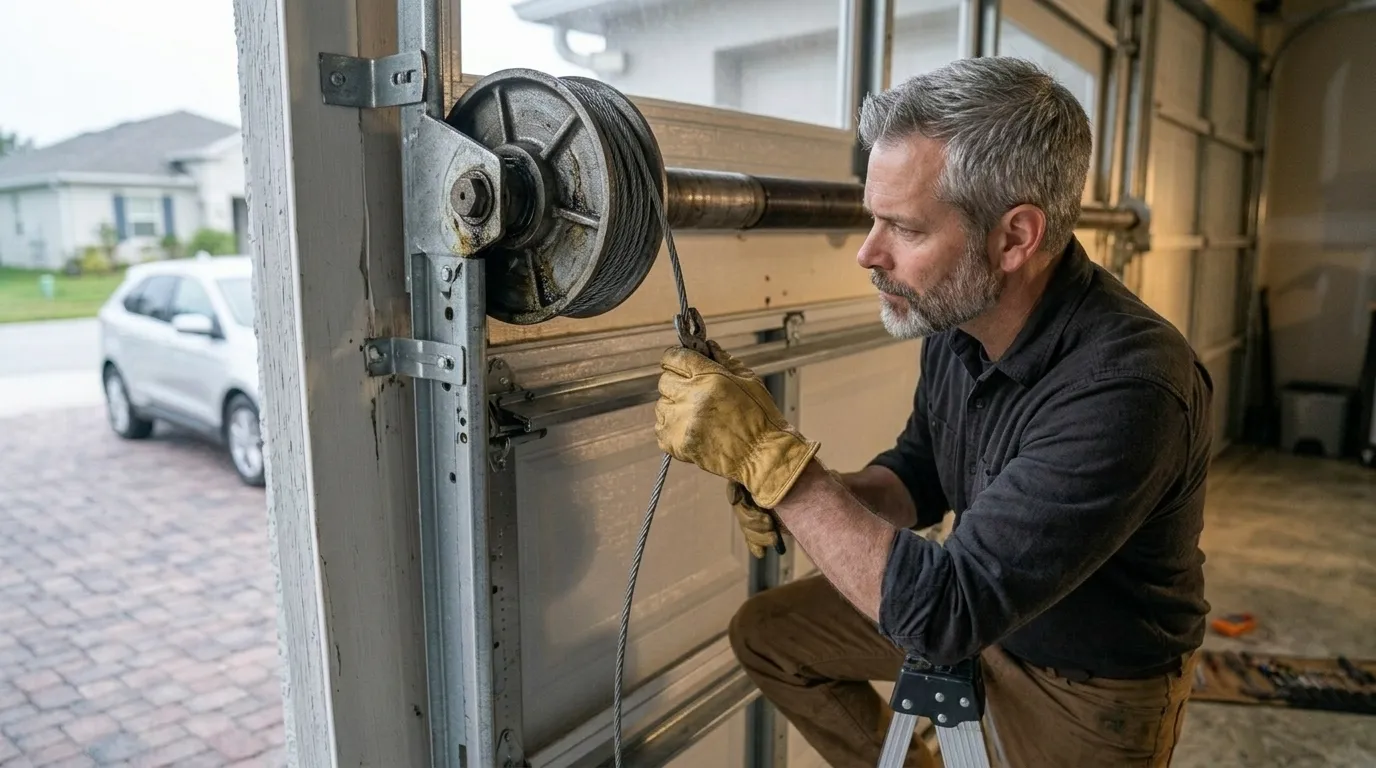
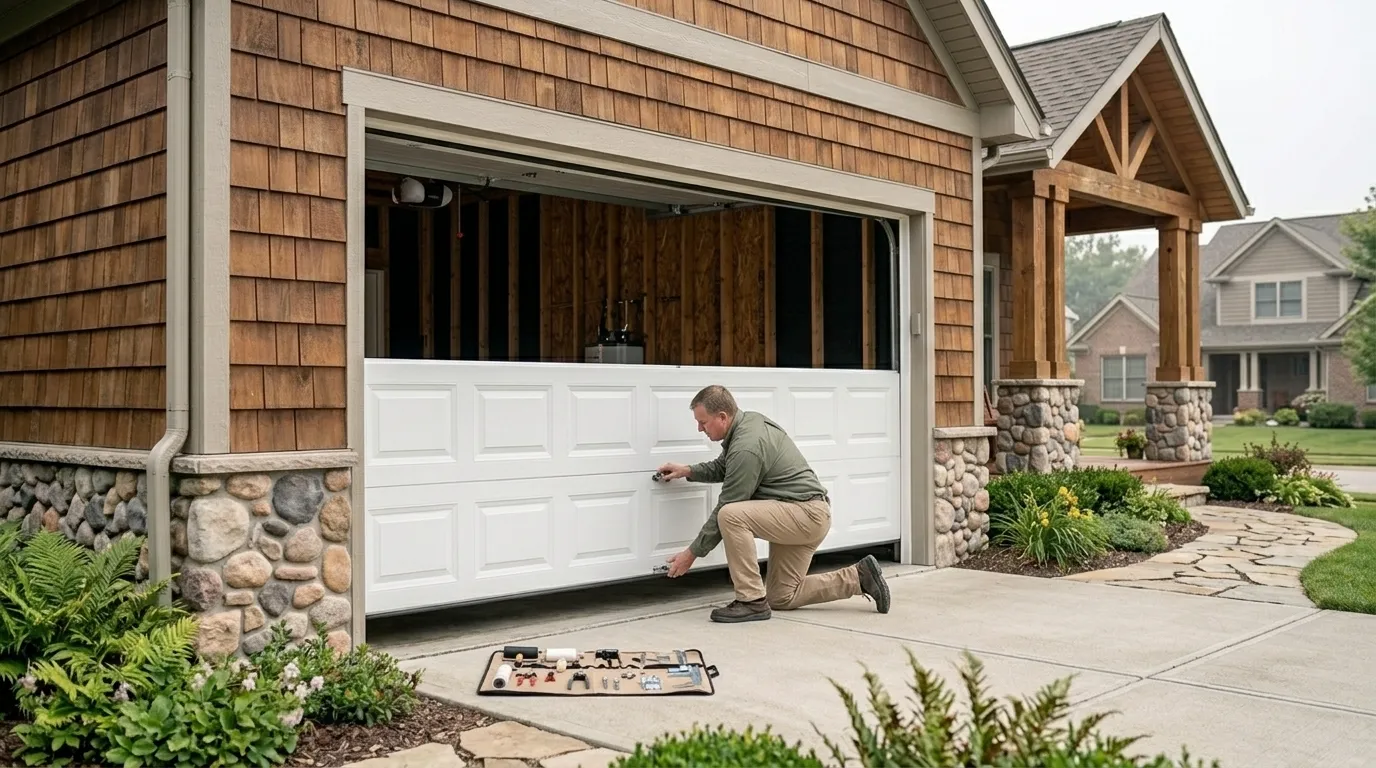
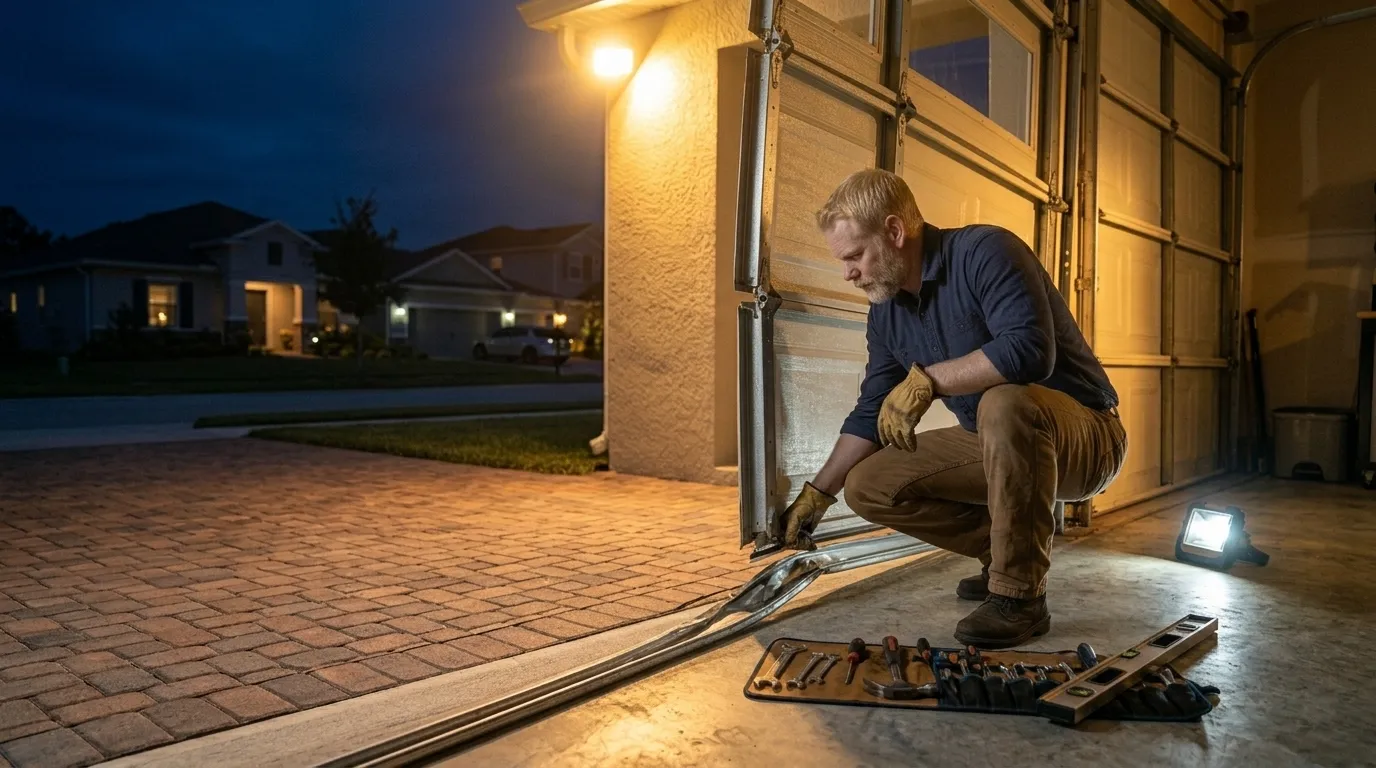
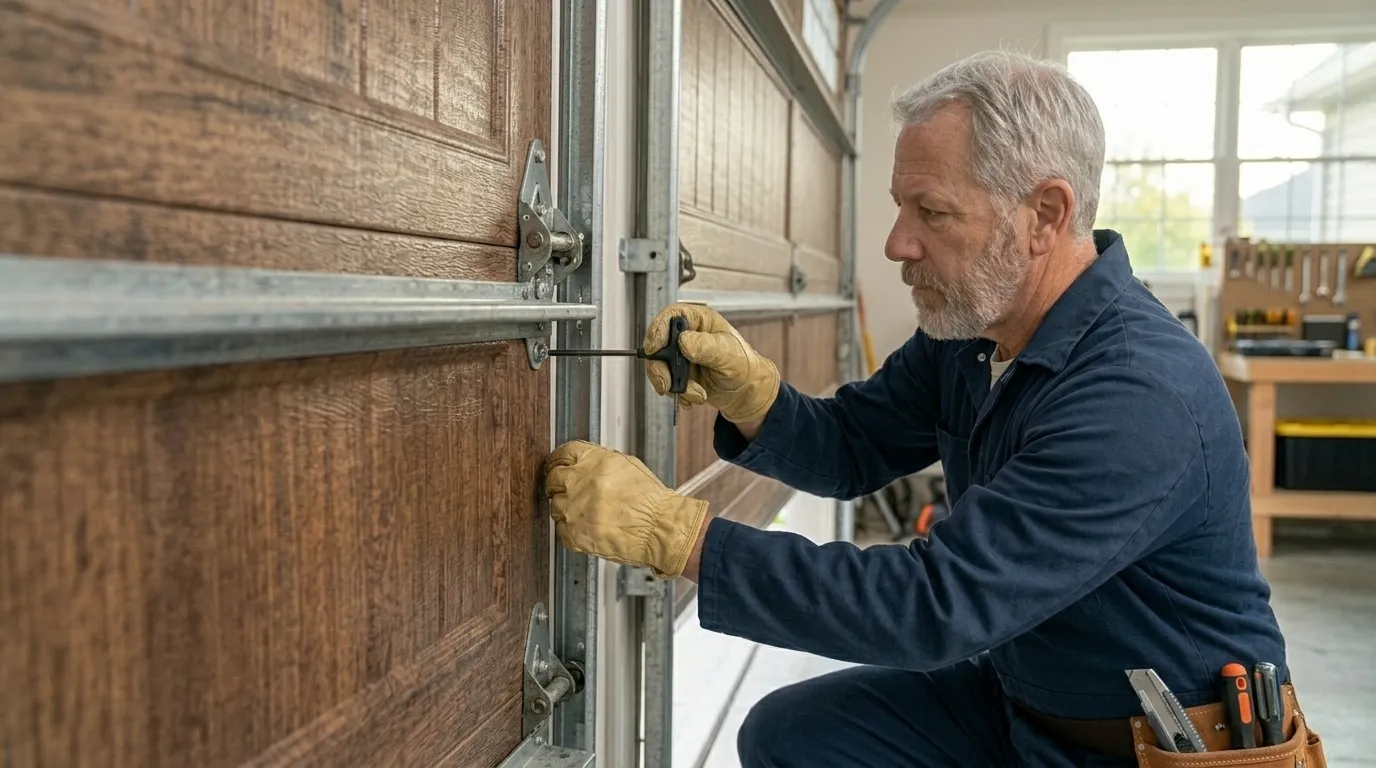
An emergency call starts with figuring out what actually broke, not just what the homeowner can see. A door that won't budge could be a snapped torsion spring, a cable off its drum, a bent track, or an opener that's lost its grip on the shaft - each one looks similar from inside the garage but needs a different fix.
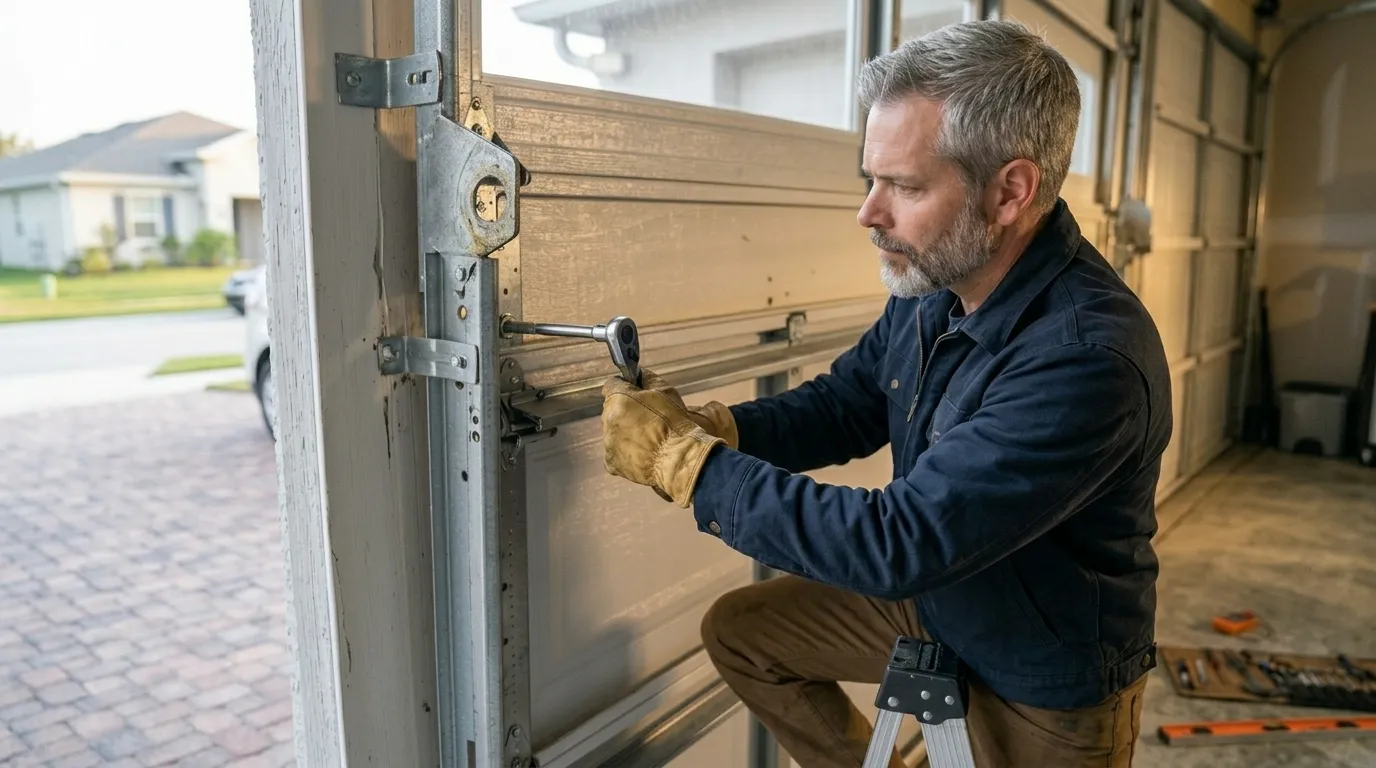
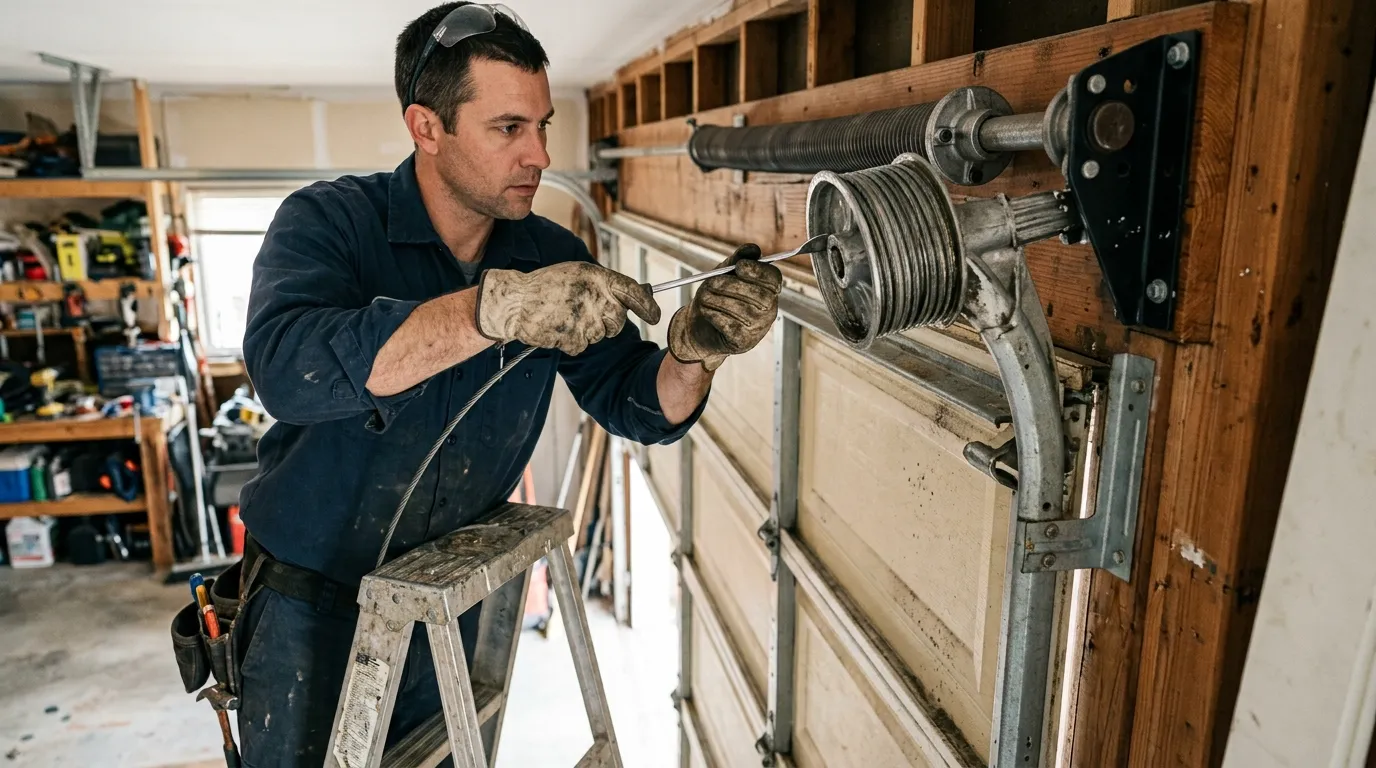
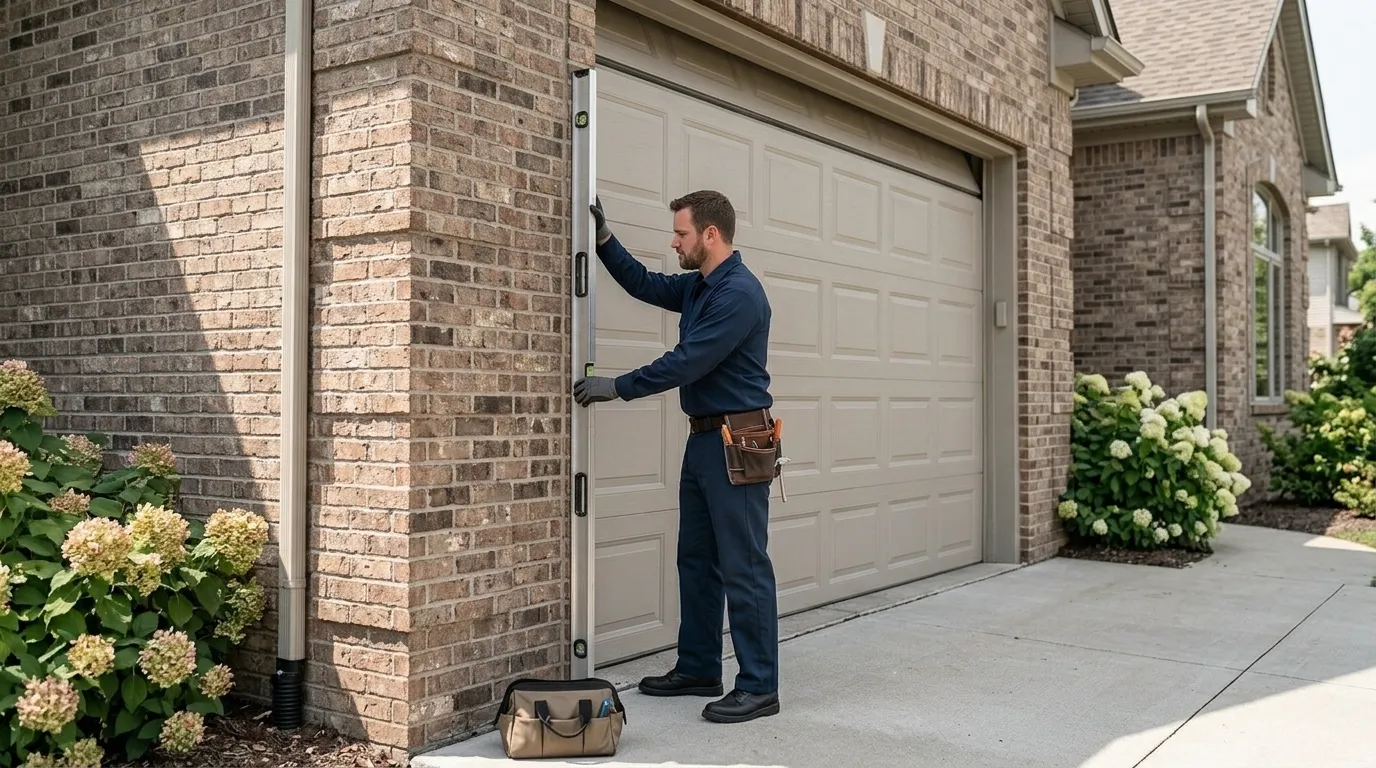
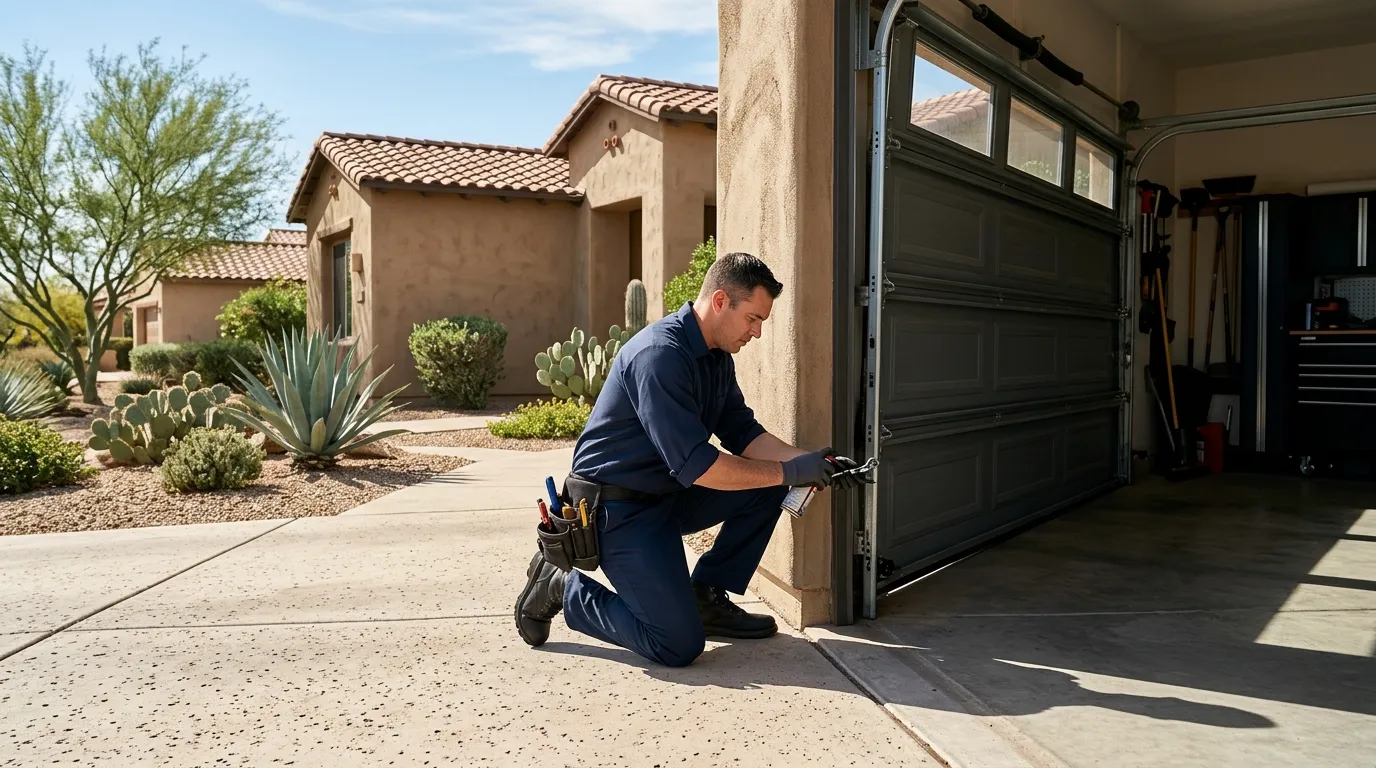
On a snapped spring, we match the wire size and wind to the door's actual weight, not just swap in whatever's closest, because a spring that's under- or over-wound on an older door throws the whole balance off and wears the opener fast. On track issues, we check whether the rail itself bent or whether the rollers are just worn past spec, since older doors in this area often still run steel rollers instead of nylon.
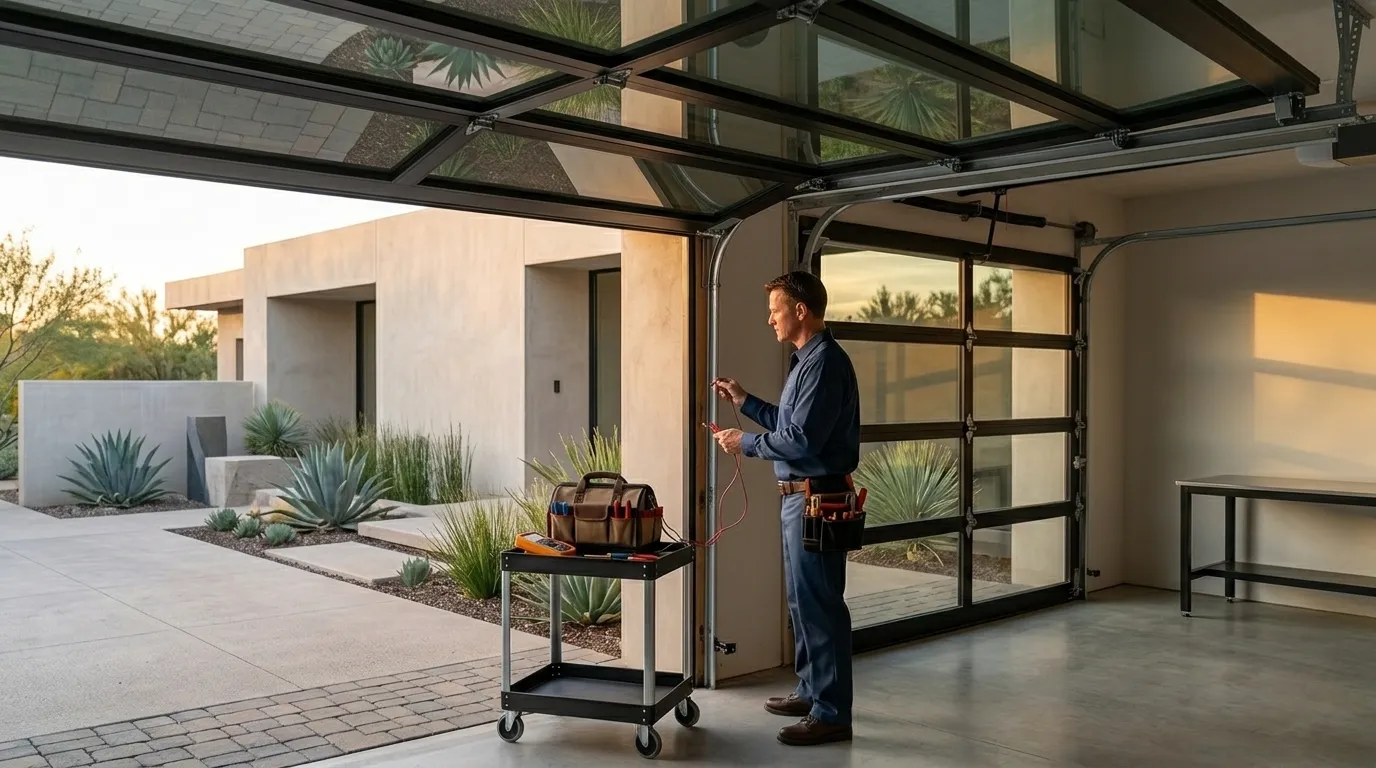
On opener failures, the diagnosis takes longer than the repair most of the time - testing the logic board, the sensors, and the drive gear before touching anything else. We don't replace parts that test fine just to look busy on an invoice.
One limitation worth saying plainly: on doors built to older specs, some replacement parts aren't sitting on a shelf. If your door needs a part that's been discontinued, we tell you that on site rather than promising a same-visit fix we can't deliver.
How It Shows Up
The most common emergency call is a door that's stuck halfway, usually because a spring let go and the door is now too heavy to move by hand or opener. You'll often hear it before you see it - a loud bang from the garage, sometimes described as a gunshot, which is the spring failing under tension.
A second pattern: the opener runs, the motor sounds normal, but the door doesn't move, or moves an inch and stops. That's usually a broken cable or a stripped gear, not the opener itself.
A third: the door works fine most days but binds or grinds specifically on cold mornings, then loosens up by afternoon. That's the seasonal swing acting on aging hardware, and it tends to get worse, not better, if left alone through the winter.