Why This Fails Locally
Most of the housing stock around Wenatchee went up between 1944 and 1993, with the median build year sitting at 1977. That means a lot of doors and openers running on hardware designed for a different era - steel tracks that have never been re-leveled, torsion springs sized for the original door weight before someone swapped in a heavier insulated panel. Across the seven named areas in this service territory, from East Wenatchee to Sunnyslope to Cashmere, the bulk of that stock dates to the 1960s and 70s, which puts a huge share of doors well past the point where factory lubrication and factory tension are still doing their job.
The cold, moderate climate band this region sits in adds a second layer to the problem. Steel contracts in cold mornings and expands as the day warms, and a track that's a quarter-inch out of plumb on a 40-degree swing will bind or skip a roller in a way it wouldn't in a milder climate. Combine 50-plus-year-old housing stock with real seasonal temperature swings and you get the two most common calls we see: a spring that's lost tension gradually instead of snapping outright, and a track alignment that's drifted enough to make the opener strain on every cycle.
None of this shows up as an emergency at first. It shows up as a door that's a little louder, a little slower, or a little harder to close by hand than it was last year.
What the Fix Involves
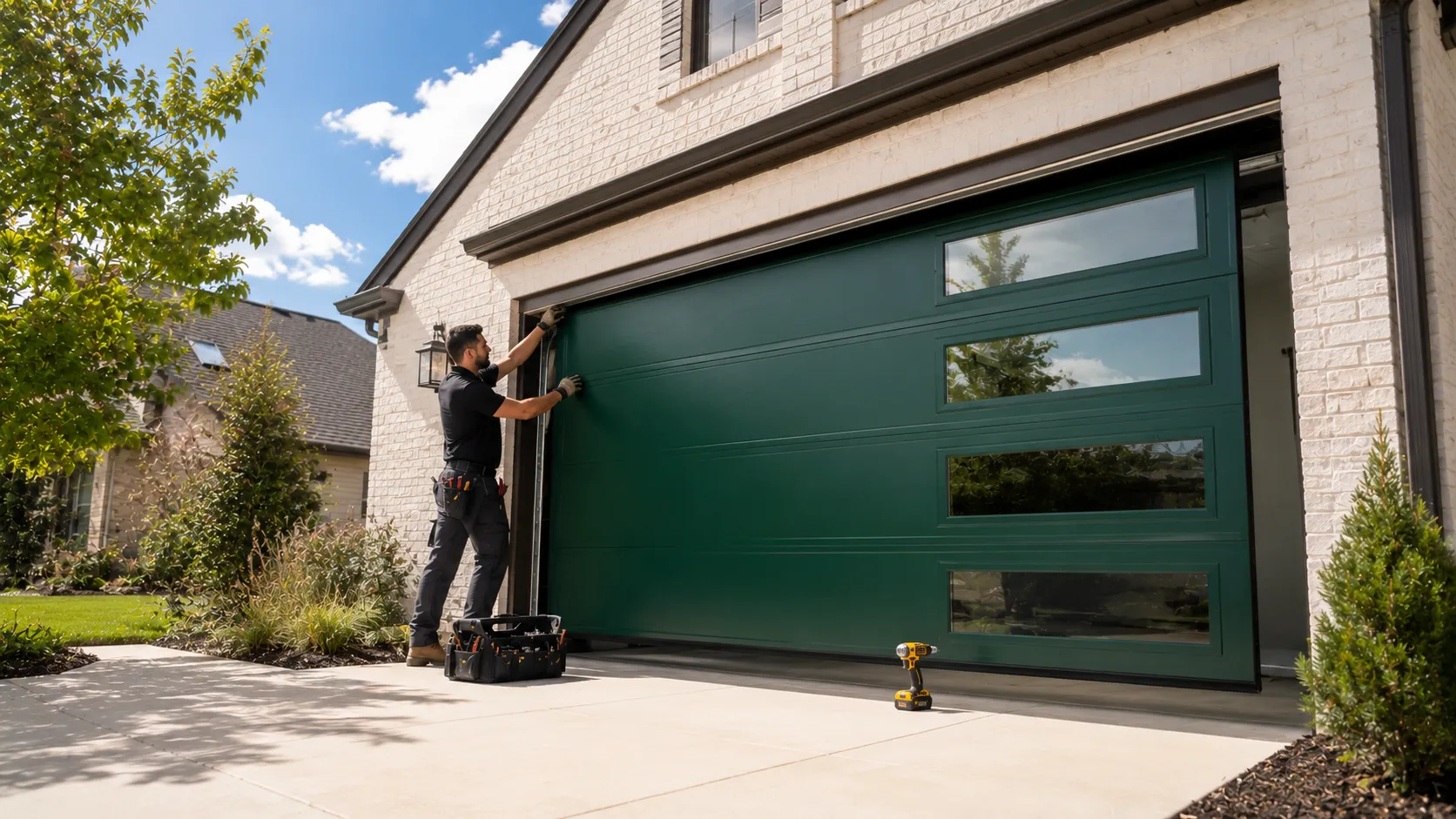
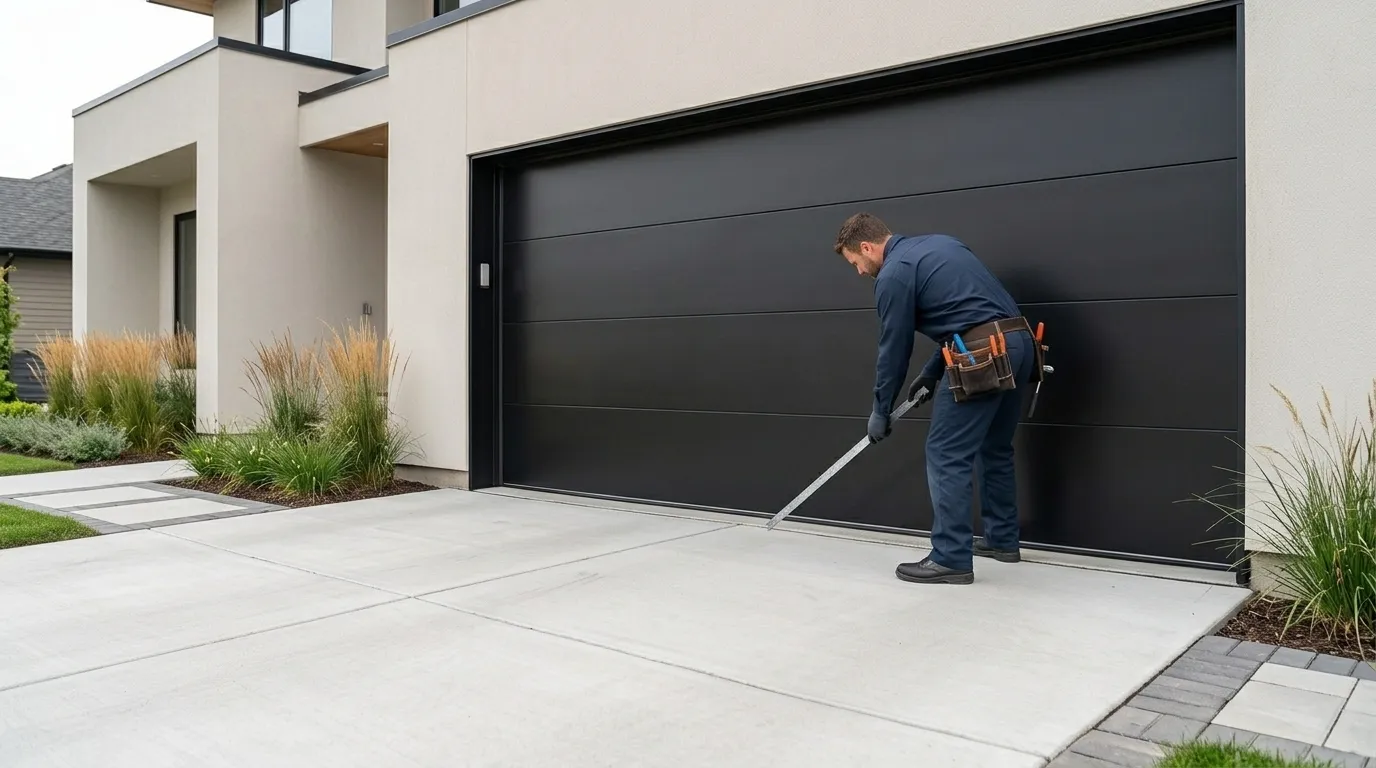
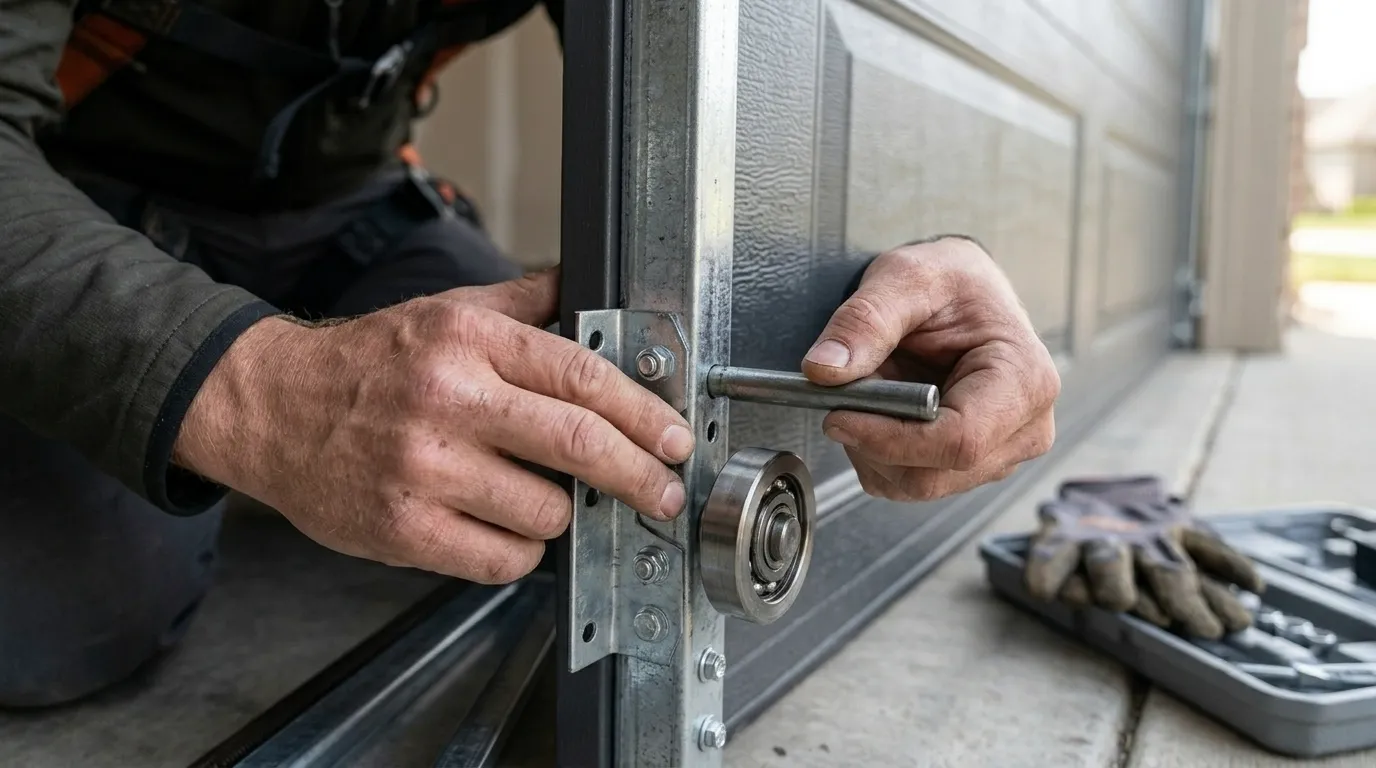
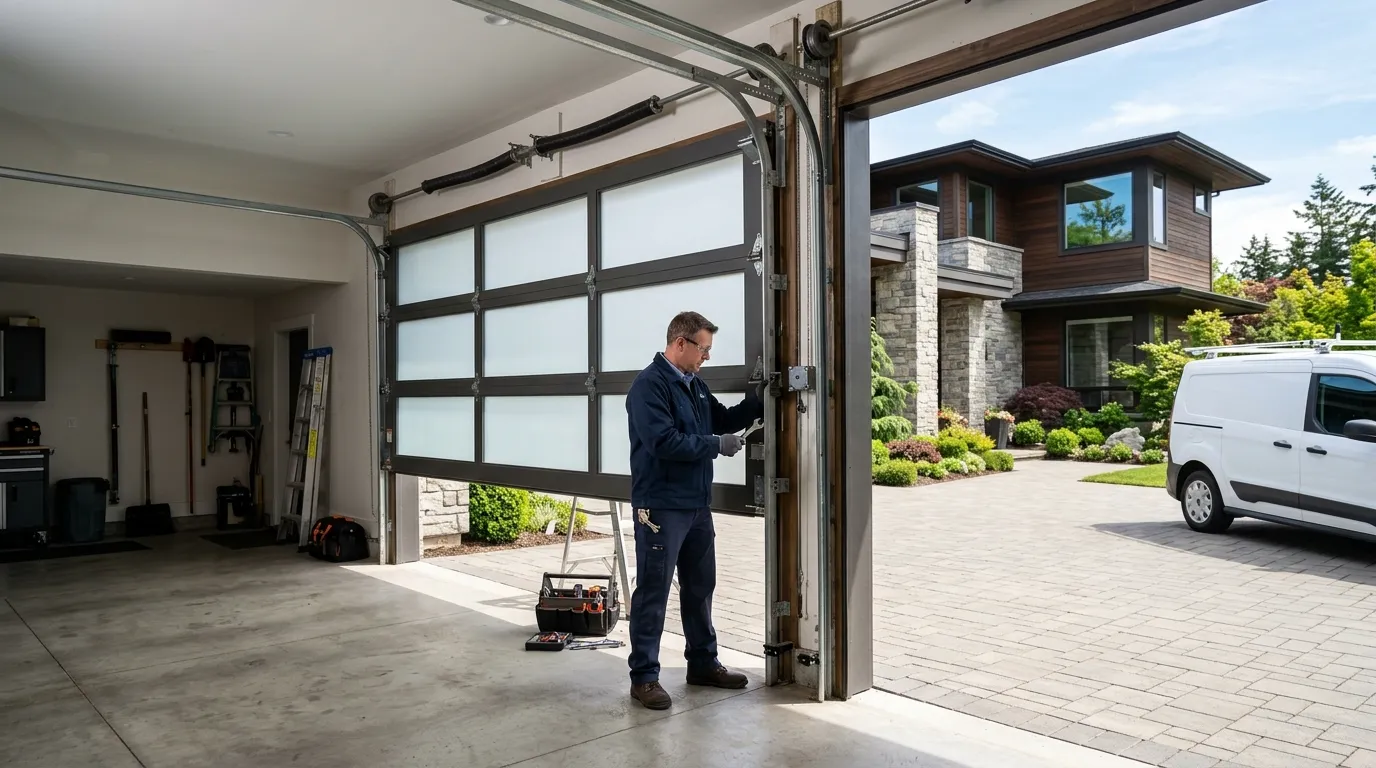
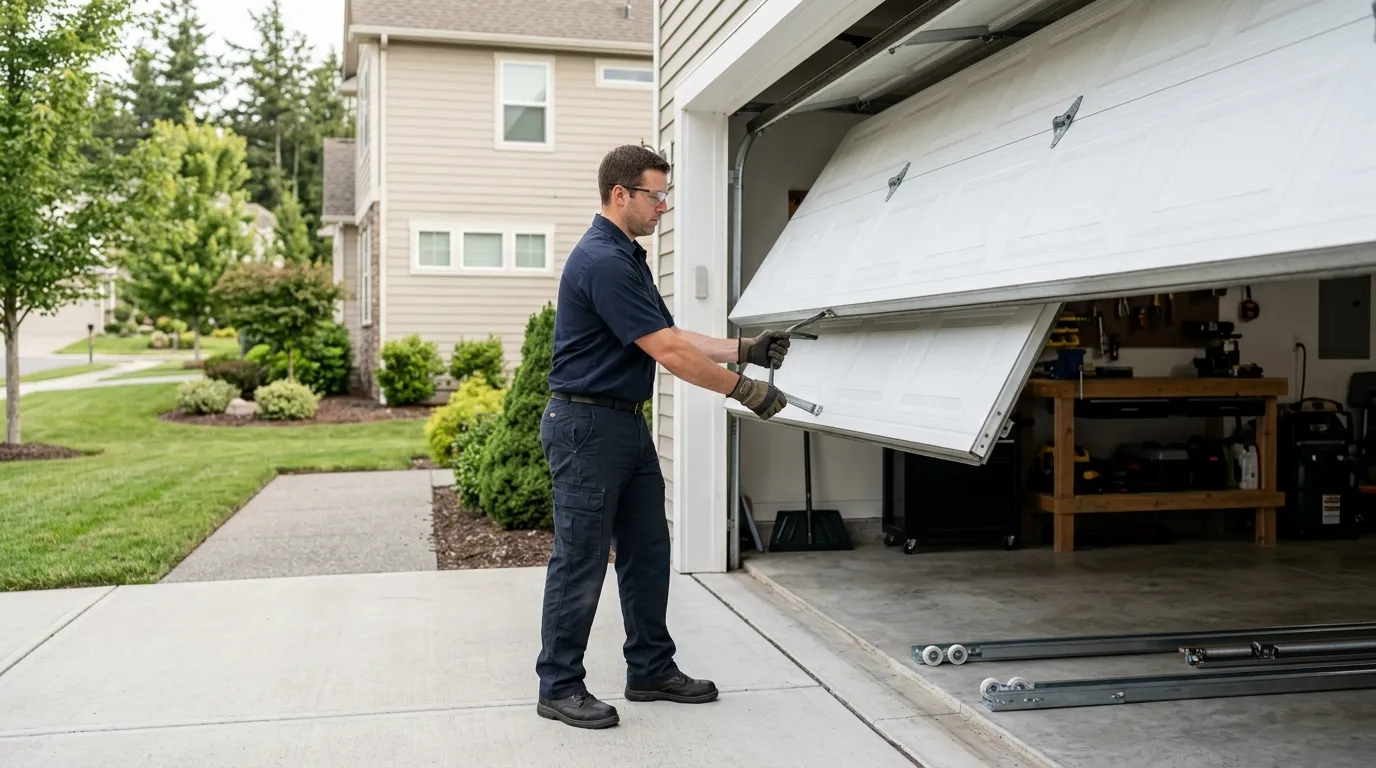
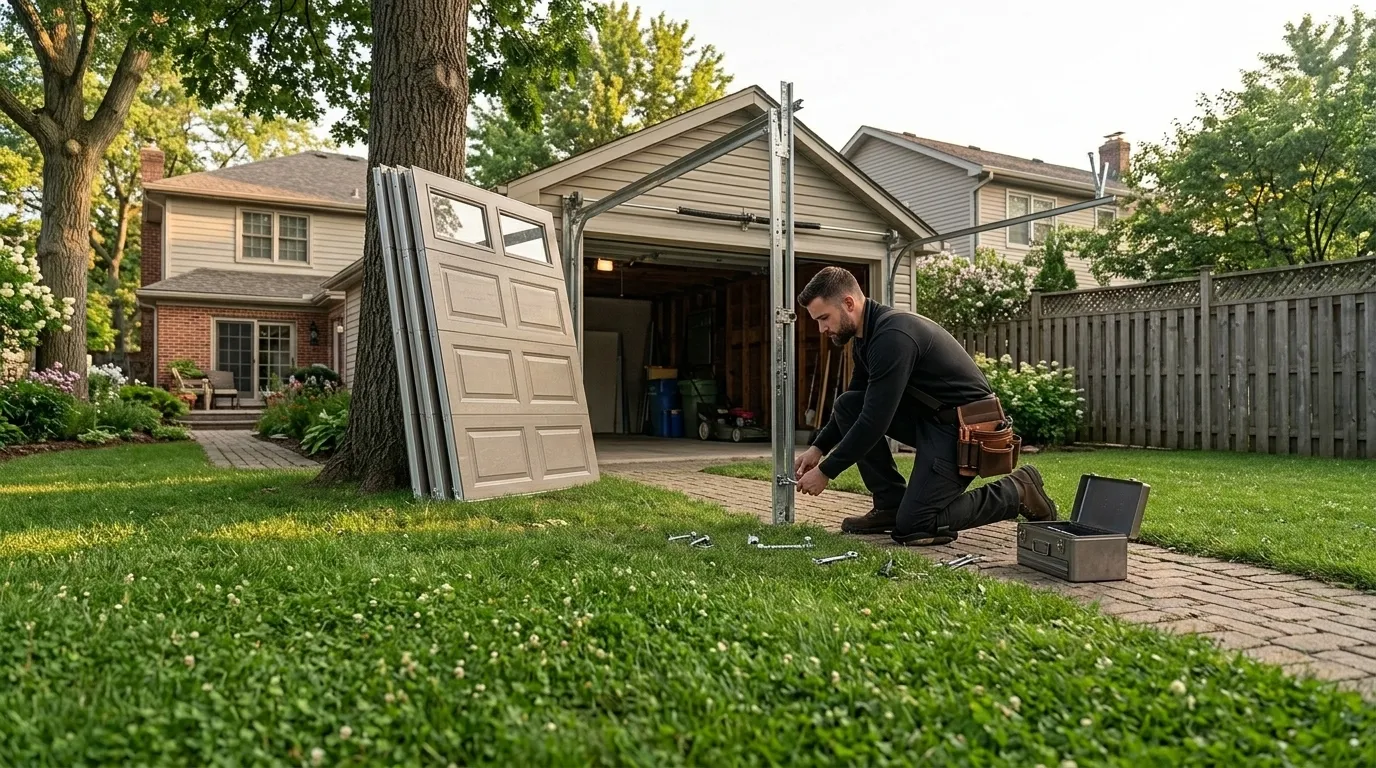
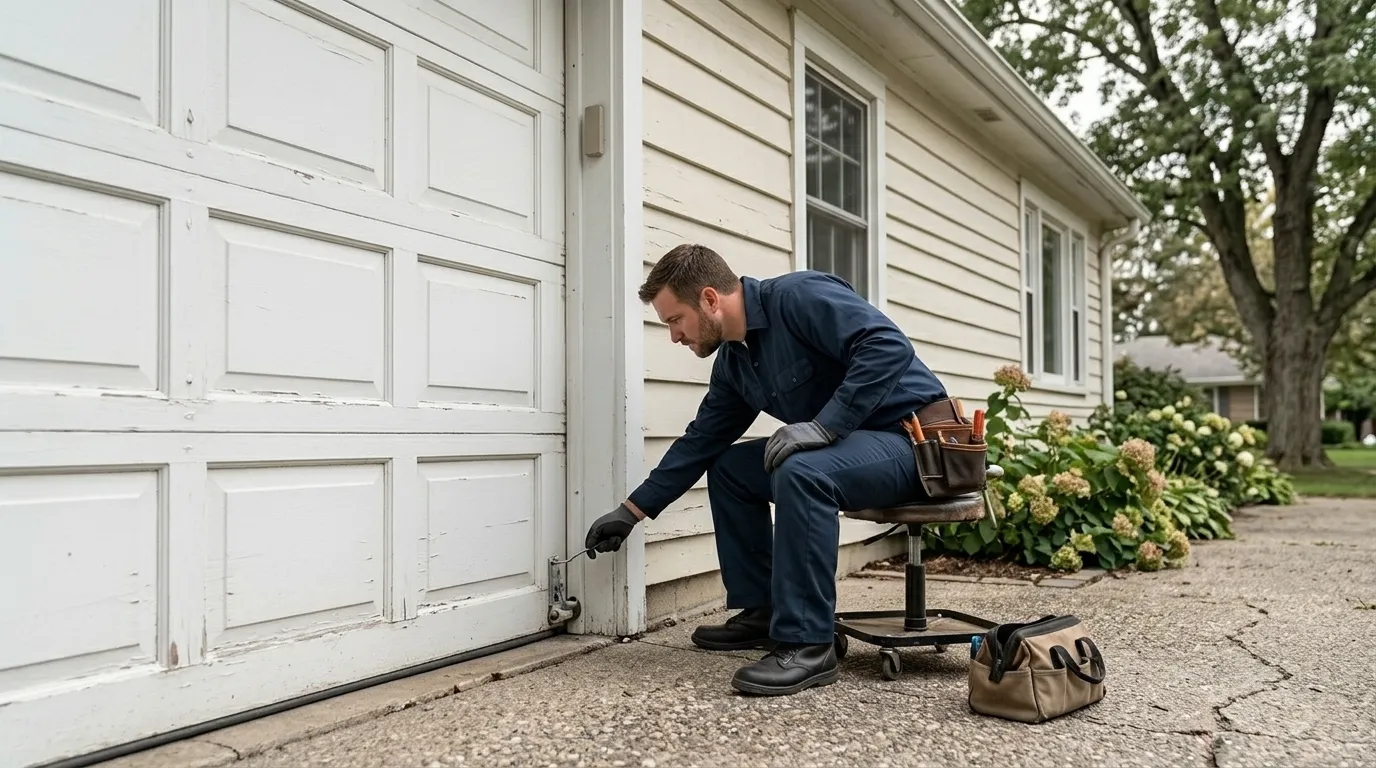
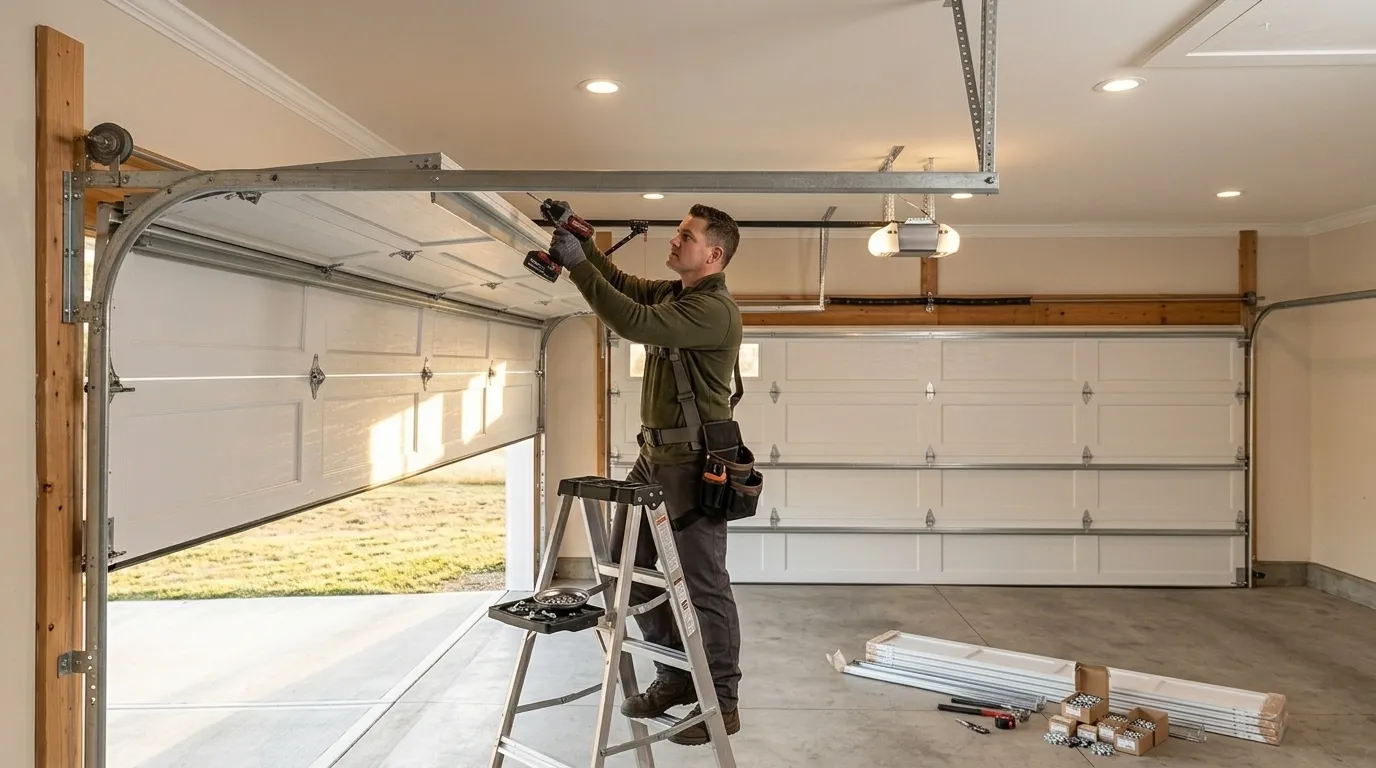
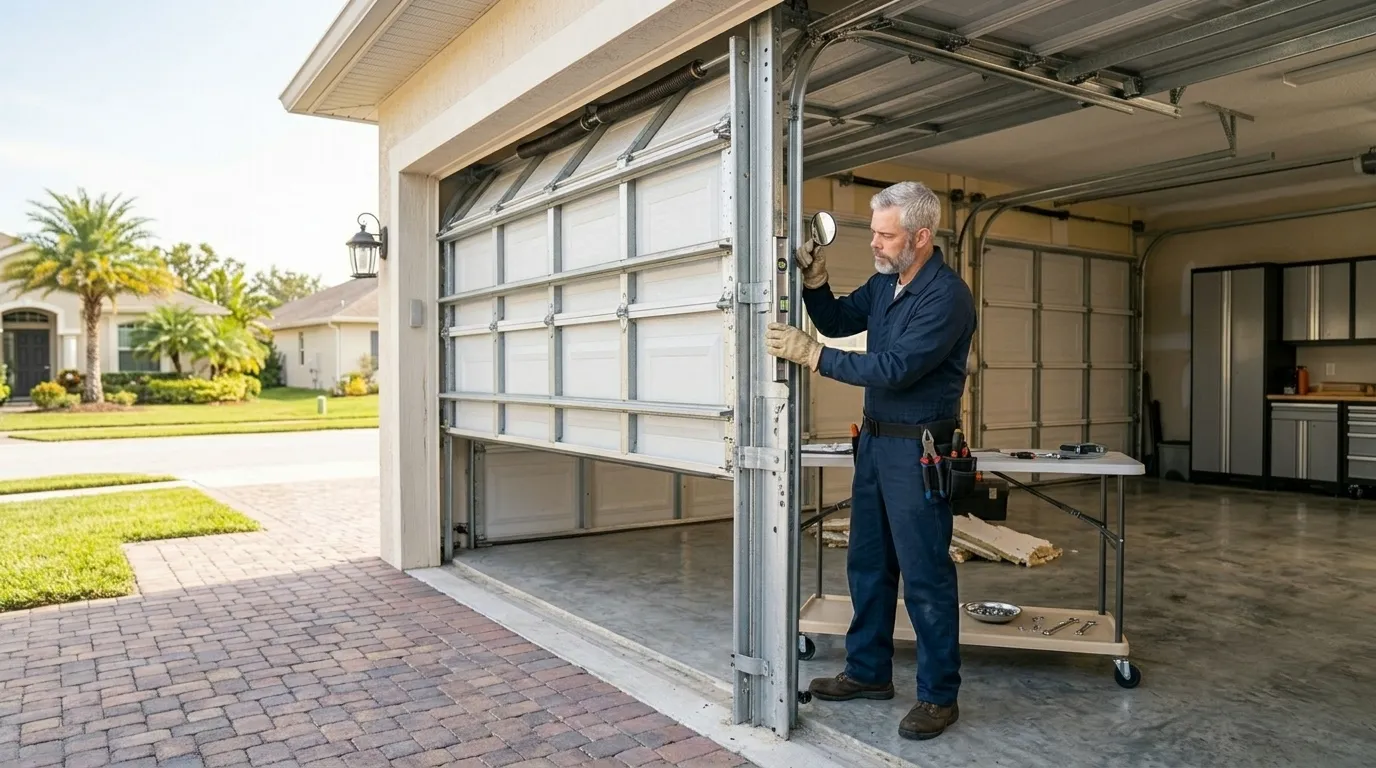
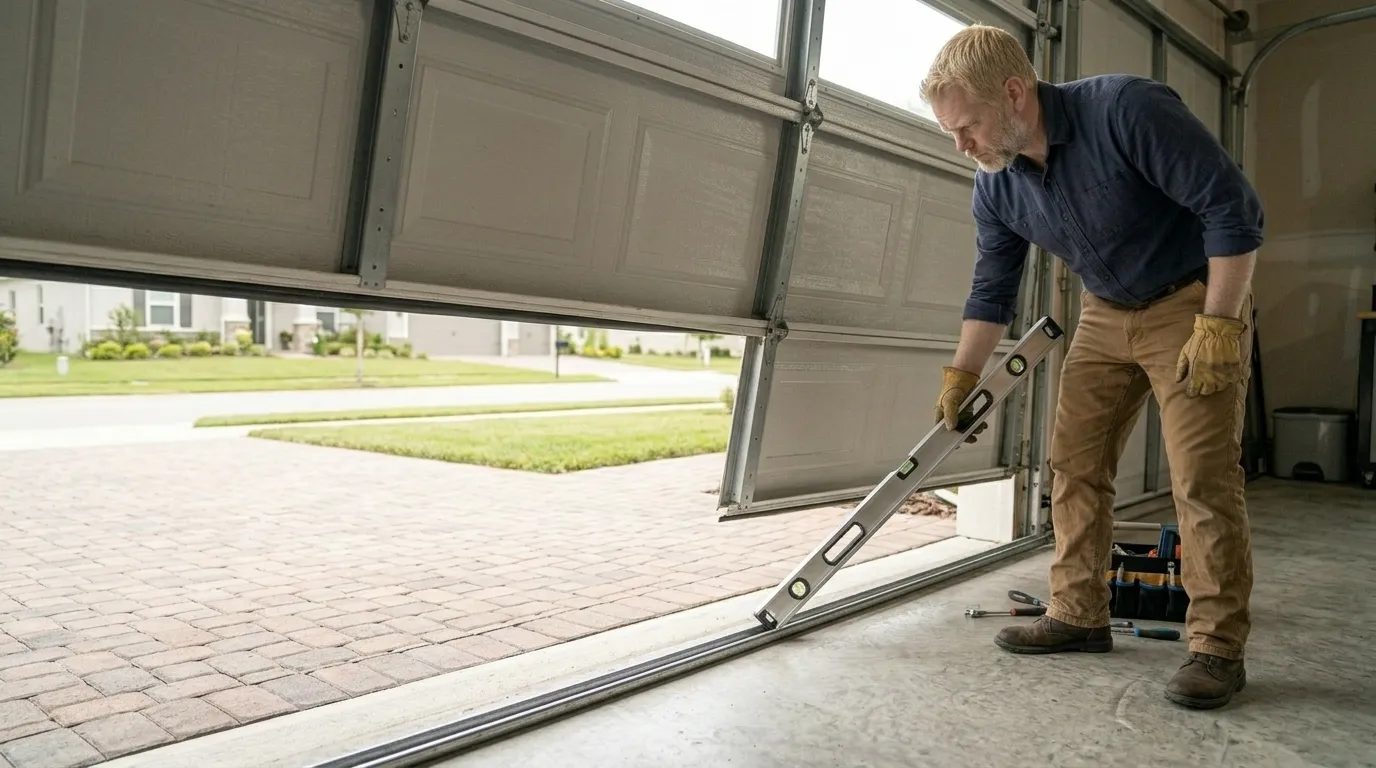
Maintenance on a door this age starts with the track, not the opener. We check plumb on both vertical sections and horizontal radius on the curve, because a track that's shifted even slightly is what makes rollers wear unevenly and forces the opener to work harder than it should. From there we check spring tension against the actual weight of the door as it sits now - not the weight it was rated for when the house was built, since a lot of panels have been replaced or added onto since.
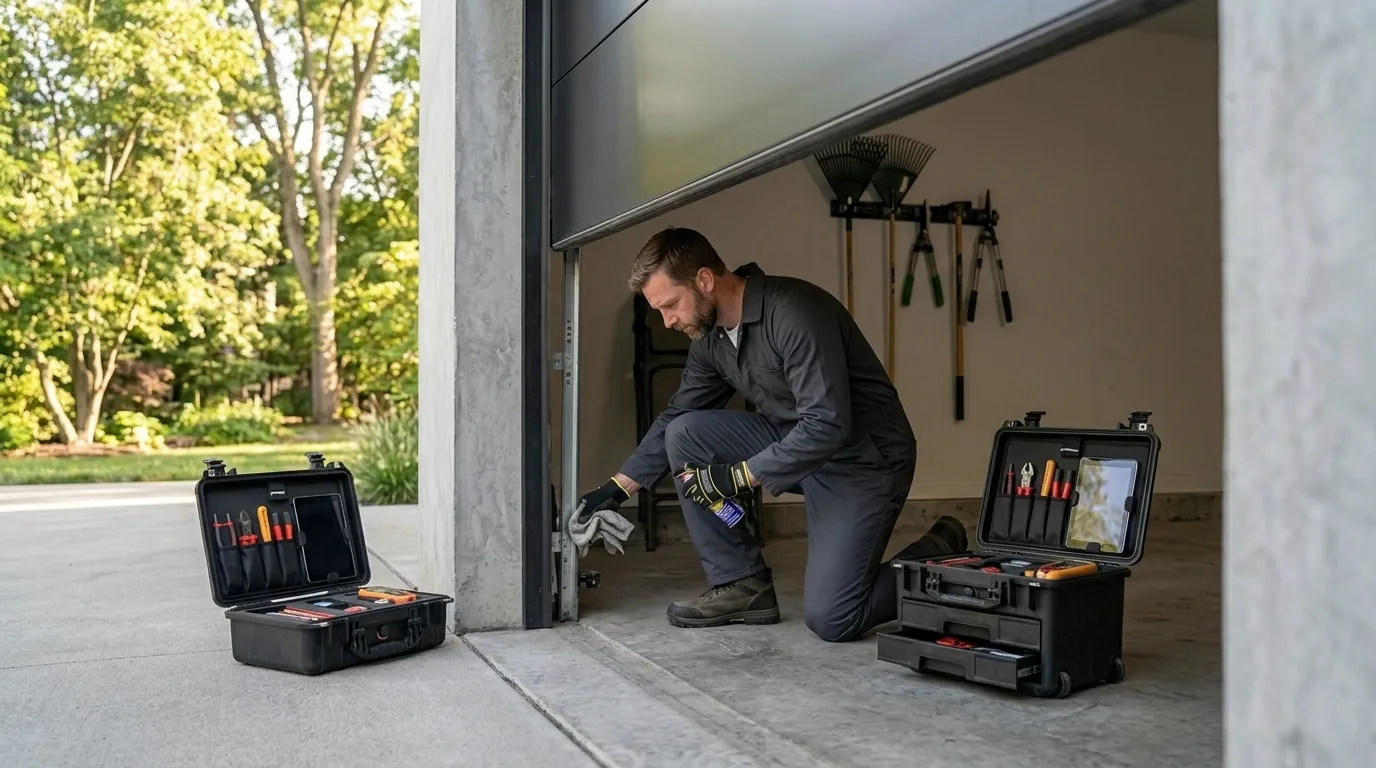
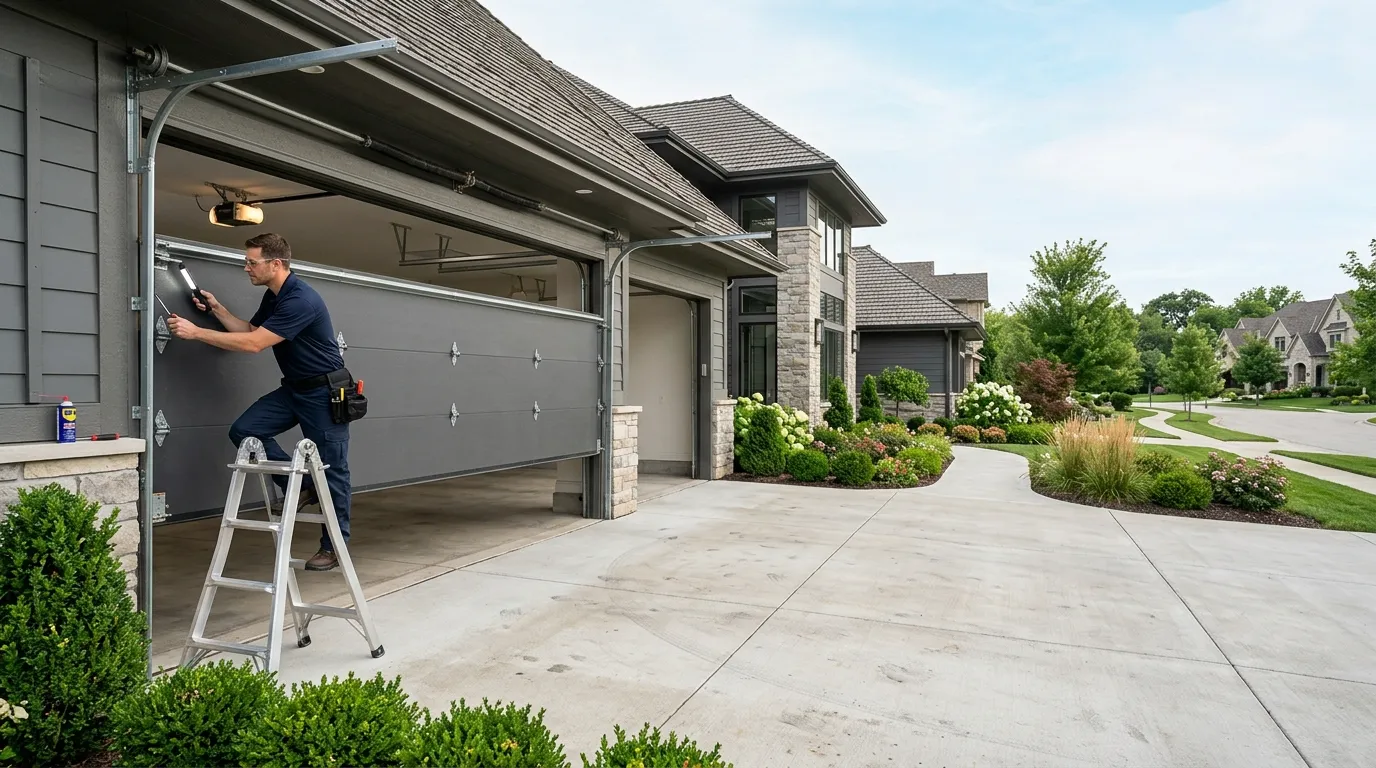
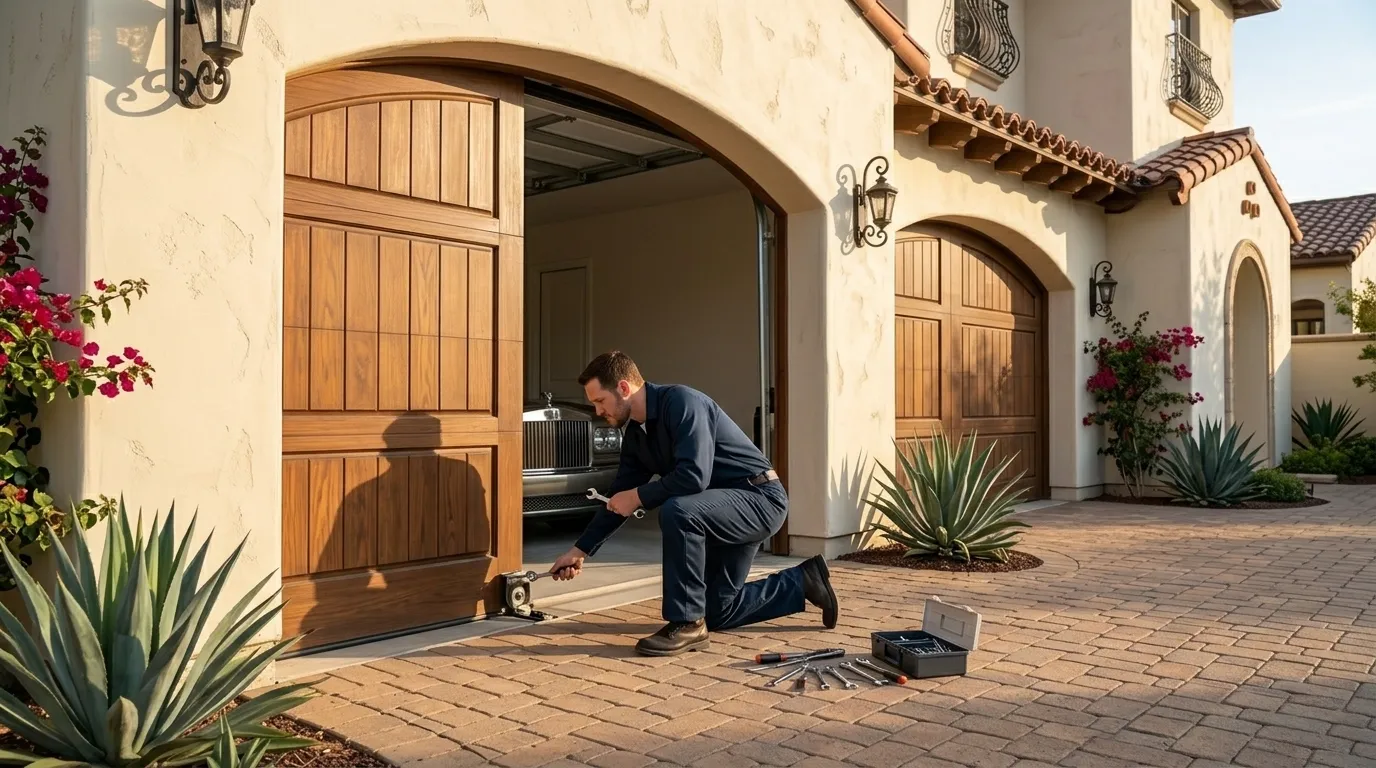
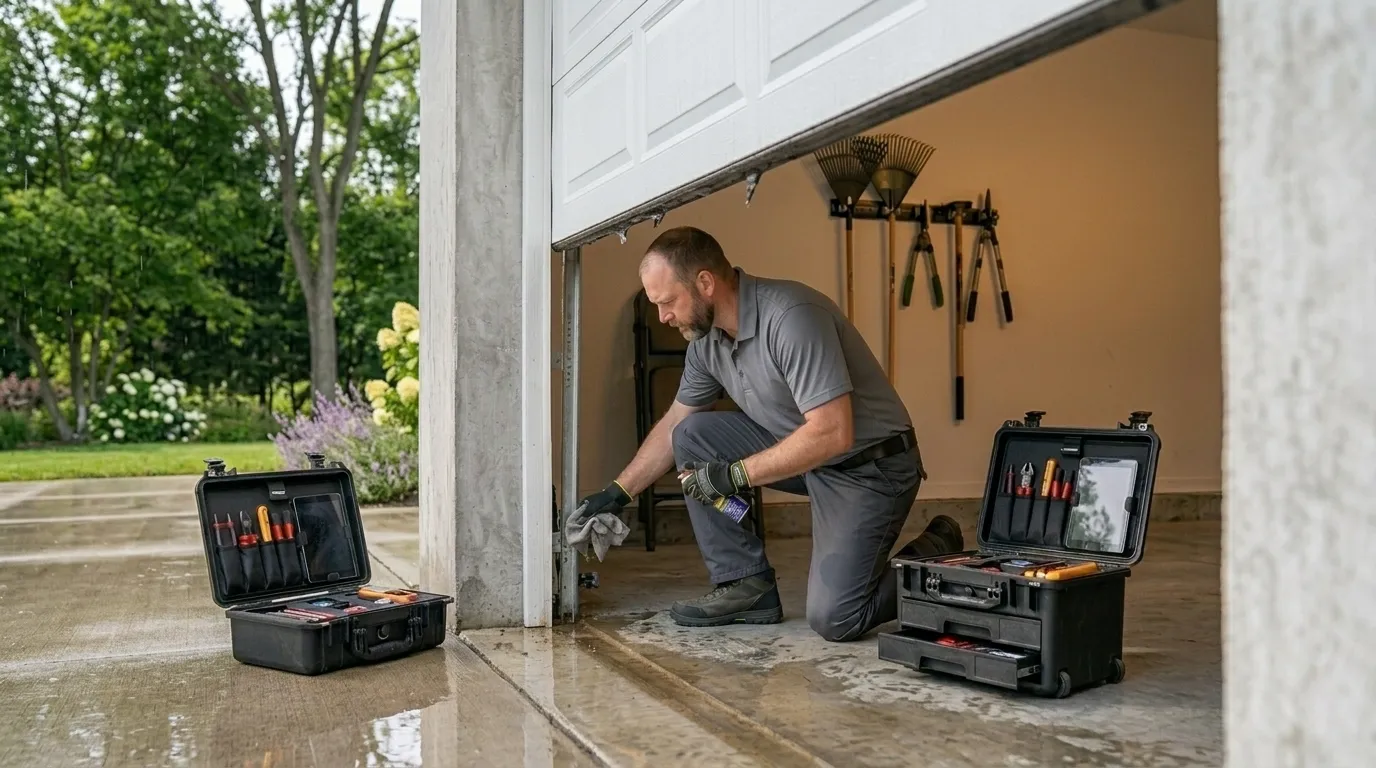
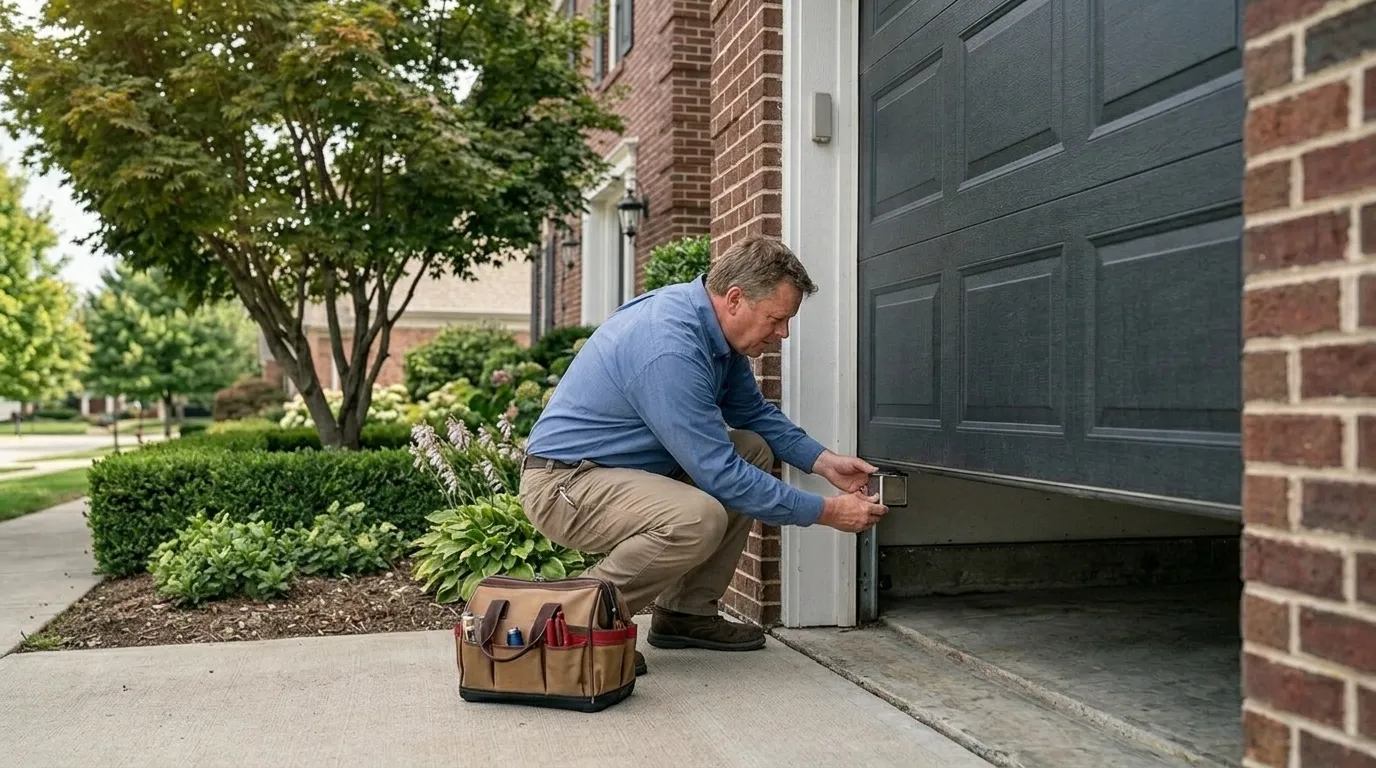
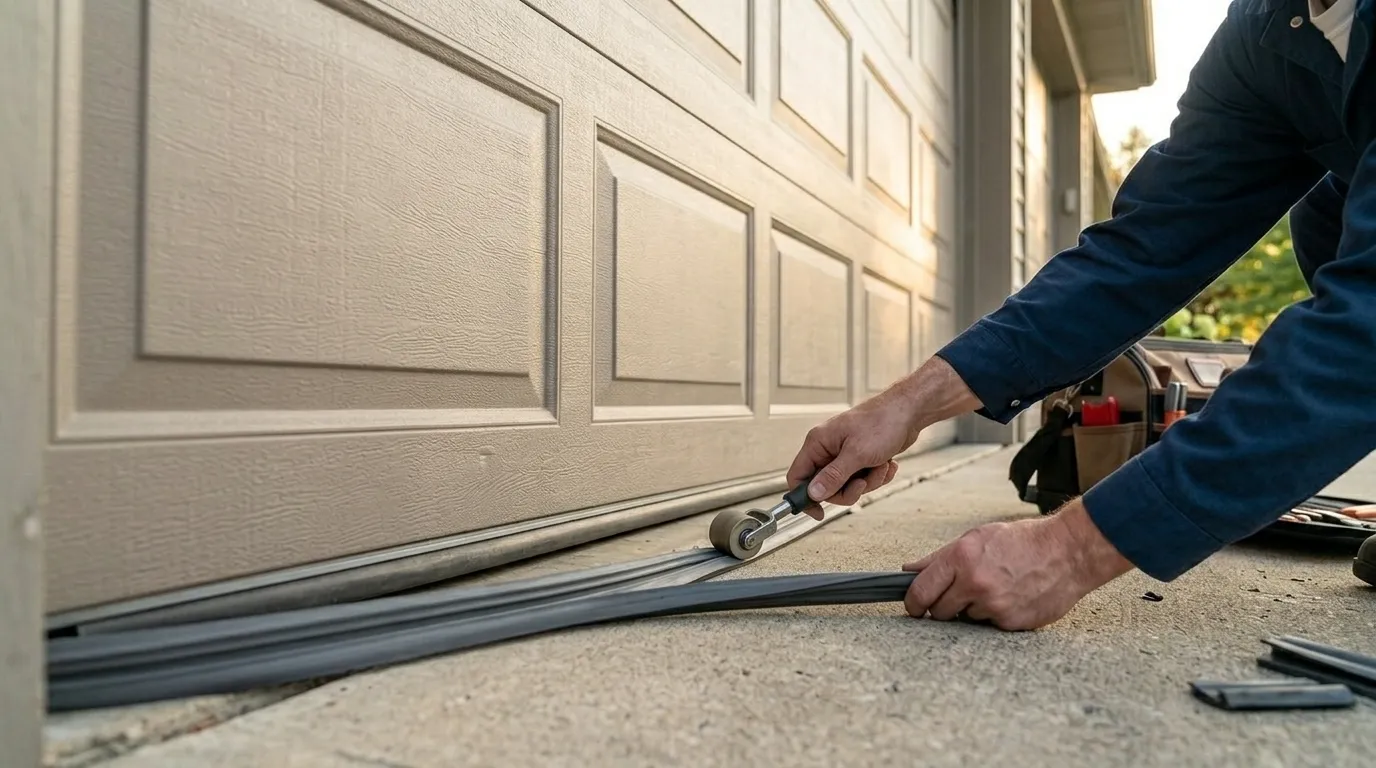
Cables, rollers, and hinges get inspected for fraying, flat spots, and loose fasteners, and everything that moves gets lubricated with the right product for steel components in a cold climate - not a general household spray that gums up or stiffens when temperatures drop. We also check the opener's force settings and safety reversal, since a track or spring that's drifted out of balance often shows up first as an opener that auto-reverses for no obvious reason.
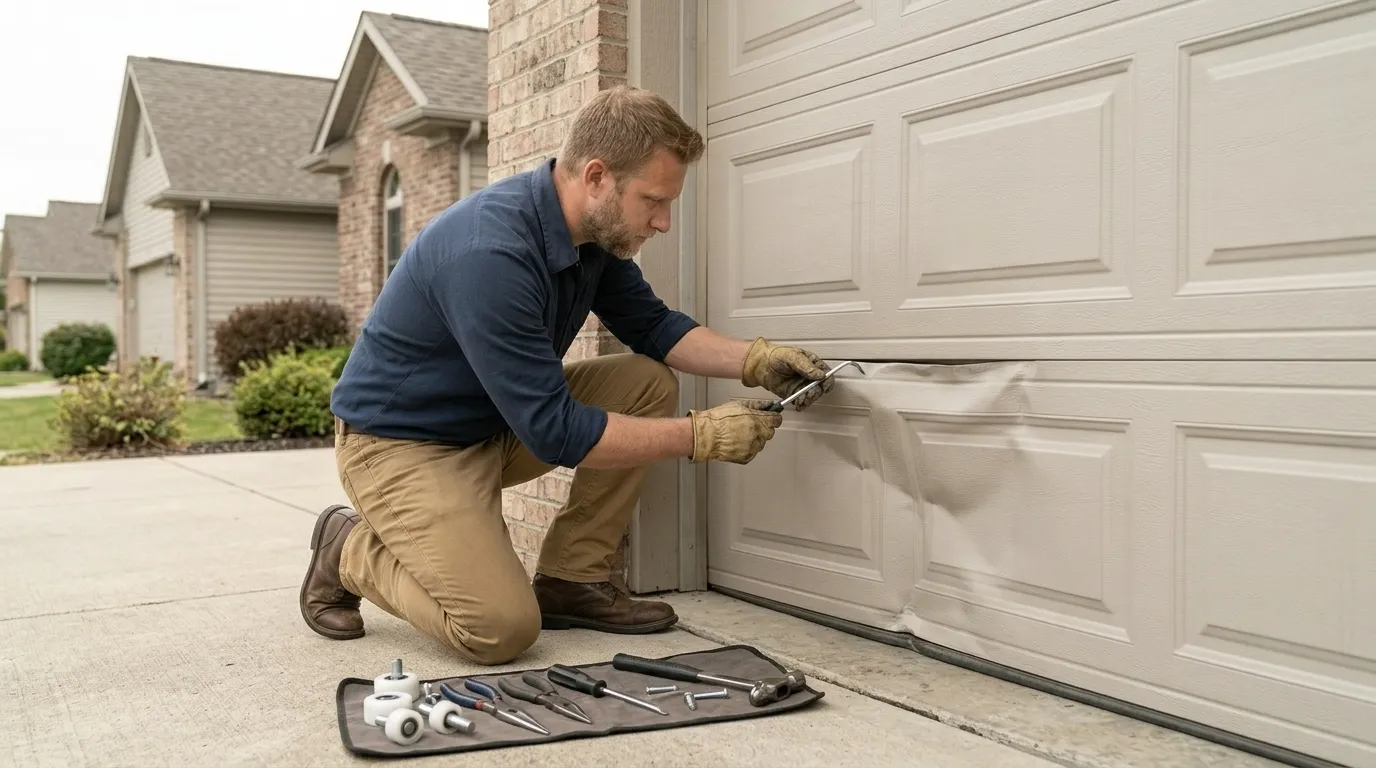
One honest limitation: if the door has been out of adjustment for years, a tune-up brings it back to a safe, quiet baseline, but it won't undo cumulative wear on rollers or a track that's been bent from repeated misalignment. In those cases we'll tell you straight that a component needs replacing rather than just adjusting, because papering over a bent track with lubricant is a callback waiting to happen.
How It Shows Up
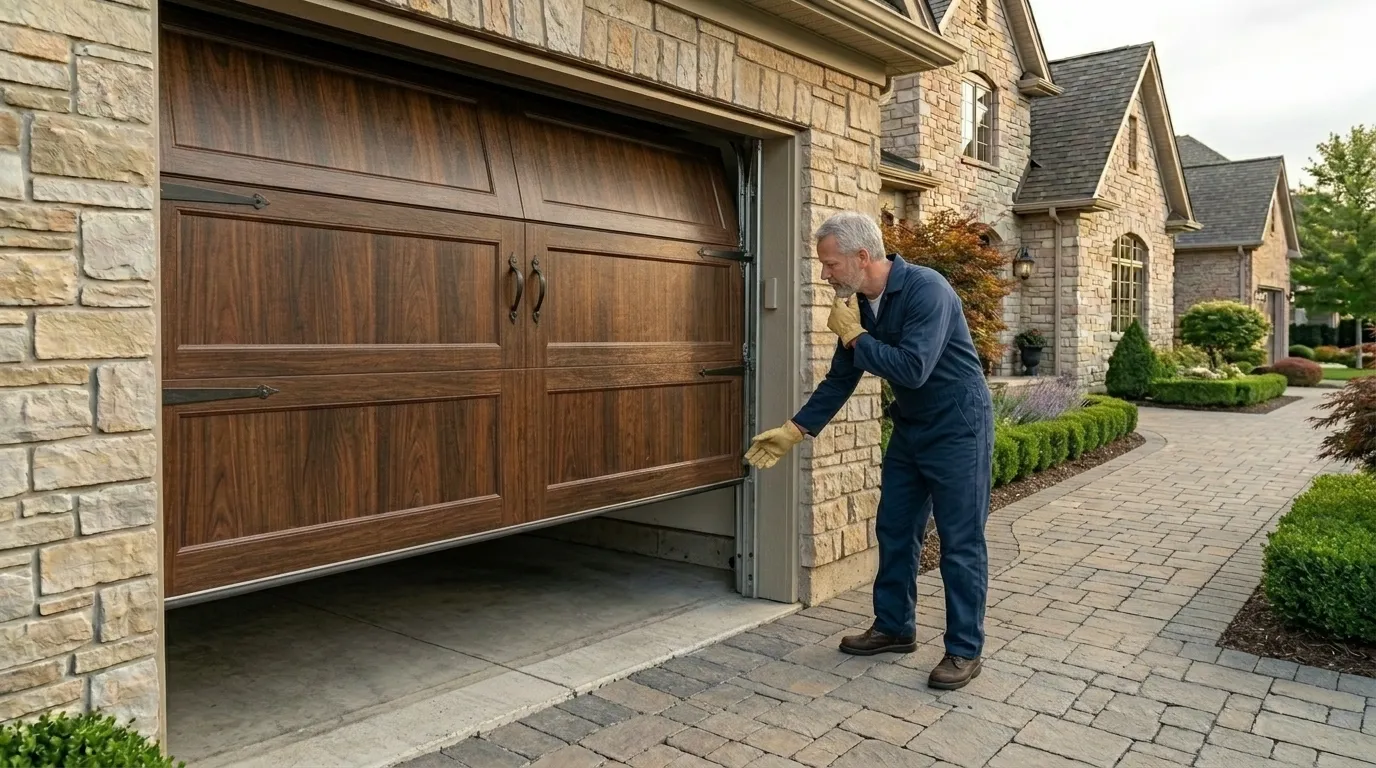
The earliest sign is usually sound - a grinding or popping noise on the way up that wasn't there a year ago. Next is speed: a door that used to close in a few seconds now visibly hesitates partway down, or the opener strains audibly at the same point in the cycle every time. If you're pulling the emergency release and finding the door hard to lift by hand, that's a spring tension problem, not an opener problem, and it's worth a look before it fails outright.
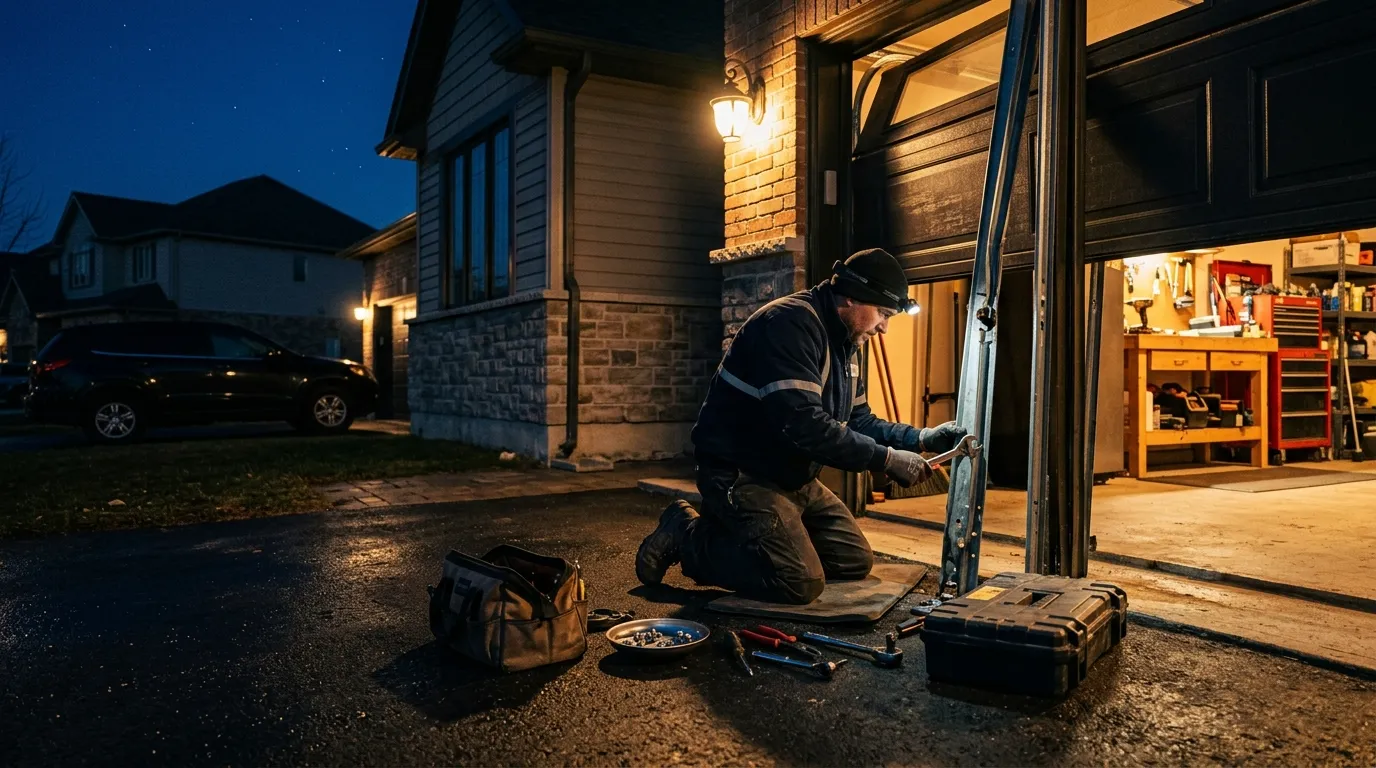
In this climate, cold mornings are when marginal problems become obvious problems. A track that's slightly out of alignment might run fine most of the year and then bind hard on the first freeze of the season. If your door has gotten noticeably louder or slower over the past few months and it's original to a house built in the 1960s or 70s, that's not a coincidence - it's the hardware reaching the end of what routine lubrication alone can fix. We serve homeowners throughout this area, from East Wenatchee and South Wenatchee out to Cashmere, Entiat, Waterville, and Leavenworth, and the pattern holds across all of it.