Booking a Visit
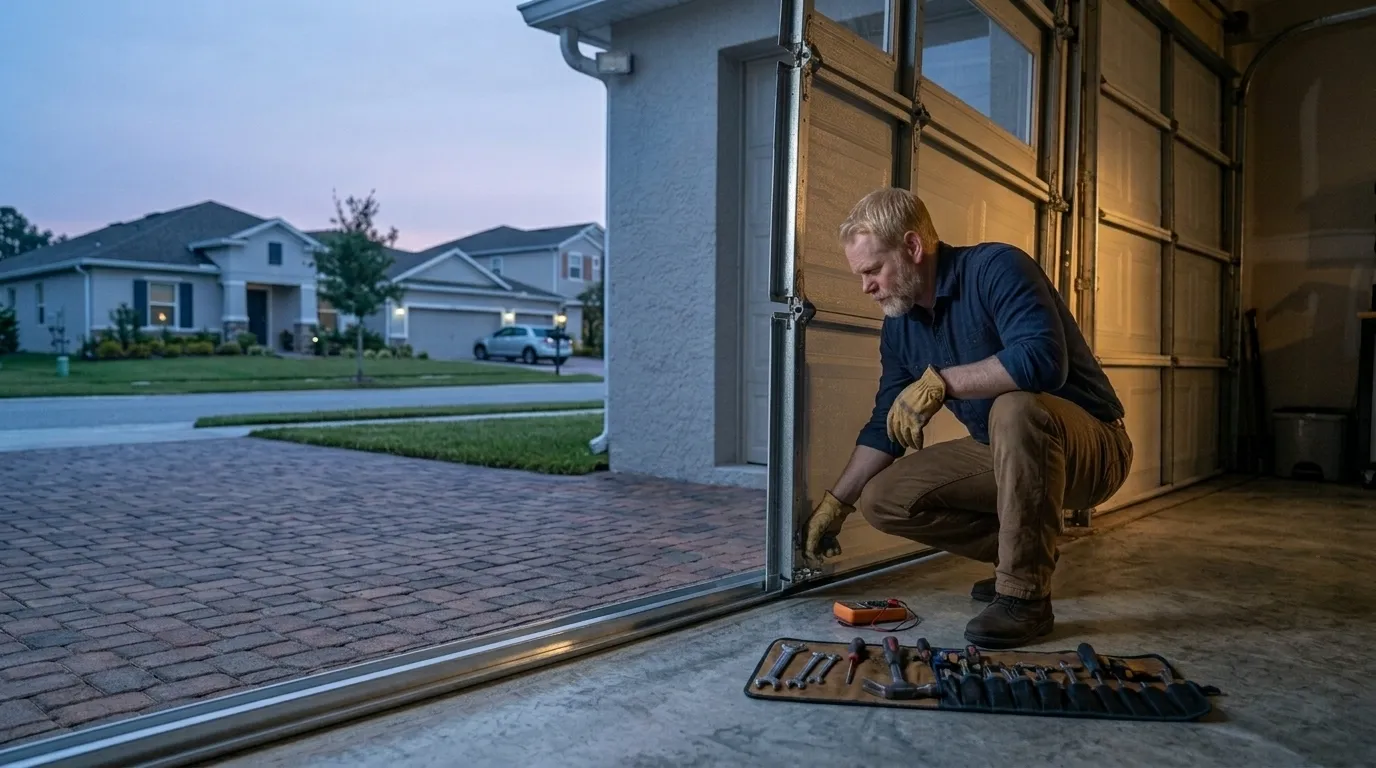
Waterville is 19 miles out from our shop in Wenatchee, so when you call about a broken spring or a door stuck halfway up, we're planning the drive, not walking out a back door. That's worth knowing up front: this isn't a town with its own depot or a crew sitting nearby. We come from Wenatchee for every job here, which means the call itself matters - tell us what the door is doing (won't open, won't close, hanging crooked, cable off the drum) so we load the truck with the right springs and hardware before we leave rather than guessing on-site.
With about 483 households in Waterville, this isn't high call volume for us, and that's fine - it means when we do come out, we're not rushing between five other jobs in town. We'd rather bring the right parts once than make a second trip. If your opener is from the same era as the house, say so on the phone; it changes what we bring.
How It Shows Up
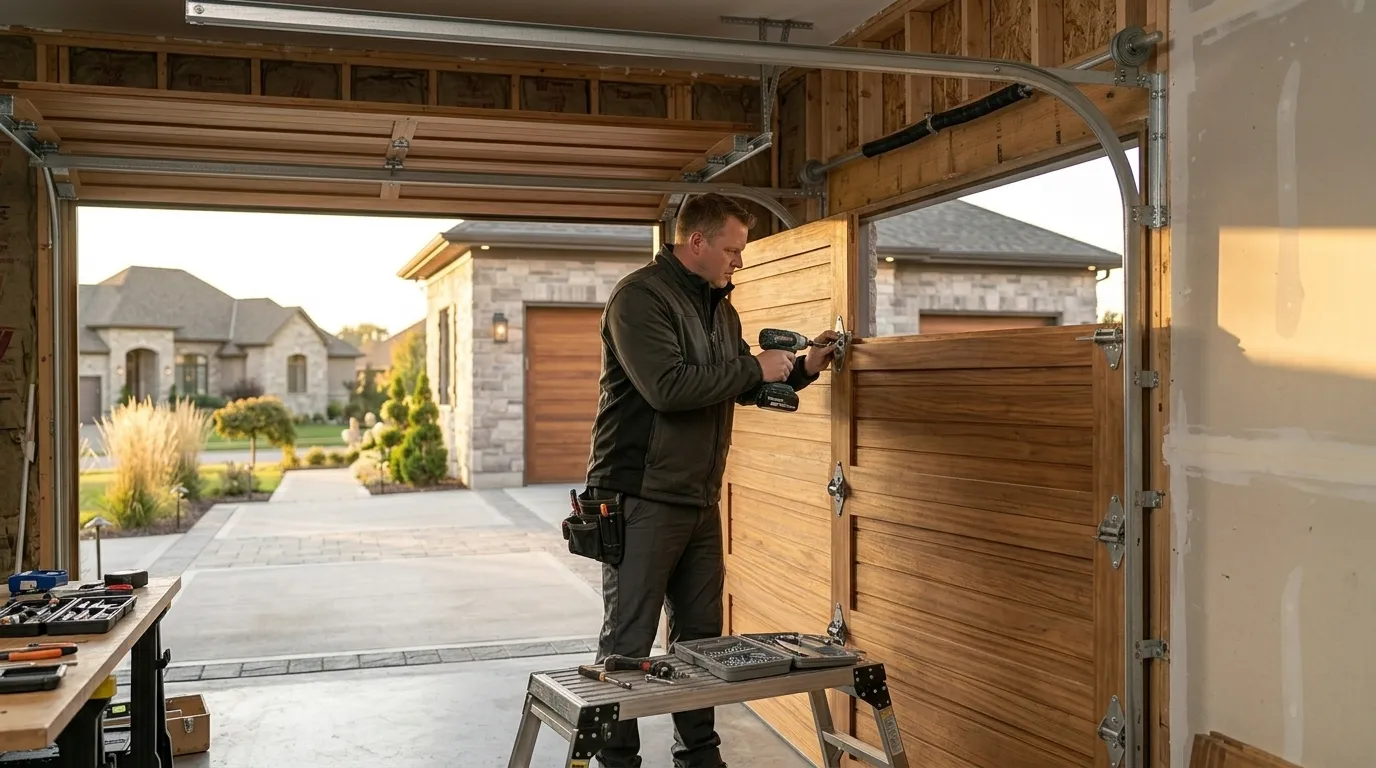
A lot of the housing stock in Waterville goes back to 1944, which is early even for this part of the service area - most of the surrounding towns we cover are 1960s-70s builds. A door original to a house that age, or close to it, was almost certainly a heavy wood or early steel panel on a torsion spring set sized for a lighter door than what's often been swapped in since. That mismatch is the single most common failure pattern we see on houses this old: somebody replaced the door decades later with a heavier insulated panel and kept the original spring and drum setup.
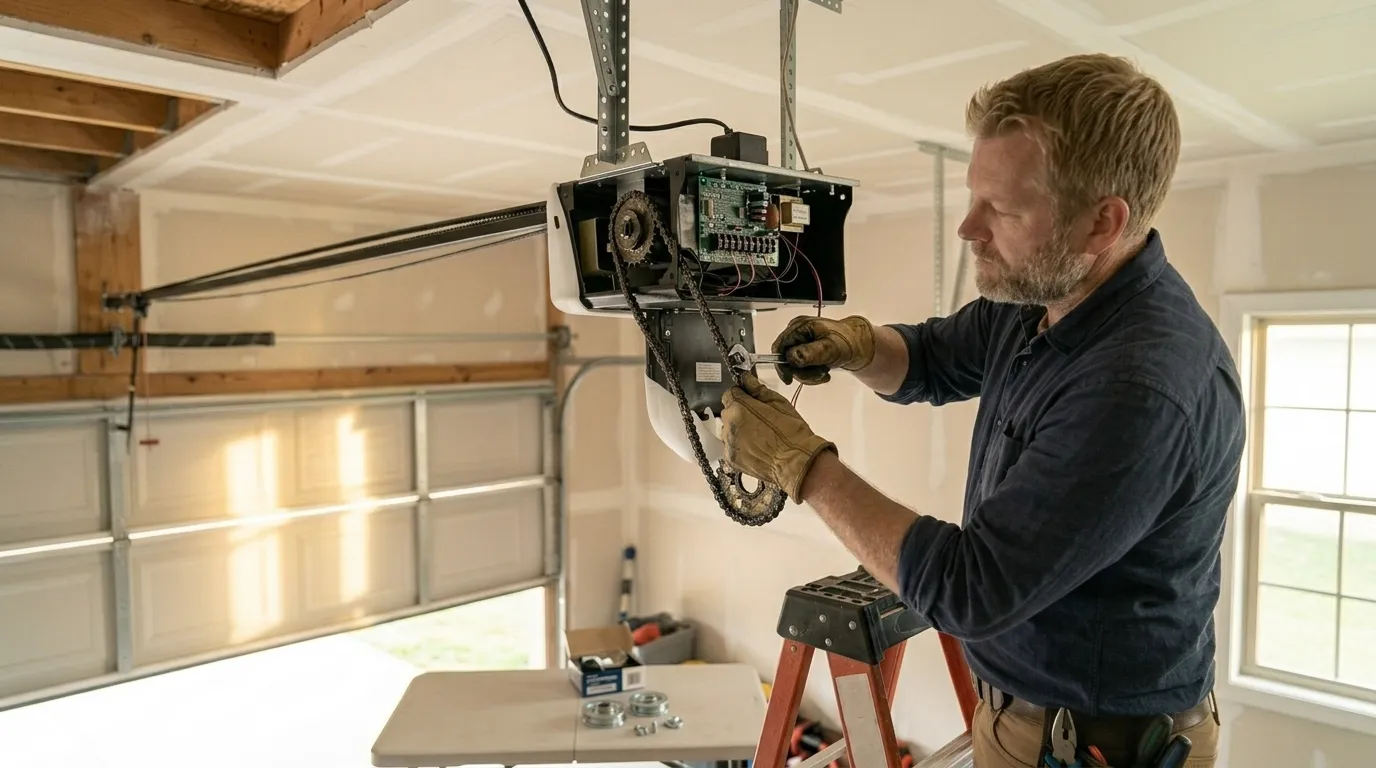
What that looks like day to day: the door feels heavier than it should coming down, it doesn't hold halfway when disconnected from the opener, or the opener strains and clicks off partway through a cycle. None of that is the opener's fault - it's the spring doing a job it was never sized for. On a cold morning, that same undersized spring has even less give, and something that's been marginal for years finally lets go.
Can You Do This Yourself
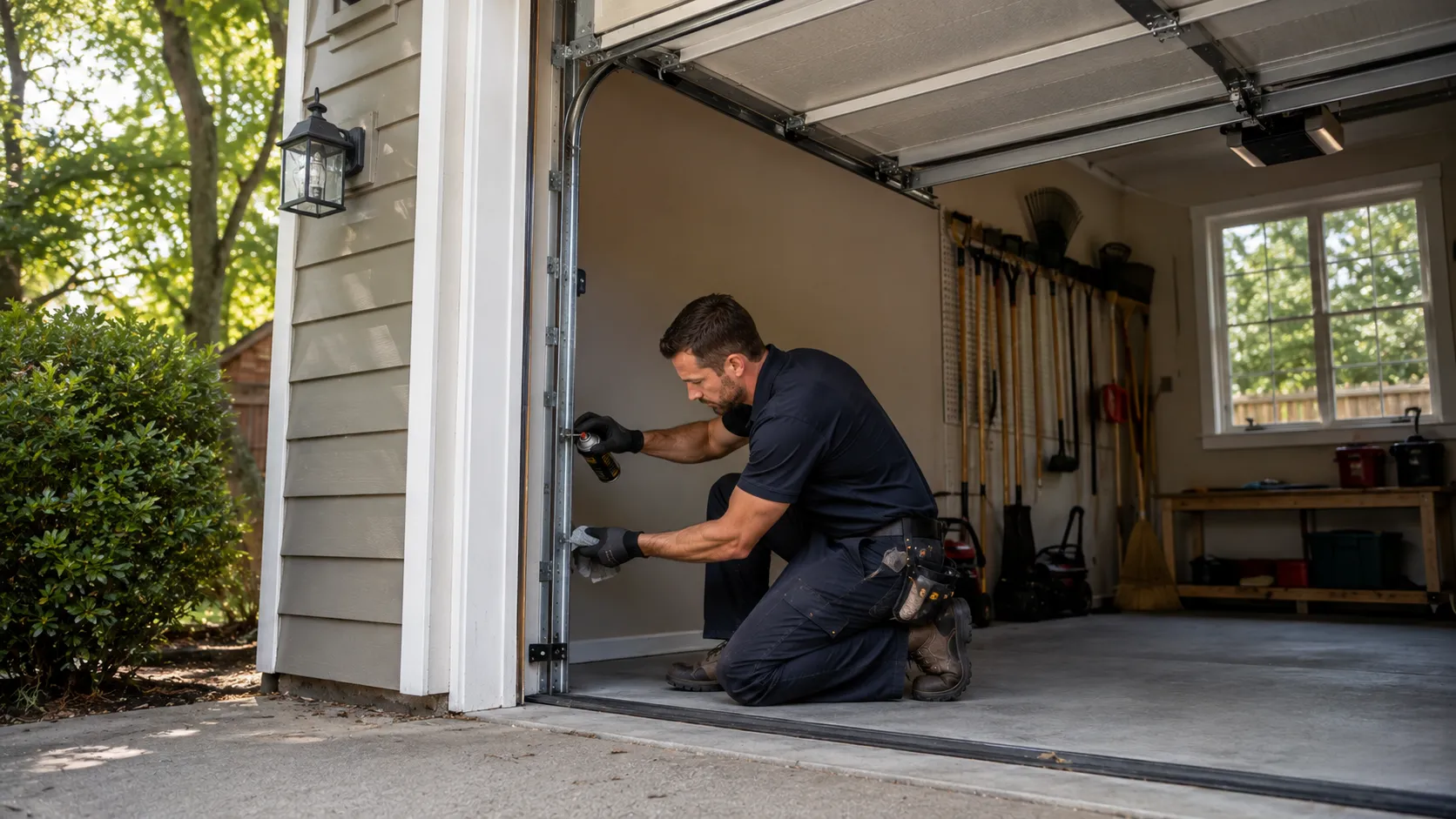
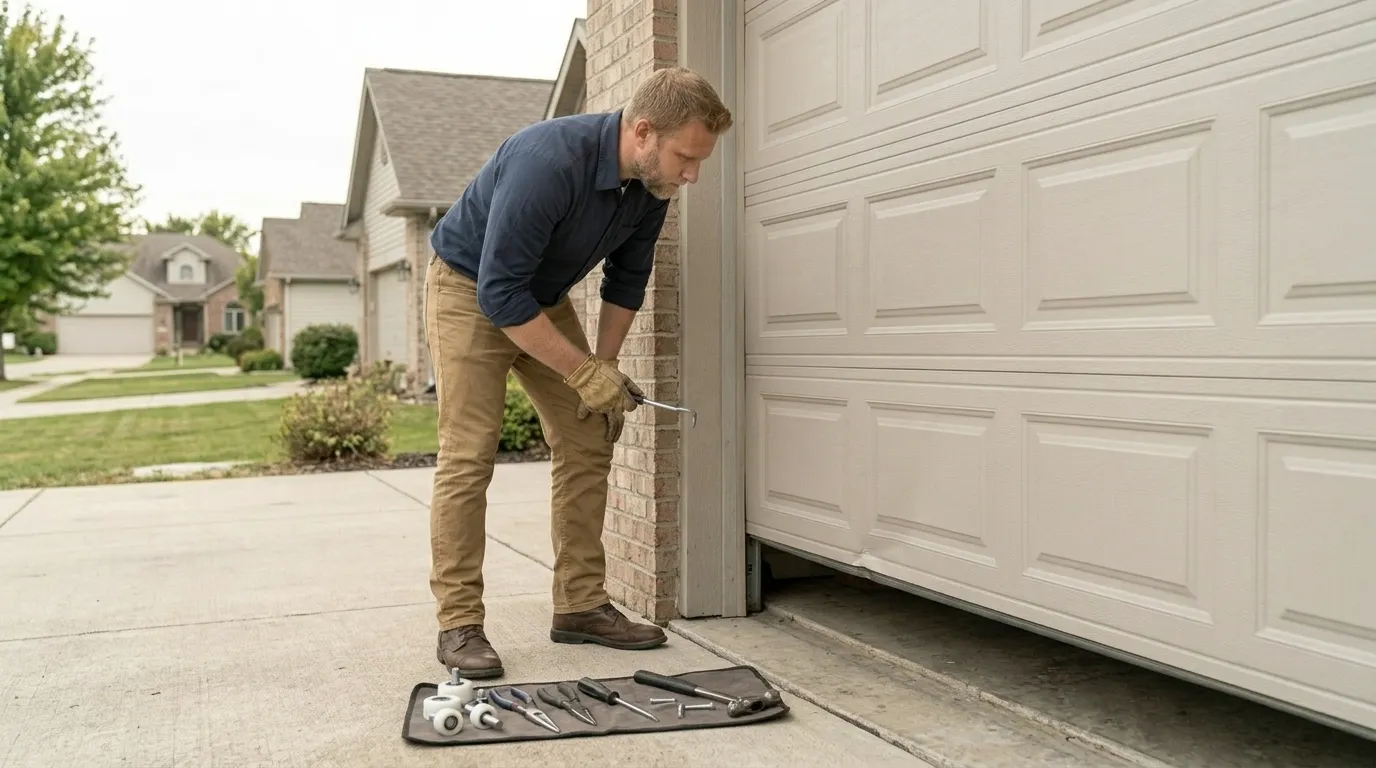
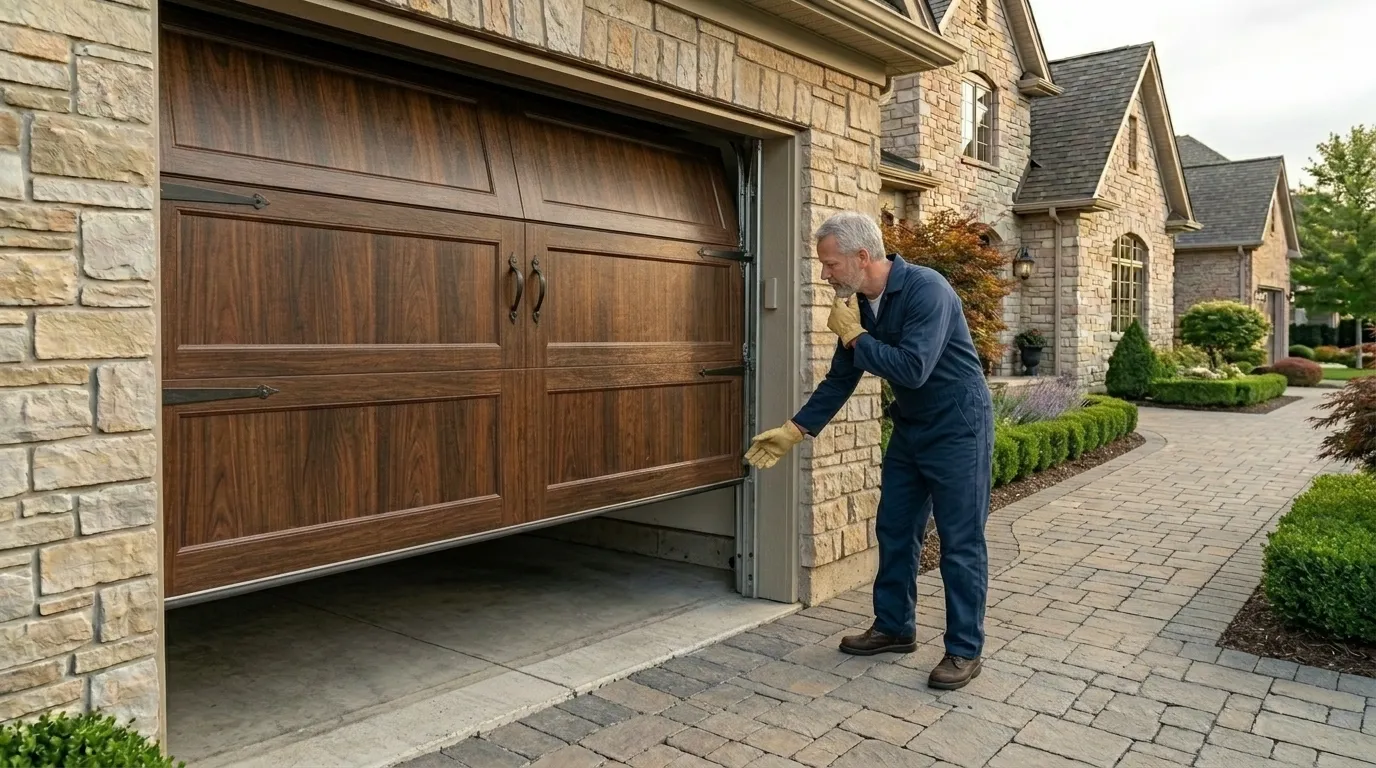
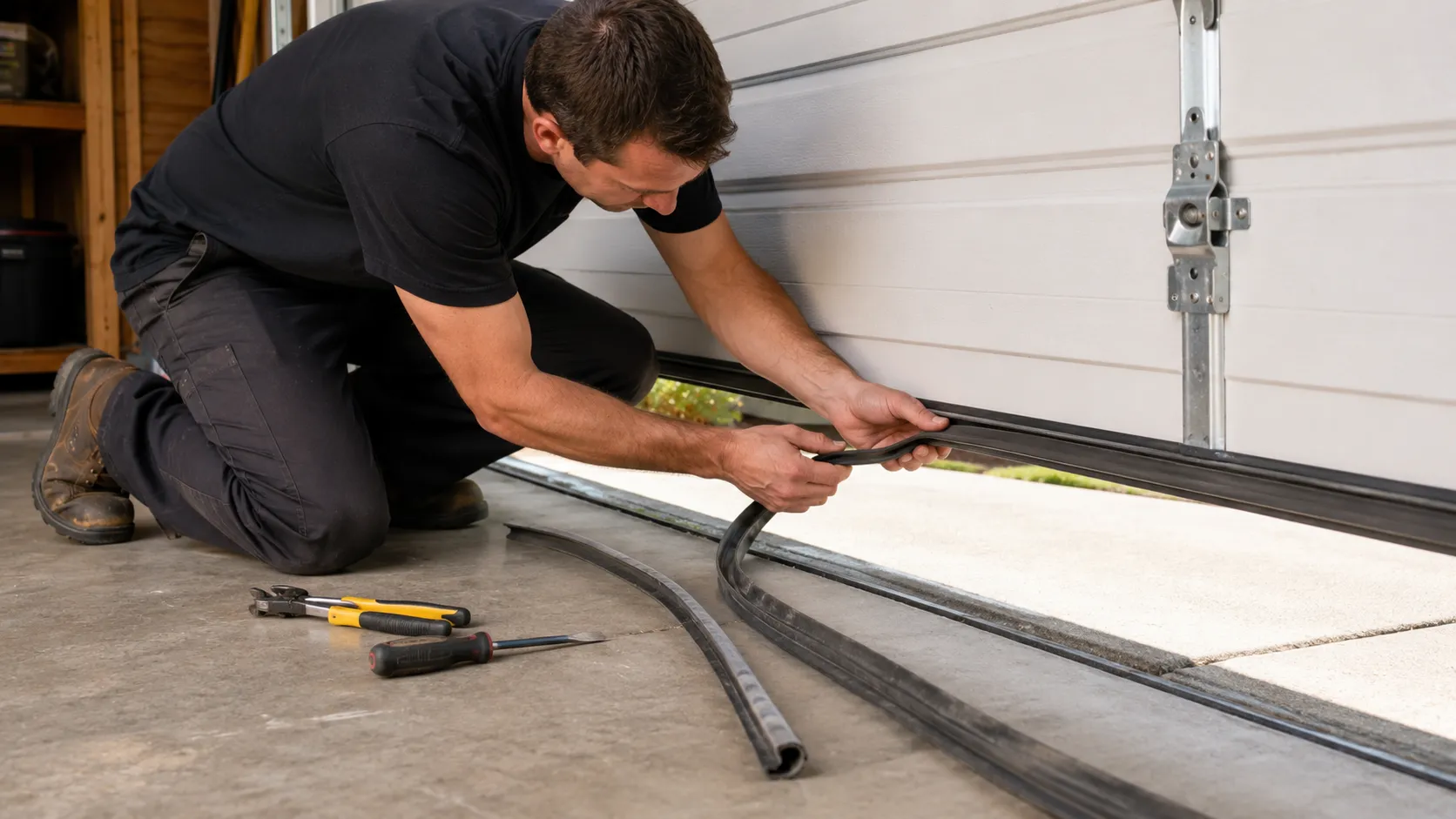
Some of this you can check safely. If the door won't close, look at the photo-eye sensors near the floor on each track - a dead leaf or a cobweb across the beam will stop a modern opener cold, and that's a five-minute fix. If the door is noisy but still moving, worn rollers are often visible and a maintenance call can address that without emergency pricing.
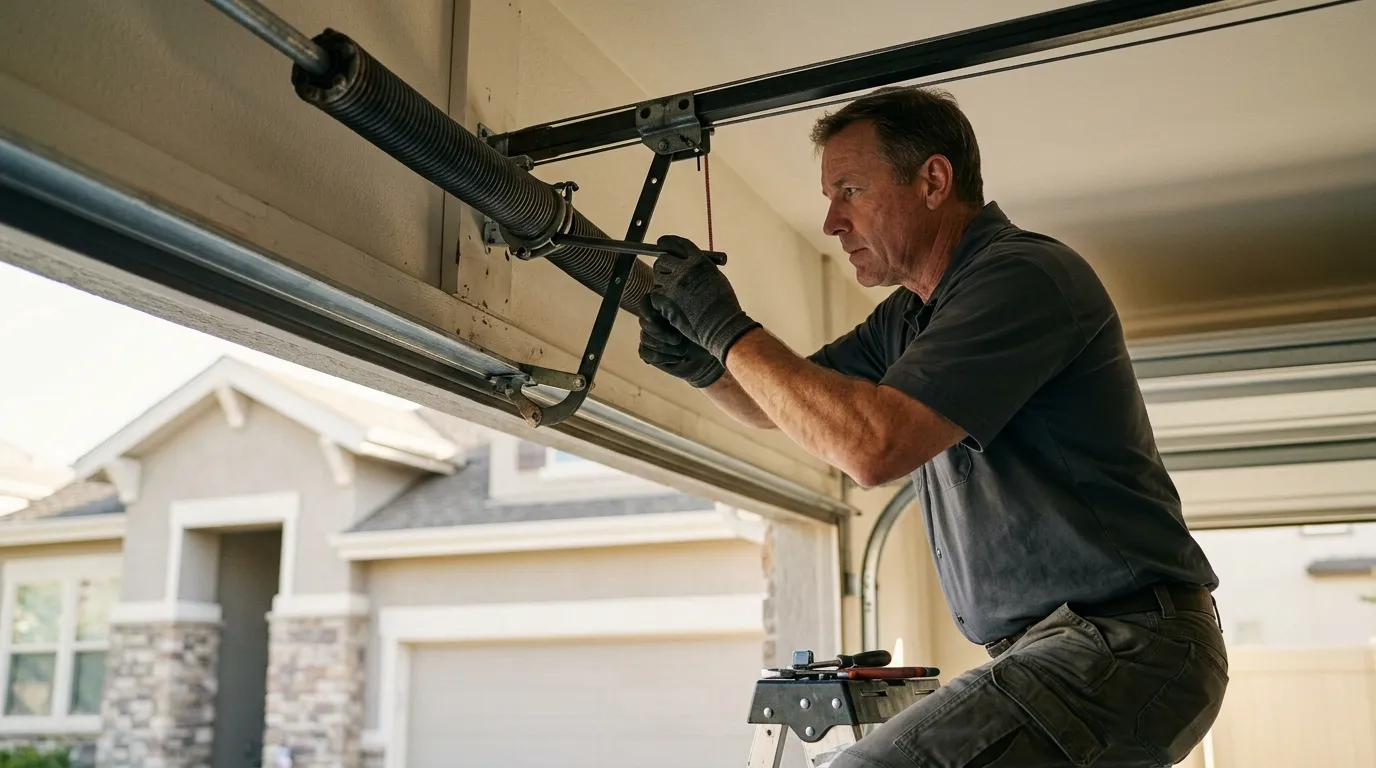
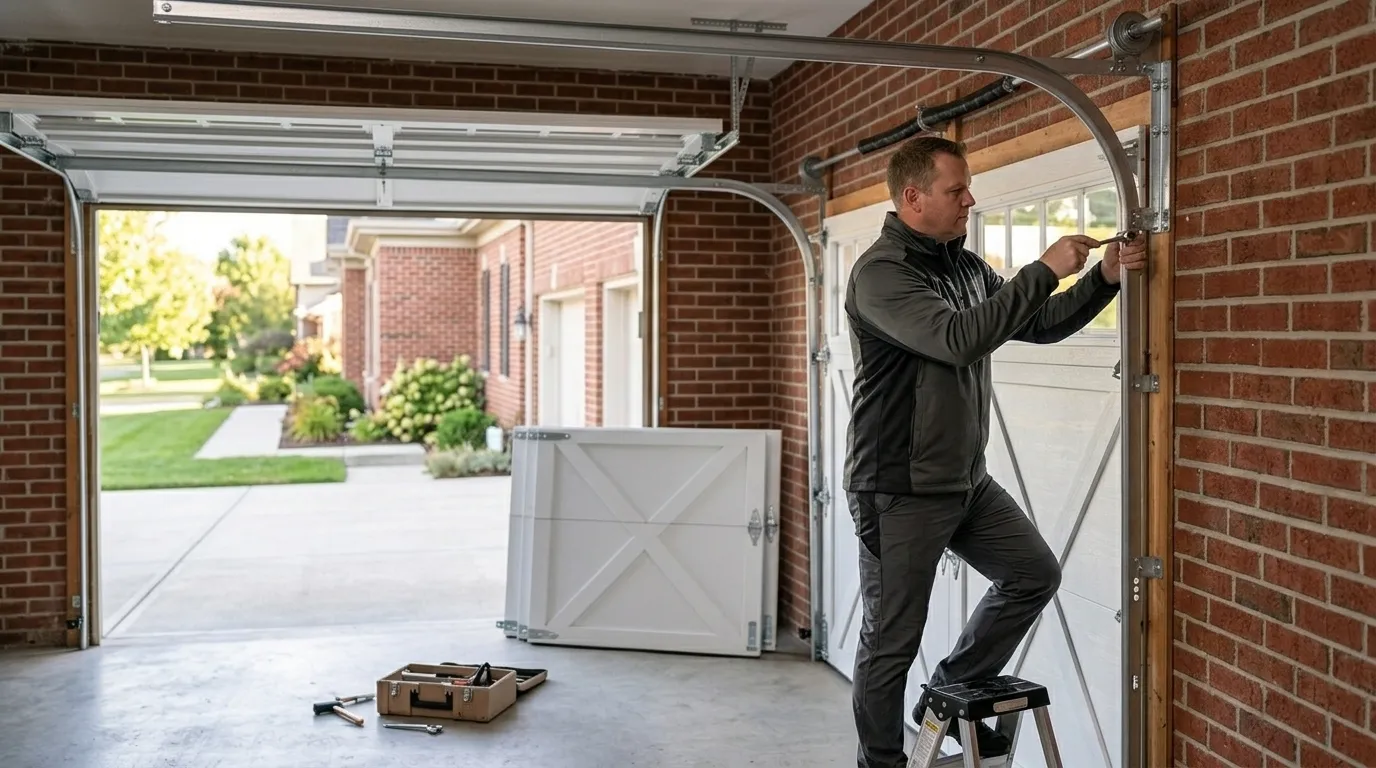
What you shouldn't touch: the torsion spring itself, the cables under tension, or anything involving disconnecting the spring from the shaft. On a door this old, in a headroom bay built to 1940s spacing, the tension stored in that spring is enough to break bones or worse if it lets go while you're working near it. If the door won't budge, is hanging unevenly, or a cable has jumped the drum, that's a call, not a project. We'd rather talk you through what's safe to check over the phone than have you find out the hard way what a torsion spring under load can do.