When to Call Someone
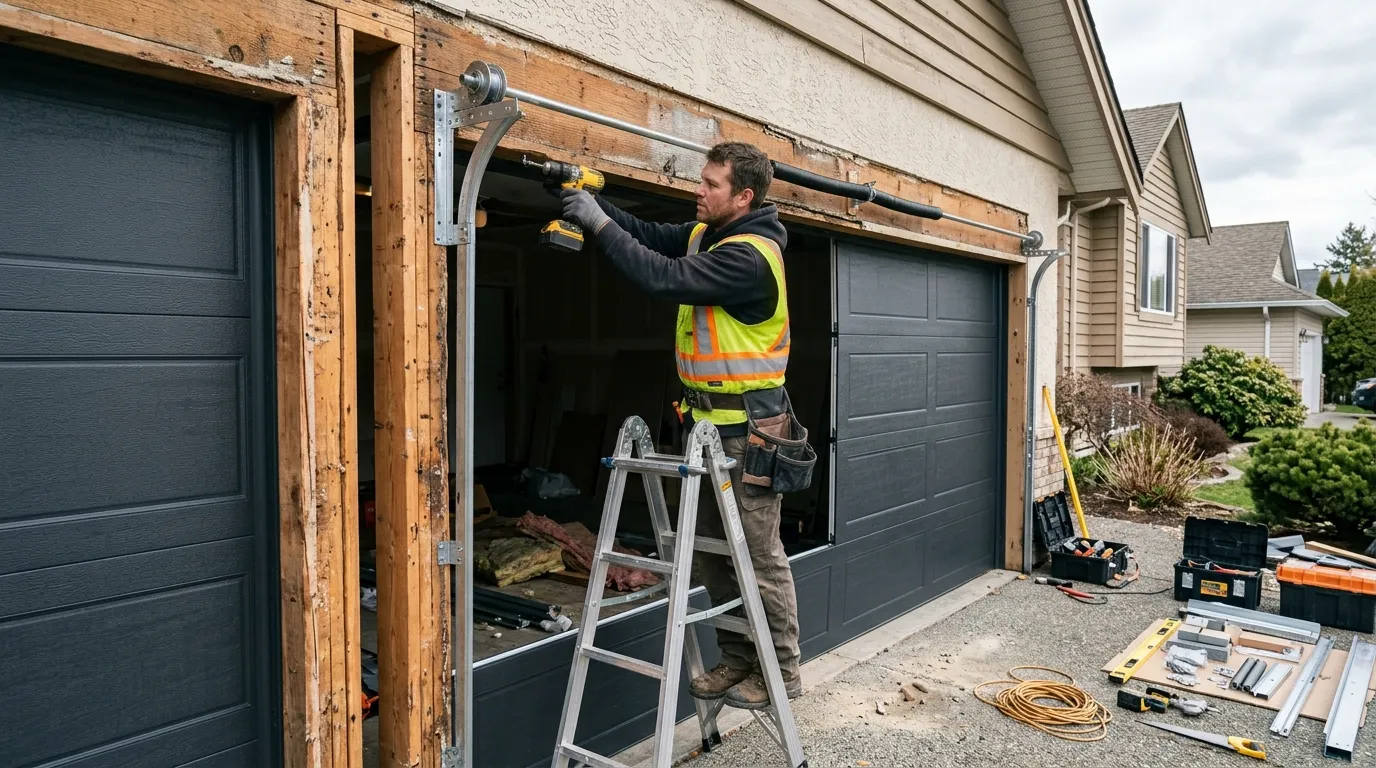
Most houses on this side of the state went up between 1944 and 1993, with the bulk of that stock dating to the 1960s and '70s. That matters because a door that's fine on a mild fall day can bind or drop a spring the first hard freeze of the year. If your door is slow to open, sags on one side, or the opener strains and stalls partway up, that's worth a call rather than a wait. A door that won't open at all, or one where a cable has come off the drum, isn't a DIY fix - the spring is under load and can hurt you. We don't do same-day emergency work as a standing promise; if the job needs a part we don't carry on the truck, it may sit a day or two. That's the honest limit of what we can guarantee on the phone.
A lot of the calls we get from the older sections of town - the 1960s and '70s builds especially - are hardware that's simply outlived its design life, not damage. Original torsion springs from a house built in the Johnson-era boom are pushing sixty years old in some cases. If your door has never had the springs replaced and the house is from that stretch, get it looked at before it fails on its own schedule.
What Is Going On
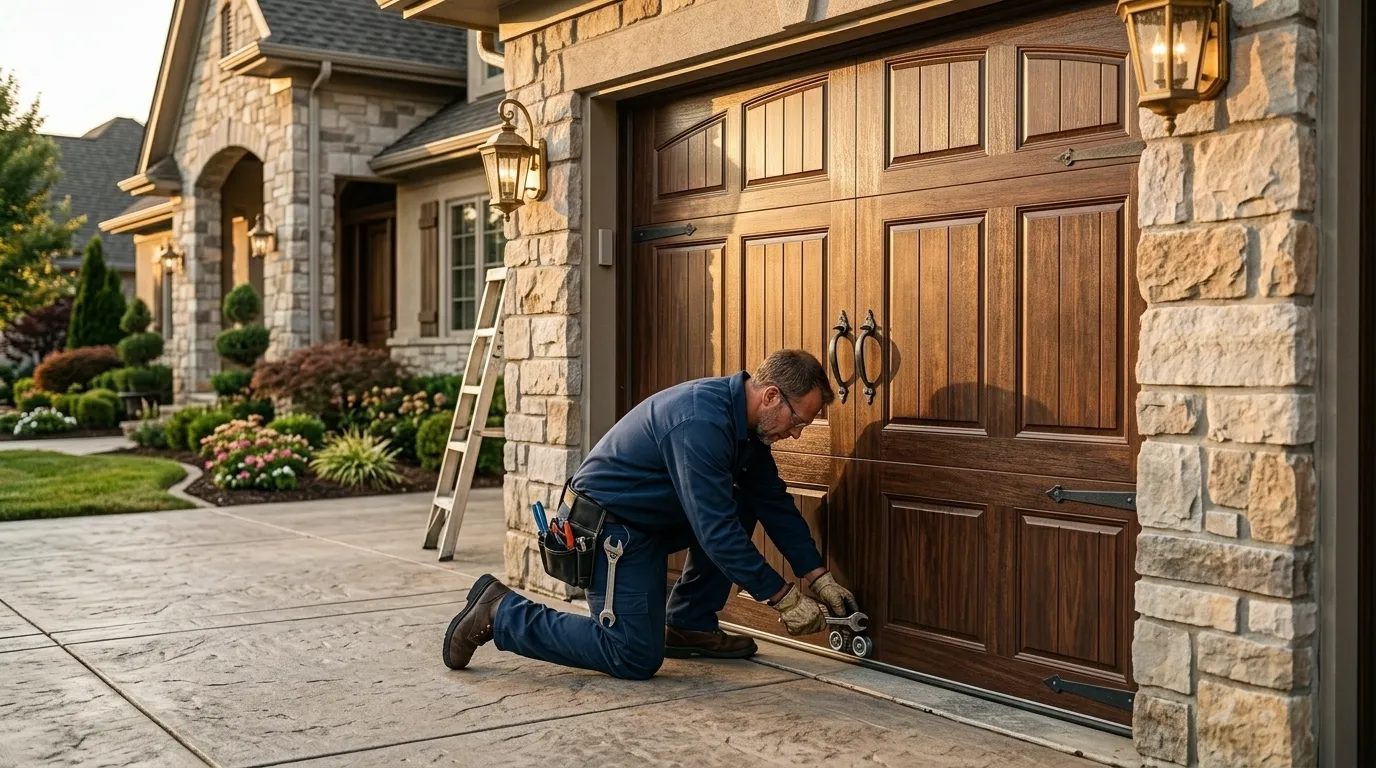
On a typical call we're checking the spring tension, the track alignment, the roller condition, and the opener's force settings, in that order. Doors installed during the 1944-1993 building run in this area were mostly built to specs and hardware standards that have since changed - lighter gauge track, single-loop cable systems, openers with no rolling-code security. None of that means the door is unsafe today, but it does mean parts wear differently than what you'd find on a door installed in the last ten years.
With a median build year around 1977, we see a consistent pattern: galvanized track that's pitted from decades of temperature swings, springs that were sized for the original door weight and never re-rated after a heavier insulated replacement door went in, and openers bolted to framing that's shifted slightly as the house settled. None of these show up as one dramatic failure - they show up as a door that's gotten a little louder, a little slower, and a little more likely to jump the track, over a few years. That gradual pattern is the biggest tell that we're dealing with age, not a fluke.
How Local Conditions Play In
Wenatchee sits in a cold-moderate climate band, and that shows up in service calls every winter. Steel hardware contracts in cold weather, which tightens tolerances that were already snug on a forty or fifty-year-old track. We see openers struggle more in the first cold snap of the season than at any other point in the year, simply because grease that was fine at 60 degrees stiffens up once temperatures drop. Lubricant type matters more here than it would somewhere with a milder winter - the wrong grease turns waxy and slows the door right when you need it to move.
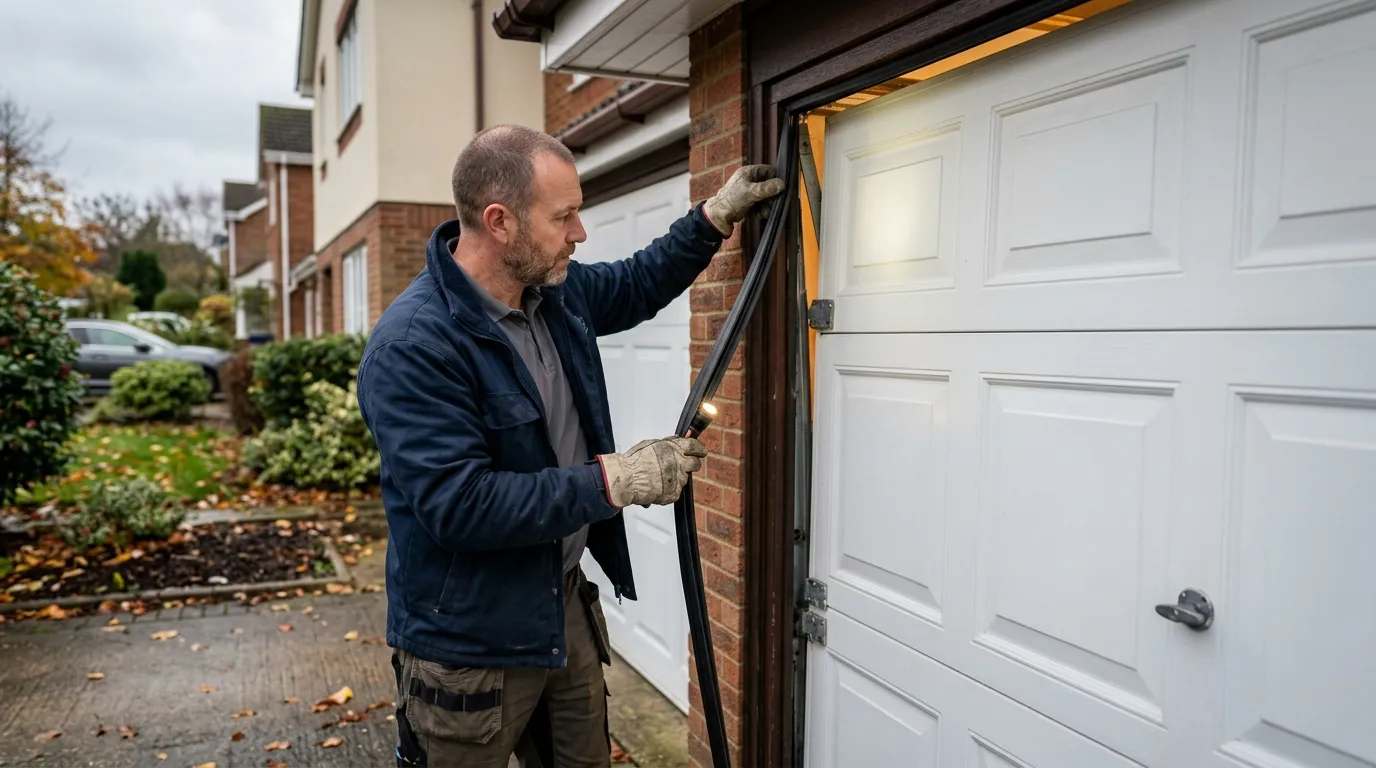
Across the area - East Wenatchee, South Wenatchee, Sunnyslope, and out toward Cashmere - we're working on the same era of housing stock with the same cold-weather pattern, so the calls tend to repeat: stiff opener chains, springs that lose a little tension every winter cycle, and weatherstripping that's cracked and letting more cold air in than the homeowner realizes. None of this is dramatic. It's steady wear from a climate that puts a real seasonal swing on steel and rubber parts, on a housing stock old enough that most of it has never been touched.