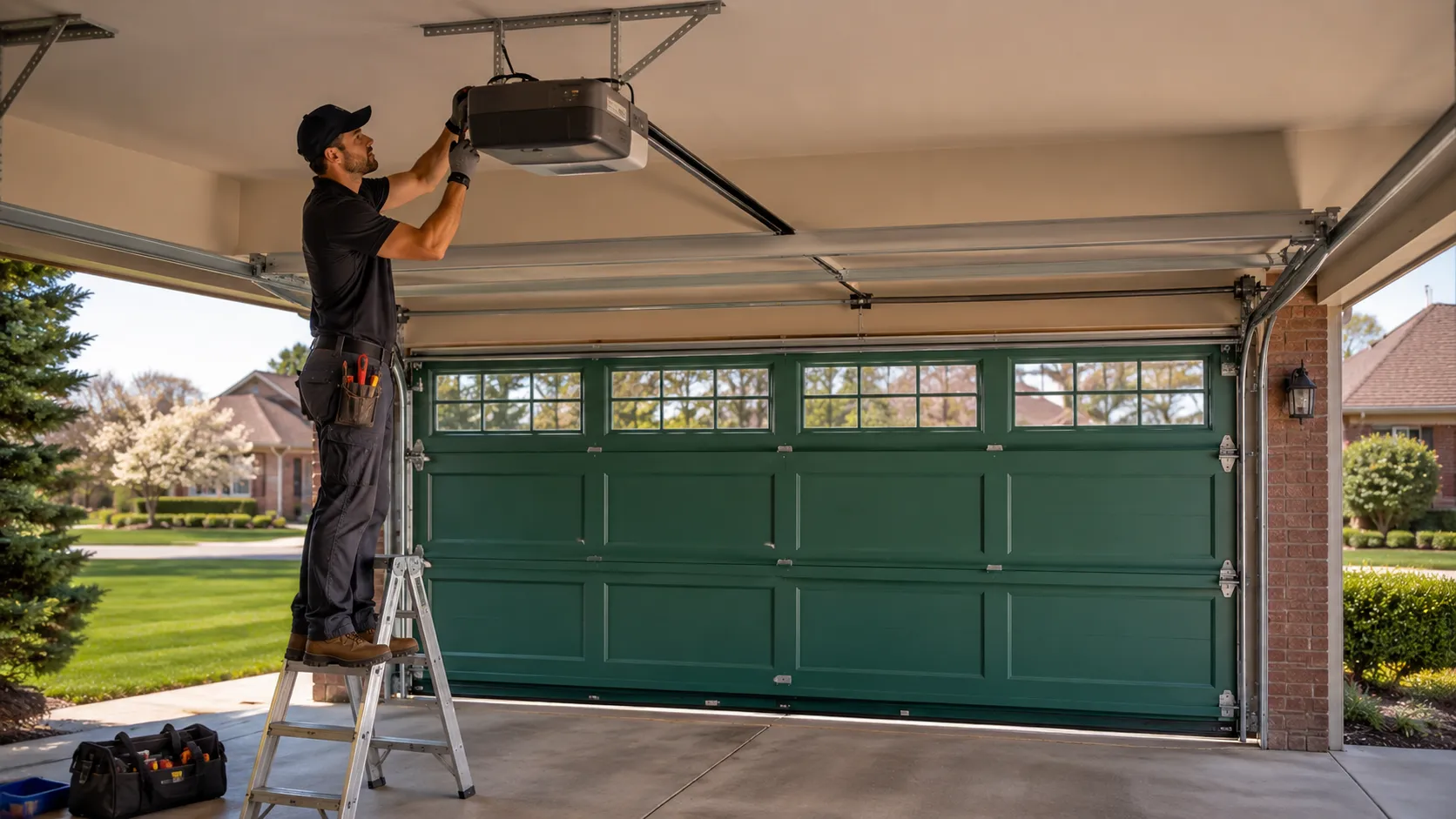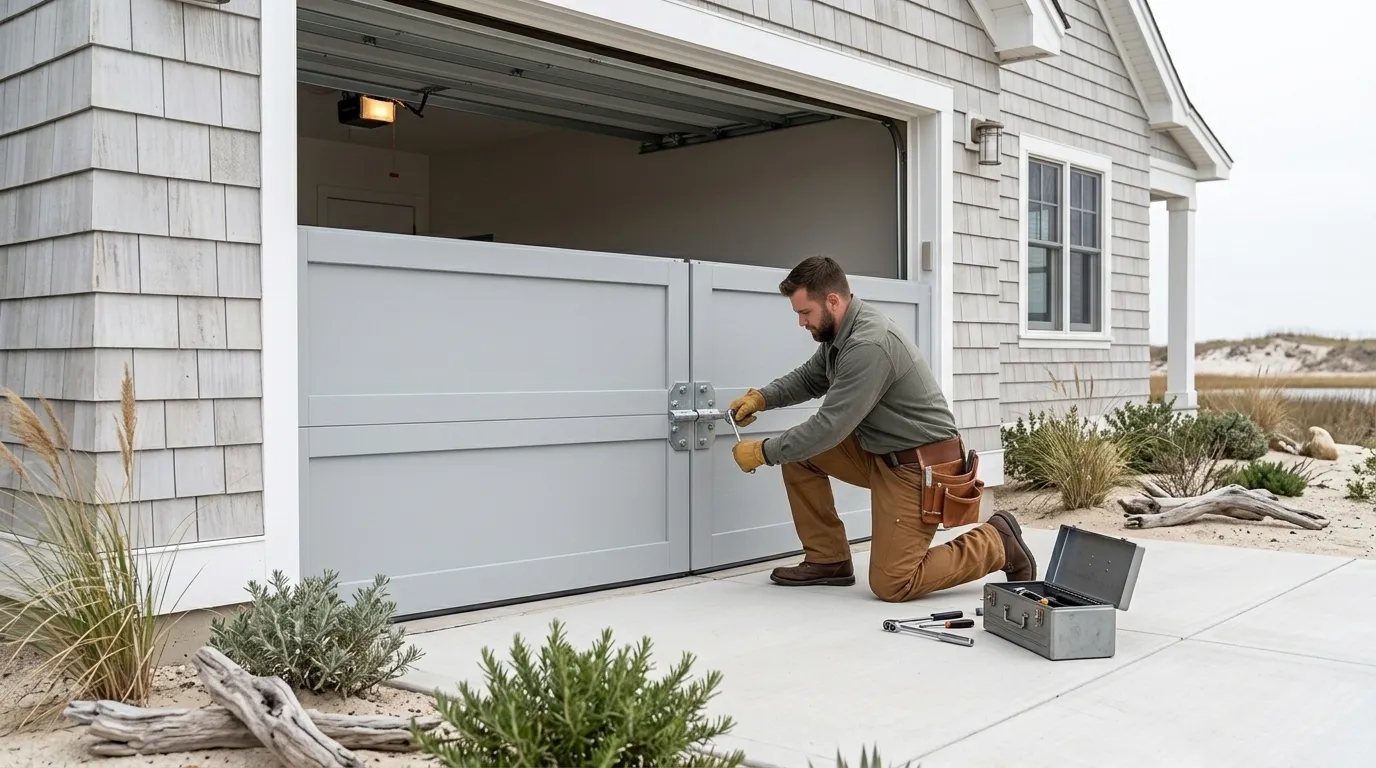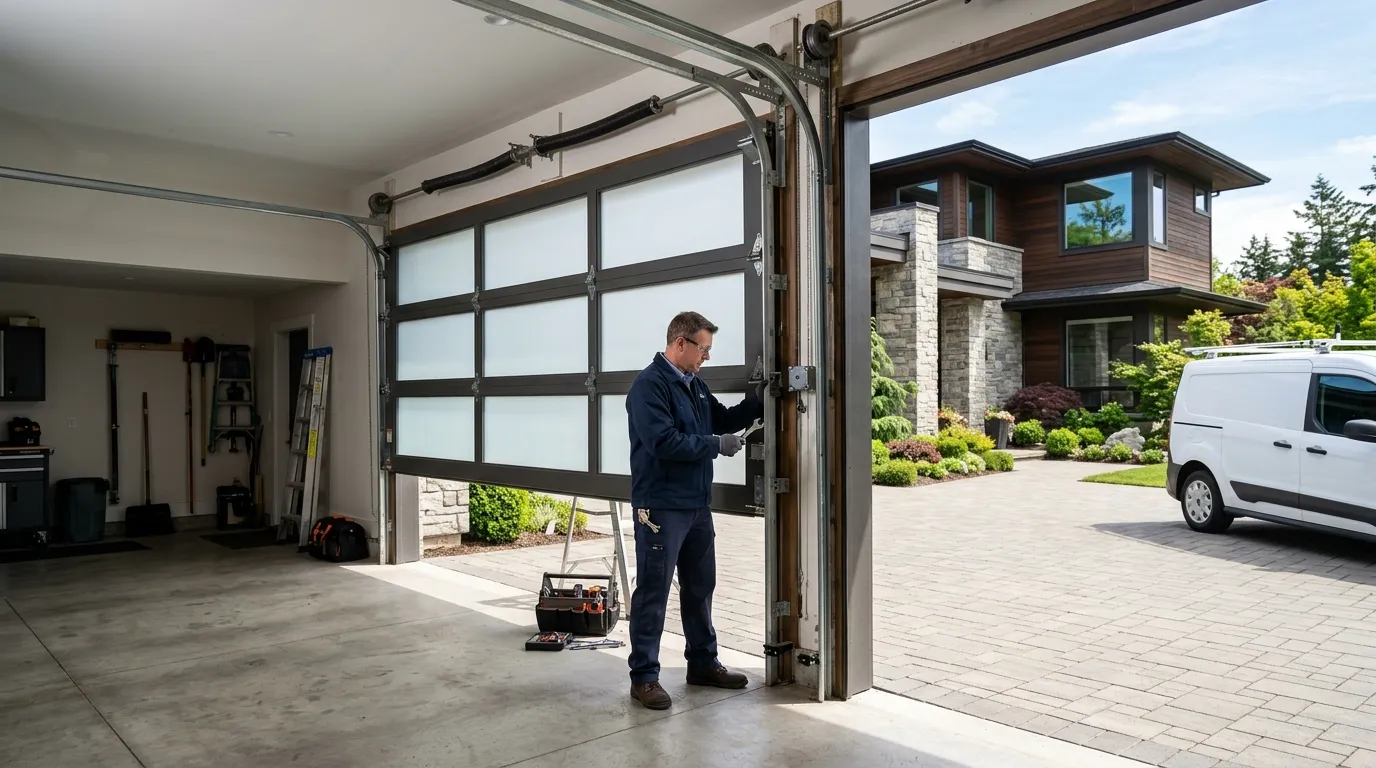
Why This Fails Locally
Most of the doors we get called out on in Wenatchee sit on houses built between 1944 and 1993, with the bulk from the 1960s and '70s, and a median build year of 1977. That matters because torsion springs, drums, and rollers from that era were sized for the doors of the time - lighter panels, simpler openers, less insulation. Fifty-plus years of daily cycling on original or first-replacement hardware is a long run for any spring.
Wenatchee's climate band is cold-moderate, which is a different failure driver than heat. Cold steel is stiffer and less forgiving; a spring that's already fatigued from decades of use can catch and snap on a below-freezing morning instead of just weakening gradually. Grease also thickens in the cold, so rollers and hinges that were already dry from age bind harder in winter than they would in a mild-climate town.
Across the roughly 4,894 owner-occupied houses in this service area, that combination - an older, consistent build era plus a real winter - shows up as the same handful of complaints on repeat: a door that groans going up, a spring that lets go without warning, or an opener straining against hardware it was never matched to.
What the Fix Involves
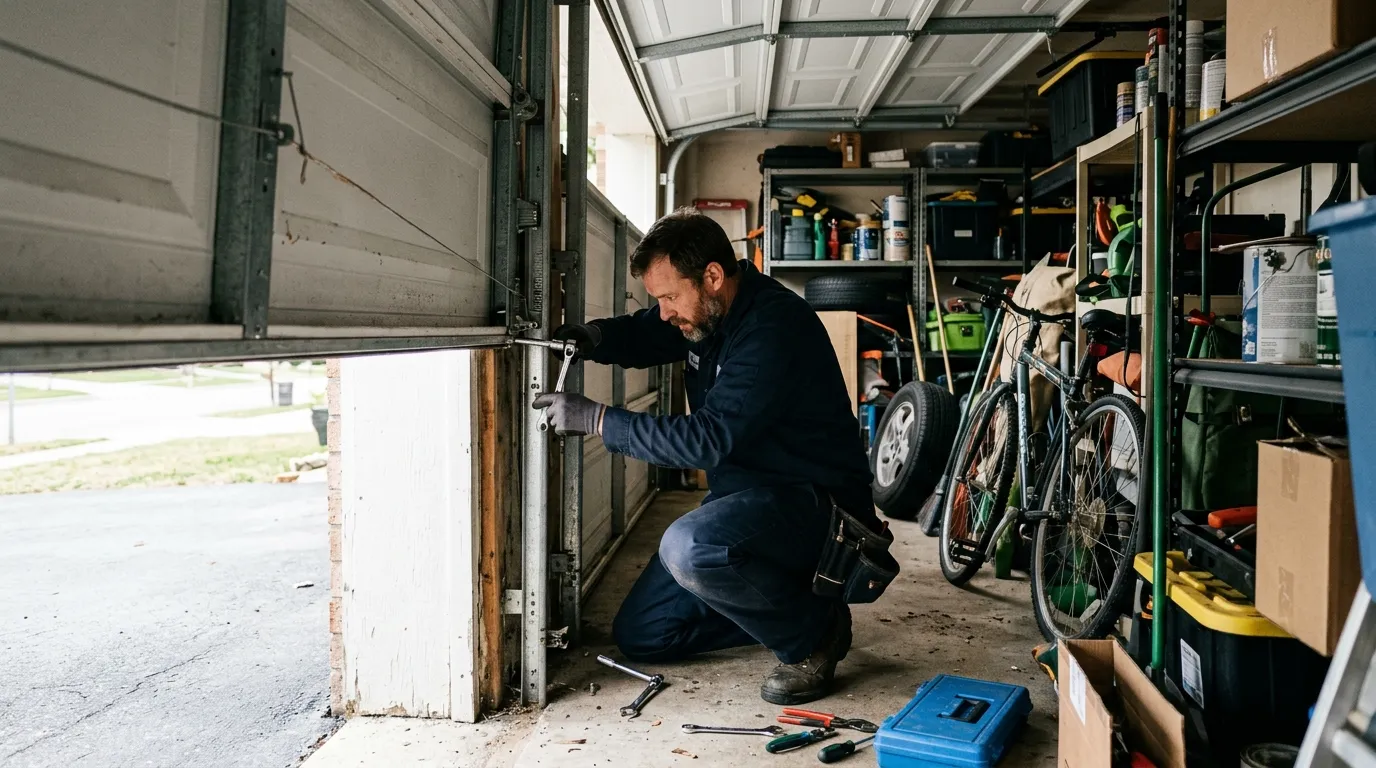
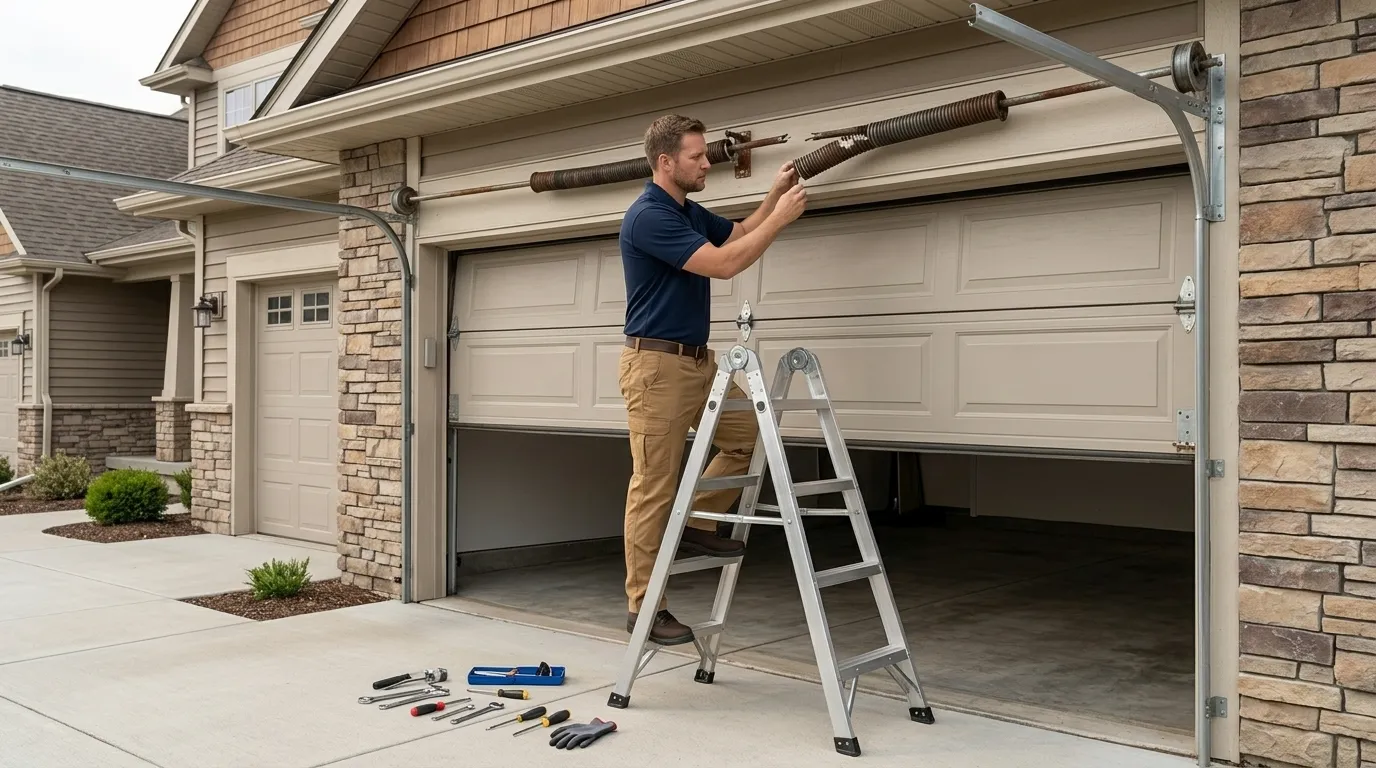
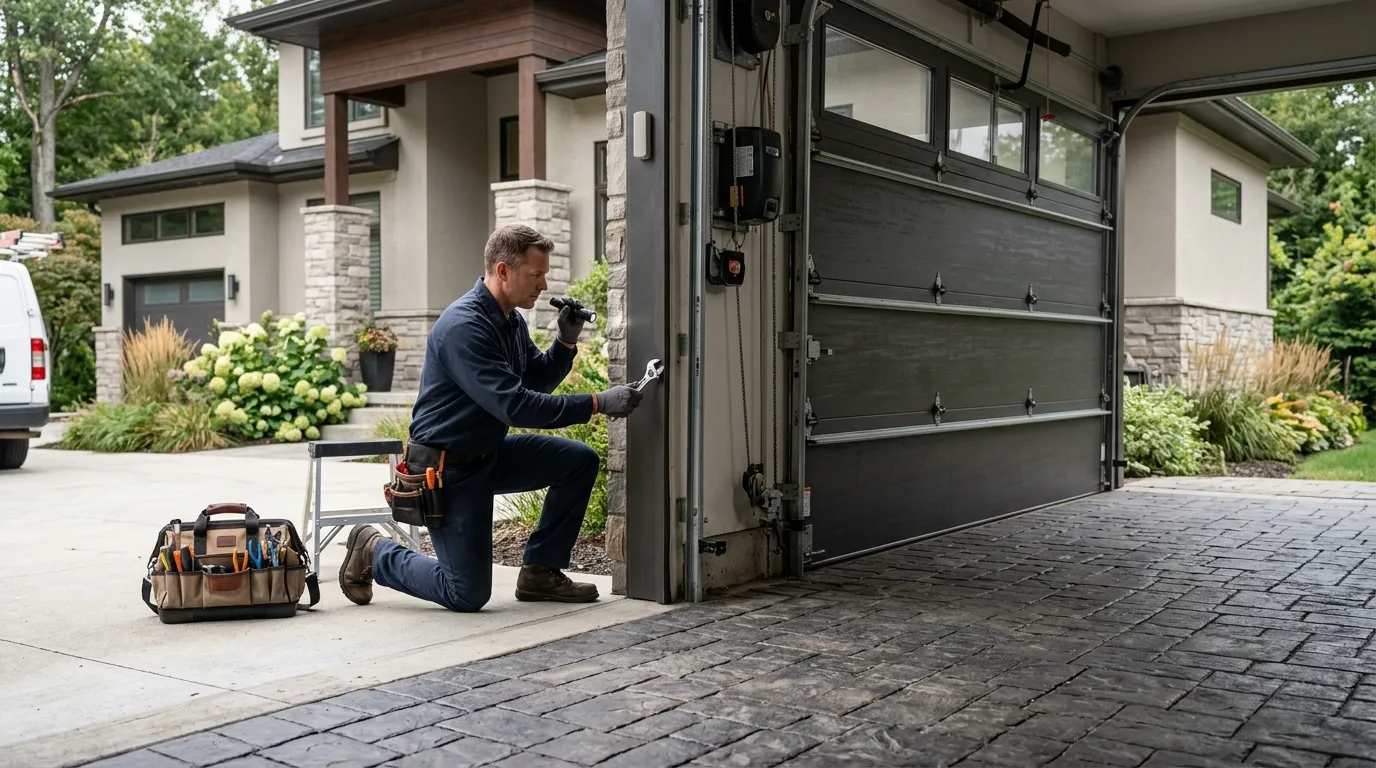
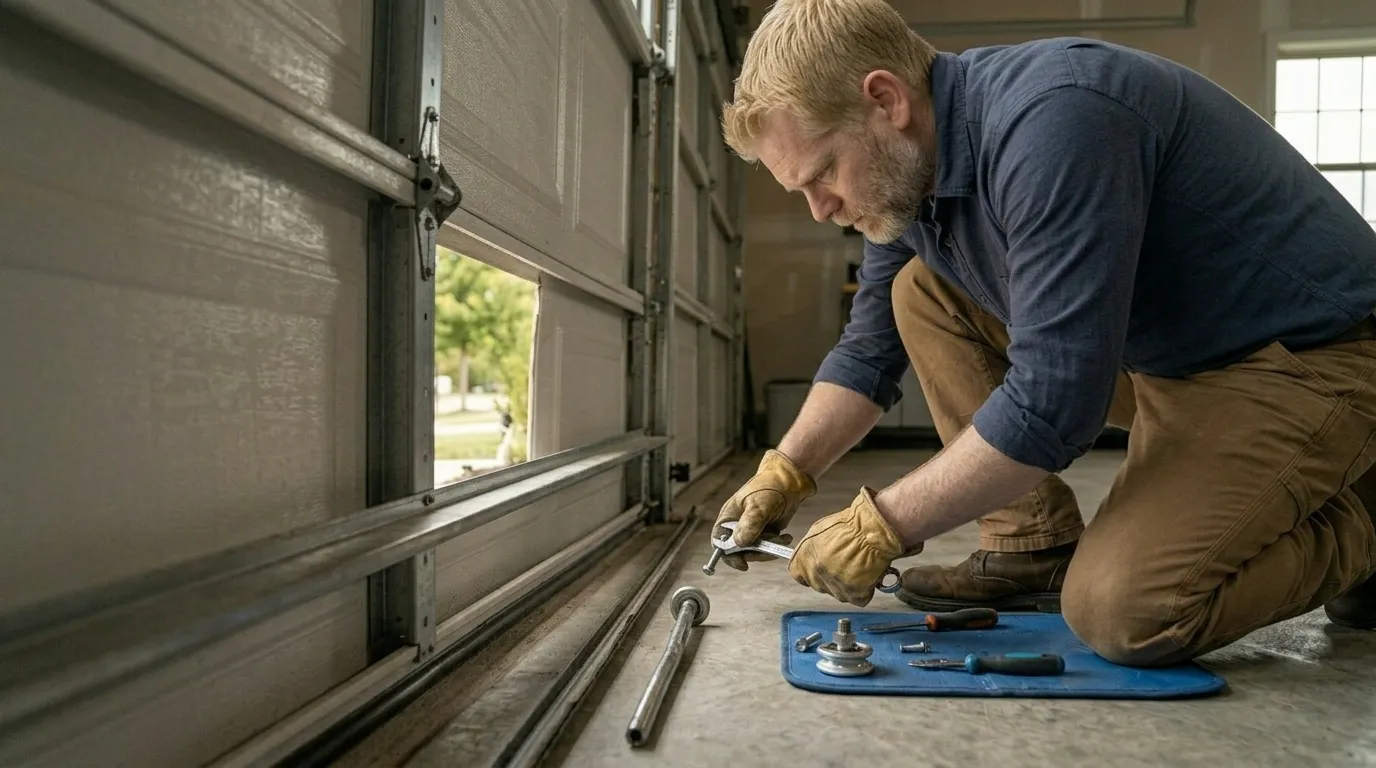
We start by checking what's actually original versus what's been swapped already, since a lot of these 1960s-70s doors have had at least one partial repair over the decades that doesn't match the rest of the system. That means matching spring wire size and wind to the door's actual weight, not just grabbing a stock replacement.
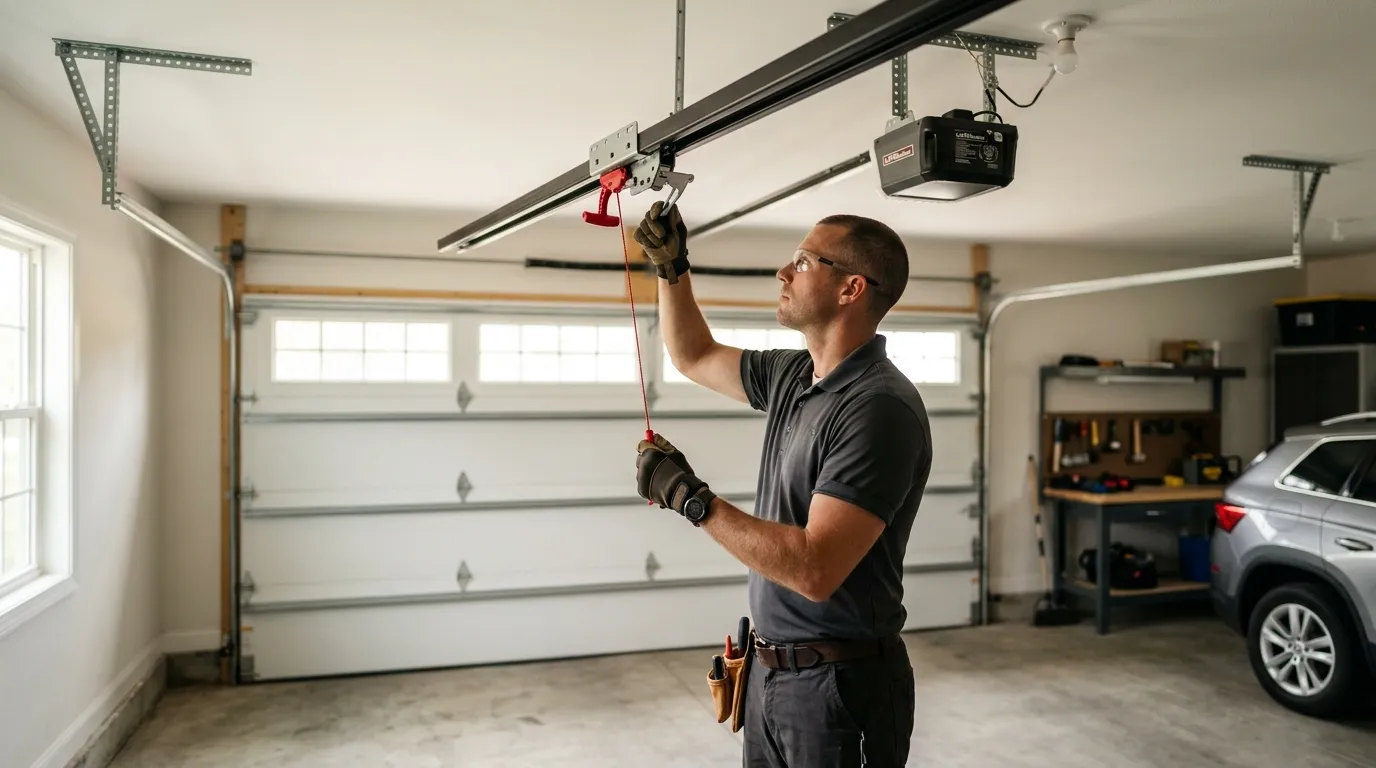
On houses from this build era we also check the track alignment and the header bracket, since older framing has settled over fifty-plus years and a track that was square in 1977 often isn't square now. Rollers get inspected for the flat spots that cold-season binding causes, and we check whether the opener - if it's been upgraded since the original door - is actually rated for the panel weight it's lifting.
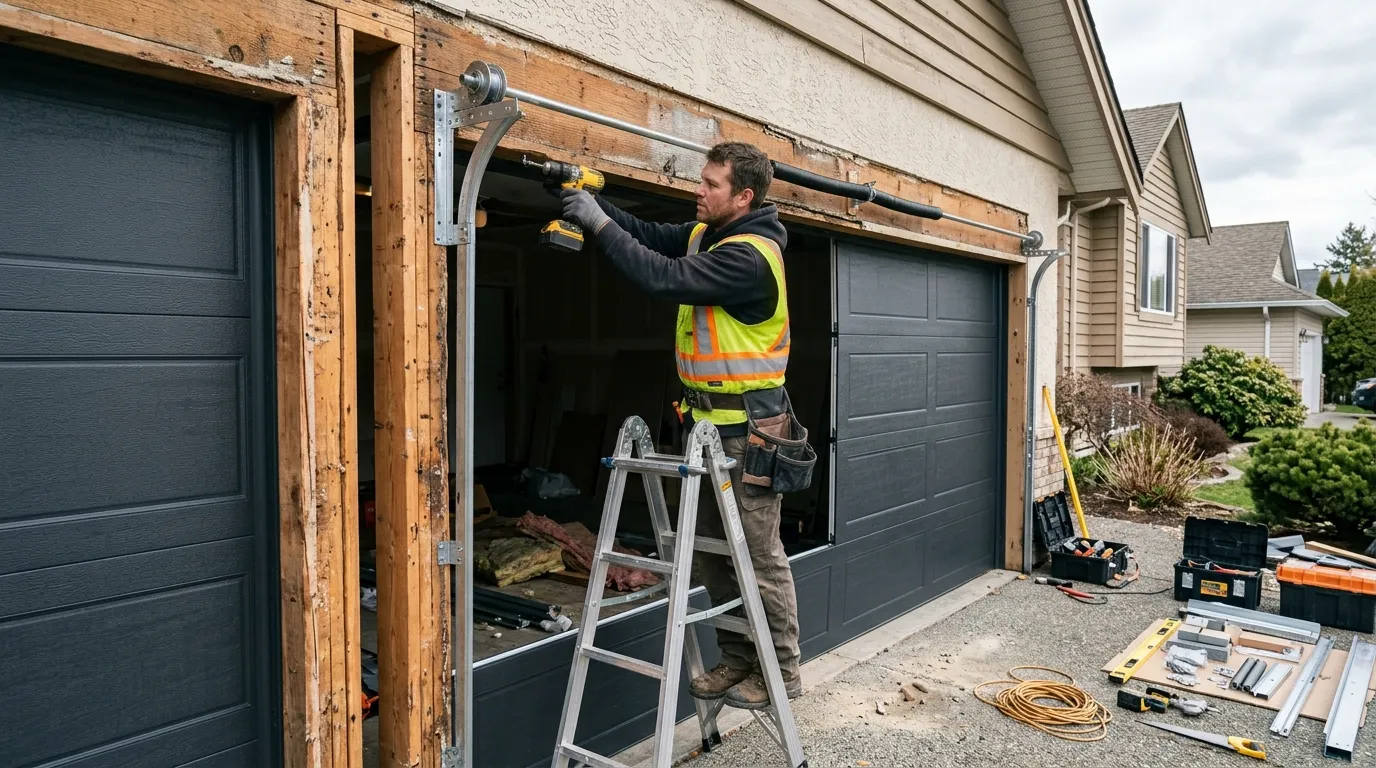
We don't replace what doesn't need it. If the door itself is sound and it's one spring or one section of track, that's the job. If the panels are original steel from the 1970s and the door's been fighting the opener for years, we'll tell you straight that patching one part isn't worth it and replacement is the better call.
How It Shows Up
On a house with original or near-original hardware, the first sign is usually noise - a grinding or popping when the door travels, especially on the first cold morning after a stretch of freezing nights. Sometimes it's a door that starts up fine and then stalls a foot off the ground, which is the opener fighting a spring that's lost most of its tension.
The more urgent version is a spring letting go outright - a loud bang, and the door drops or won't move at all. That's more common on these older systems in winter because fatigued steel and cold don't mix well.
We cover Wenatchee and the areas around it - East Wenatchee two miles out, South Wenatchee at three, Sunnyslope at five, Cashmere at nine, and out to Entiat, Waterville, and Leavenworth - and the same age-of-housing pattern holds across all seven. If your door's making noise it didn't make last year, that's worth a call before it becomes a dead-door morning.