When to Call Someone
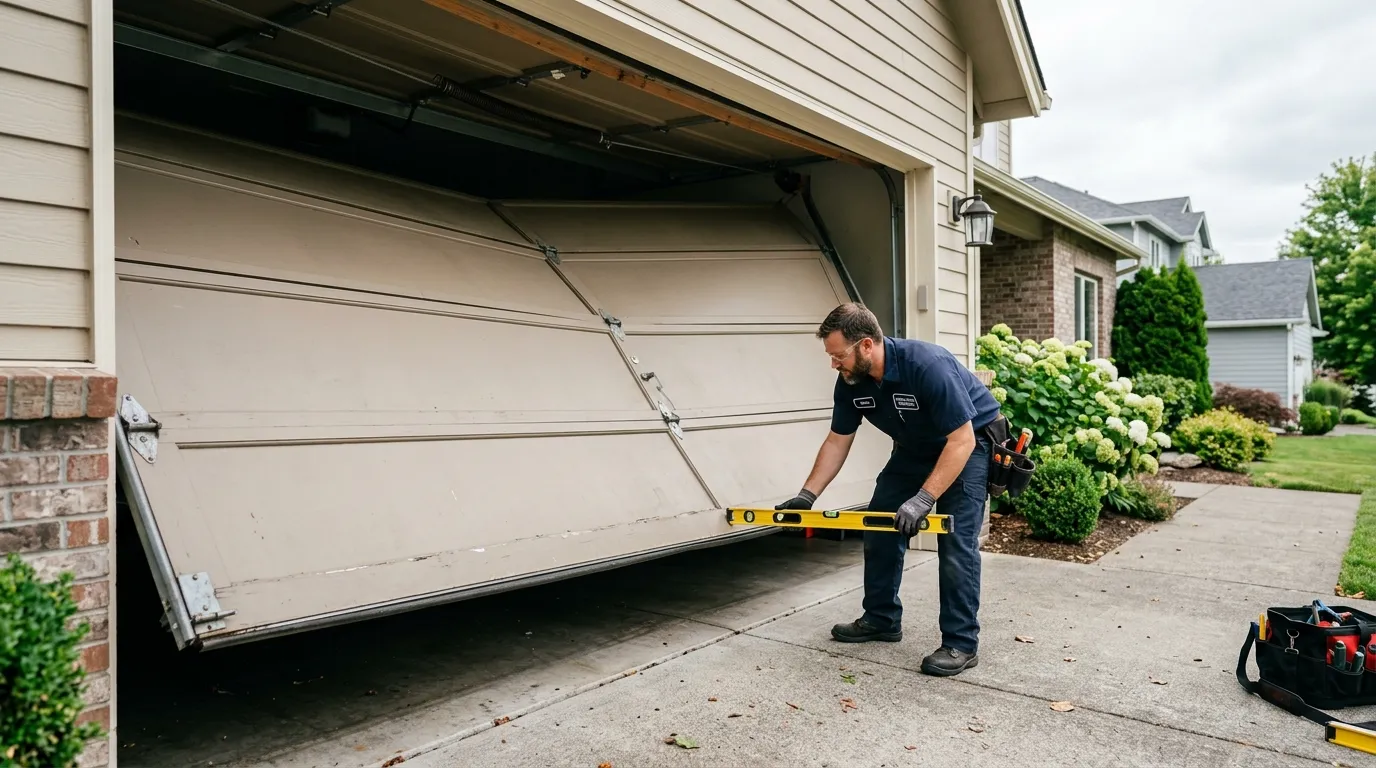
If the door won't budge, sags on one side, or you hear a bang followed by the opener straining and going nowhere, stop and call. That bang is almost always a torsion spring letting go, and a spring under tension is not a DIY job - it can take a finger or worse.
A lot of the houses here went up between 1944 and 1993, median build year 1977, which means a good share of the doors still running around town are on original torsion hardware from that era. Parts for a 1970s door aren't always sitting on a shelf, so if your spring is original to the house, expect the tech to source a match rather than grab one off a truck.
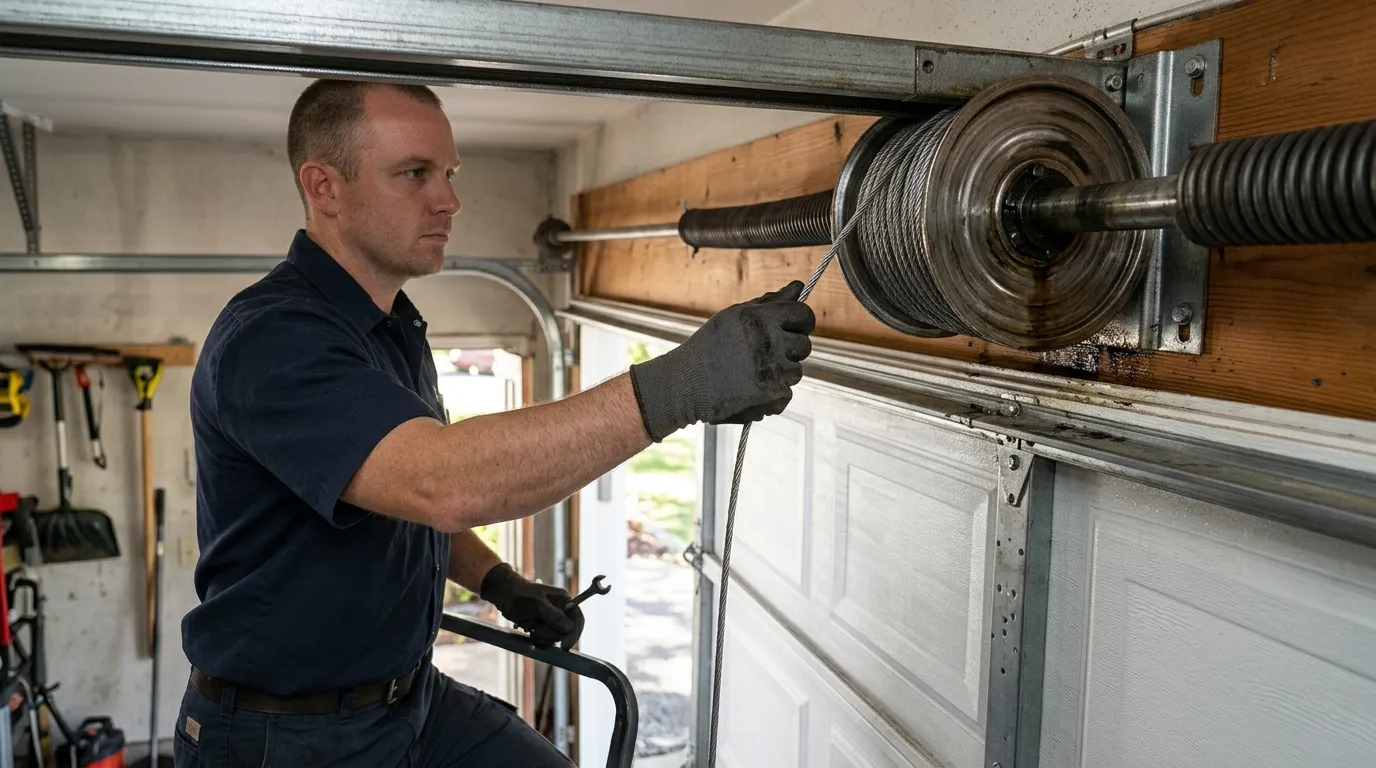
We don't do same-day miracles on odd-size springs from that period, and we won't pretend a patch job on 45-year-old hardware is a long-term fix. If the coil, the bearing plate, and the cable drum are all showing their age at once, replacement of the whole assembly usually costs less over time than repeated calls.
Call when the door is stuck shut, when a cable has jumped the drum, or when the opener runs but the door doesn't move - those are safety issues, not maintenance items.
What Is Going On
A torsion spring stores energy by twisting on a shaft above the door. Cold makes the steel less forgiving - a spring that's been fatigued for years can hold through a mild fall and then snap on the first hard cold morning, because the metal has less give right when the door is heaviest to lift.
Across the seven named areas of mostly 1960s-70s housing stock in this service area, we see the same failure pattern: original springs, original tracks, decades of use, and a sudden cold spell that finds the weak point. It's not that the cold breaks the spring on its own - it's that a spring already near the end of its life doesn't have the reserve left to handle the added strain of stiff, colder steel and a heavier pull first thing in the morning.
Rollers and hinges age the same way. Nylon rollers from that era get brittle, and a stiff roller in a track built for a 45-year-old door binds harder once the grease inside it thickens up in the cold. That binding puts extra load right back on the spring, which is often the last domino to fall.
How Local Conditions Play In
This area sits in a moderate cold climate band, which means winters cold enough to stiffen steel and thicken grease, but not the kind of extreme cold that changes what hardware you'd install in the first place. That's enough, though, to matter for a door that's already worn.
With median household income at $75,854 across roughly 10,166 households and 4,894 owner-occupied houses in the service area, a lot of homeowners here are weighing a spring repair against a full opener or door replacement on a house that's 50 years old. Both are reasonable calls depending on what else is failing.
The honest answer is that cold weather doesn't cause spring failures on its own - it exposes hardware that was already near the end of its working life. A door on a well-maintained newer track handles a cold morning fine. A door running original 1970s-era torsion hardware is the one that goes on the coldest morning of the year, because that's when the extra strain finally finds the weak link.