How That Shows Up in the Door
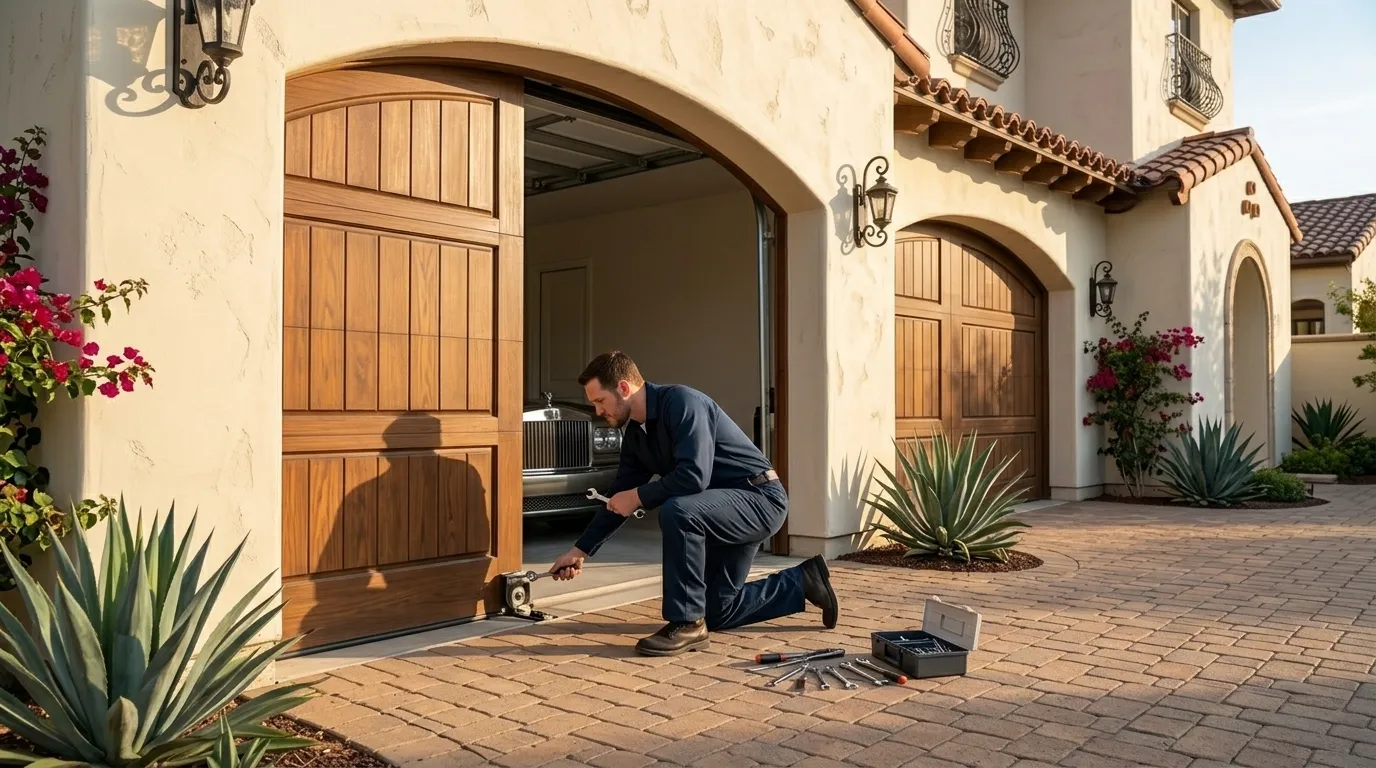
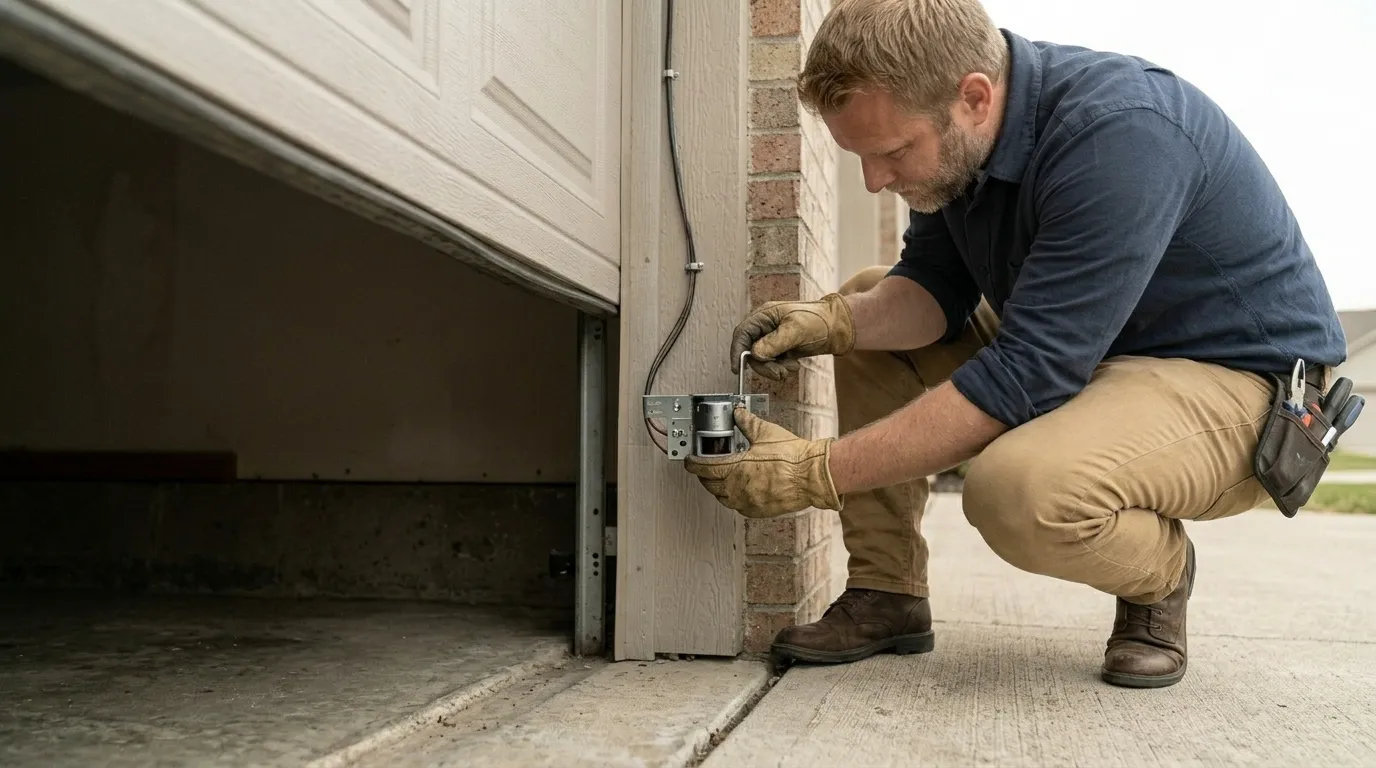
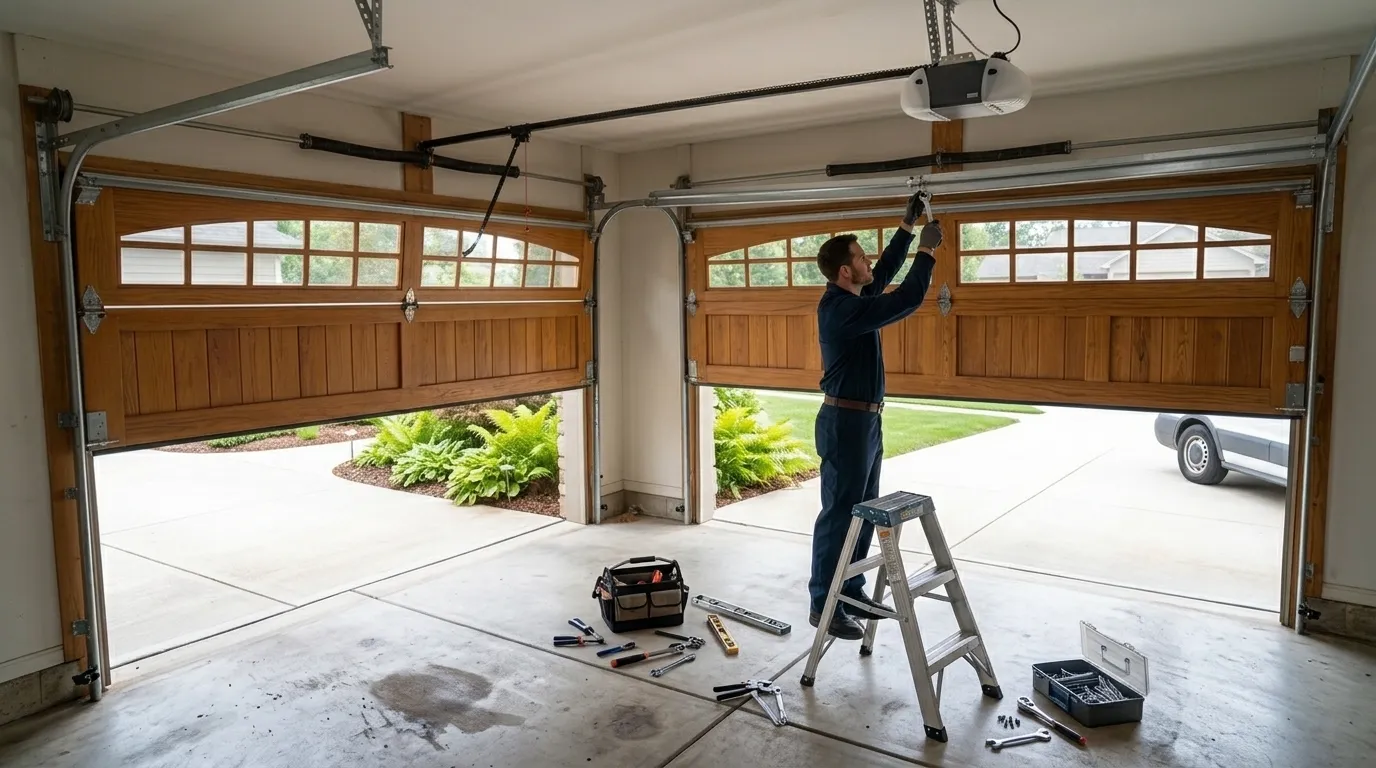
Cashmere's housing stock centers on 1963, which puts it a good decade or more ahead of the broader Wenatchee service area's 1977 median. That gap matters more than it sounds like it should. A door installed in the early-to-mid 1960s usually came with a lighter steel section, smaller-radius track, and a torsion spring sized for a door that weighed less than what most owners have since bolted on top of it - added insulation, a heavier replacement panel, sometimes a full steel slab swapped in for the original. The spring never got upsized to match. So the symptom we see out here isn't the same one we see on a 1985 house in town: it's a door that closes hard, bounces at the bottom, or needs a shove partway up because the spring is quietly undersized for the load it's been carrying for years. Openers from that era, where they haven't already been replaced, also tend to run on chain drive with a drum-style reversing mechanism that doesn't meet current safety expectations. None of this is a defect in the house - it's just what 60 years of incremental changes does to hardware nobody re-specs along the way.
What Neighbours Usually Call About
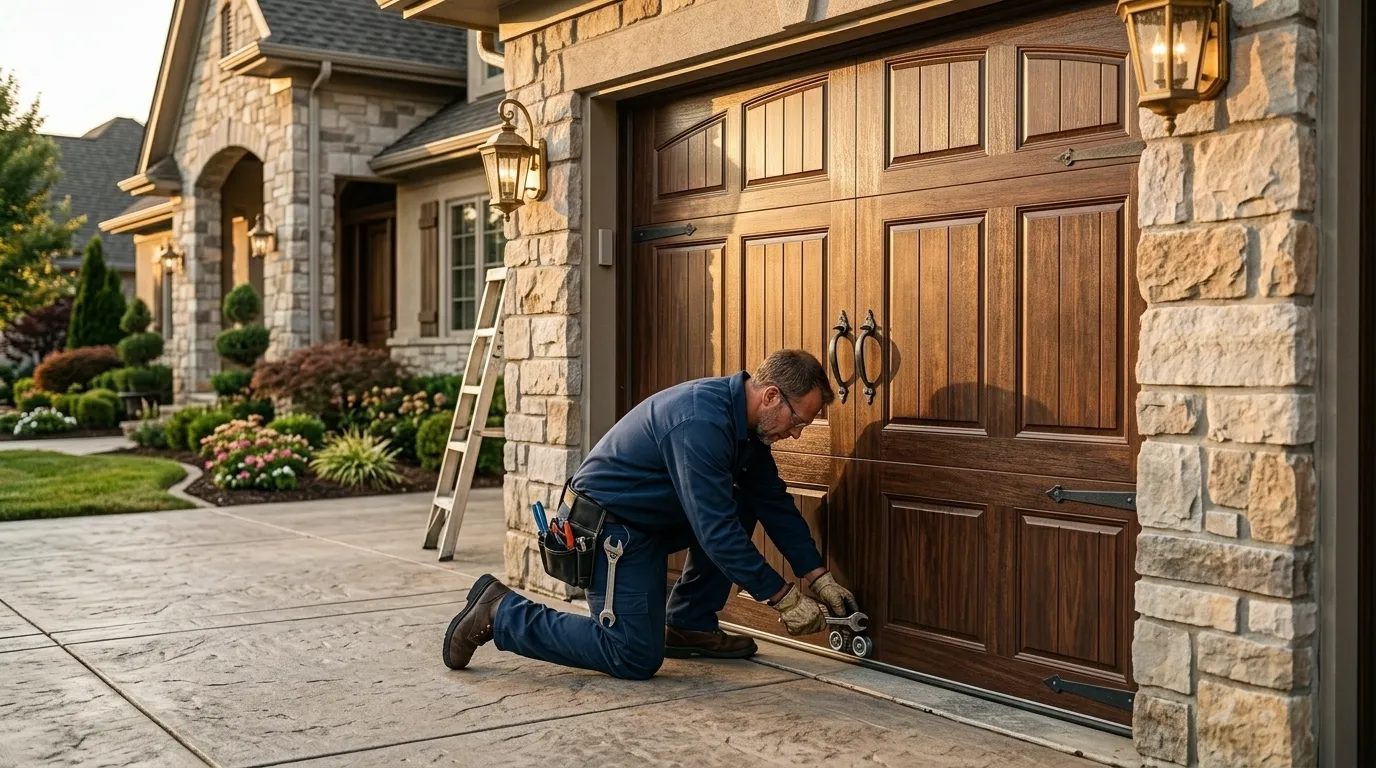
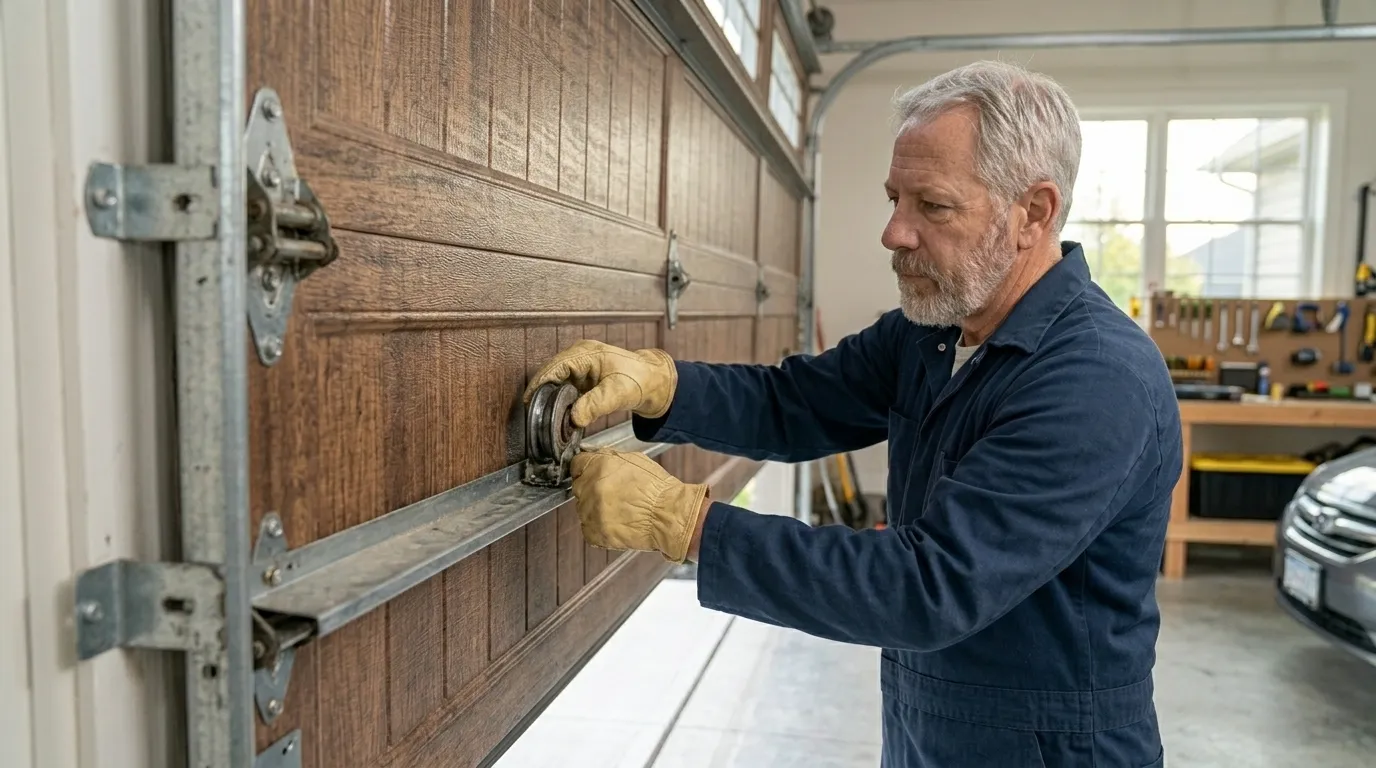
The calls we get from this side of the valley skew toward spring failure and hardware fatigue rather than opener electronics. A torsion spring rated for the original door weight, running for six decades of temperature swings in a cold-moderate climate, is doing more cycles of contraction and expansion than a spring in a milder zone - metal fatigue shows up as a sudden snap, usually on a morning when it's cold enough that the steel's lost some flex. We also get track and roller calls: steel rollers from a 1960s install, never upgraded to nylon, grinding and binding as the track shifts slightly out of parallel over decades of settling. Cable fraying at the bottom bracket is common too, especially on doors that have seen one or two panel replacements without a full hardware check to match. None of these are exotic problems. They're the ordinary wear pattern of an older door that's mostly original, and they're very fixable without replacing the whole unit.
This Area's Housing
Cashmere runs about 1,149 households, smaller than the wider service area's 10,166, and a median household income of $63,825, below the area-wide $75,854. That income gap tends to show up in how repairs get approached here: more owners ask us to fix what's failed rather than replace the whole door, and more jobs are single-spring or single-panel work rather than full system swaps. It fits the housing pattern too - a 1963 median build year means a lot of these garages were built with dimensions and door sizes that predate the wider double-door format common in newer construction, so single-car torsion setups are more common than you'd find on the newer end of the region's stock. None of that changes what a repair costs to do right, but it does mean the conversation usually starts with 'what's broken' rather than 'what should we upgrade.'