Why This Fails Locally
Most of the housing across Wenatchee's service area went up between 1944 and 1993, with the median landing around 1977. Across the seven named neighborhoods we work in, the bulk of that stock is 1960s and 70s vintage, which means a lot of garages were framed for hardware and door sizes that haven't been made in decades. Rough openings from that era often run narrower than what current doors are built to, and the original track and header setups weren't designed for anything heavier than the single-layer steel doors that came with the house.
Wenatchee sits in a cold moderate climate band, so freeze-thaw cycling works on old seals, wood jambs, and steel that's been flexing for fifty-plus winters. A door that was fine in 1978 has usually outlived its springs, its rollers, and often its opener two or three times over. When a homeowner calls about a door that binds, drops crooked, or won't seal at the bottom, the root cause is almost always this mismatch: 2020s door expectations meeting a 1970s opening. Installation here isn't just swapping panels - it's reconciling a modern door with an old frame.
What the Fix Involves
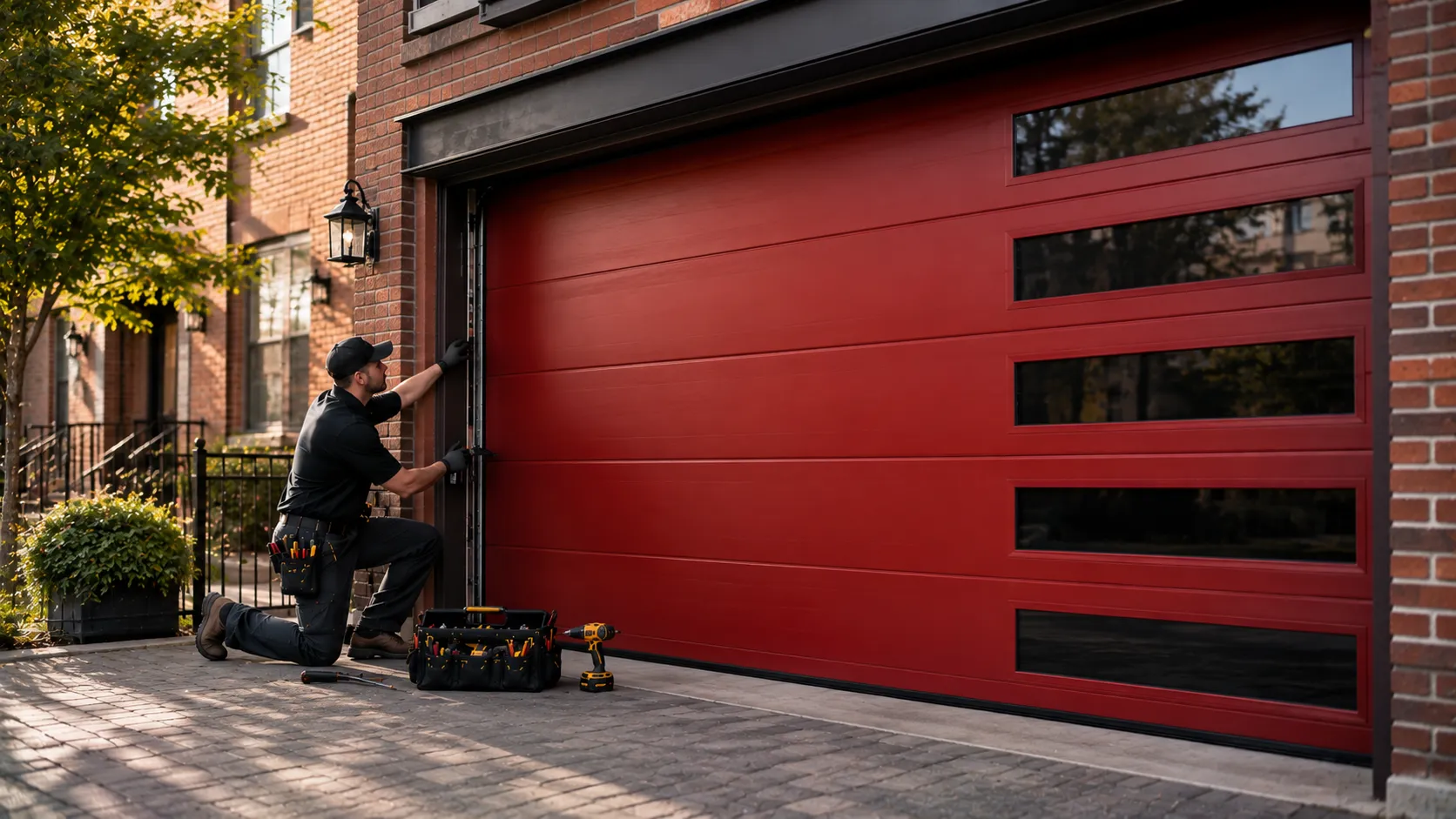
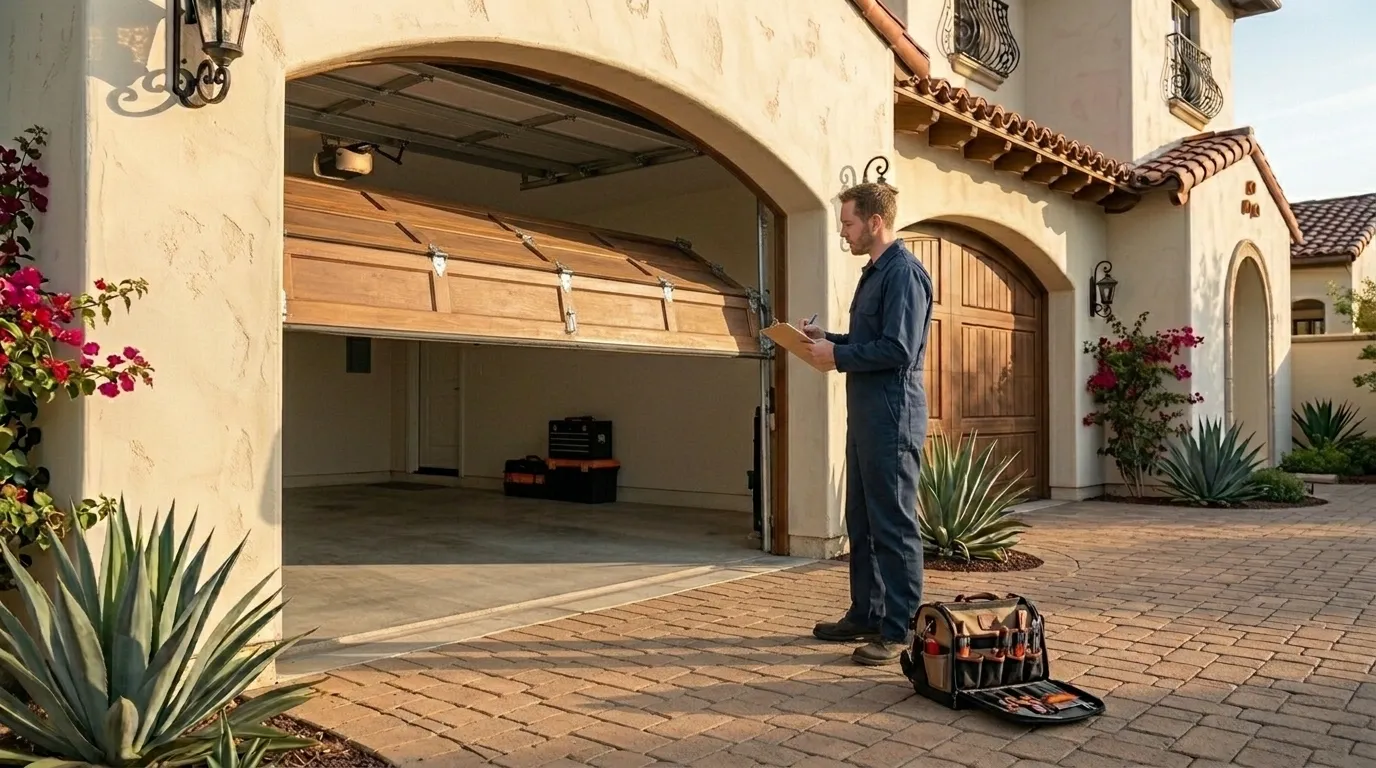
On a house from Wenatchee's 1960s-70s wave, the first job is measuring the actual rough opening, not assuming it matches a catalog size. Jambs settle, headers sag a little, and old framing is rarely square after five decades. We check the opening, the header height, and the track path before we ever talk door models.
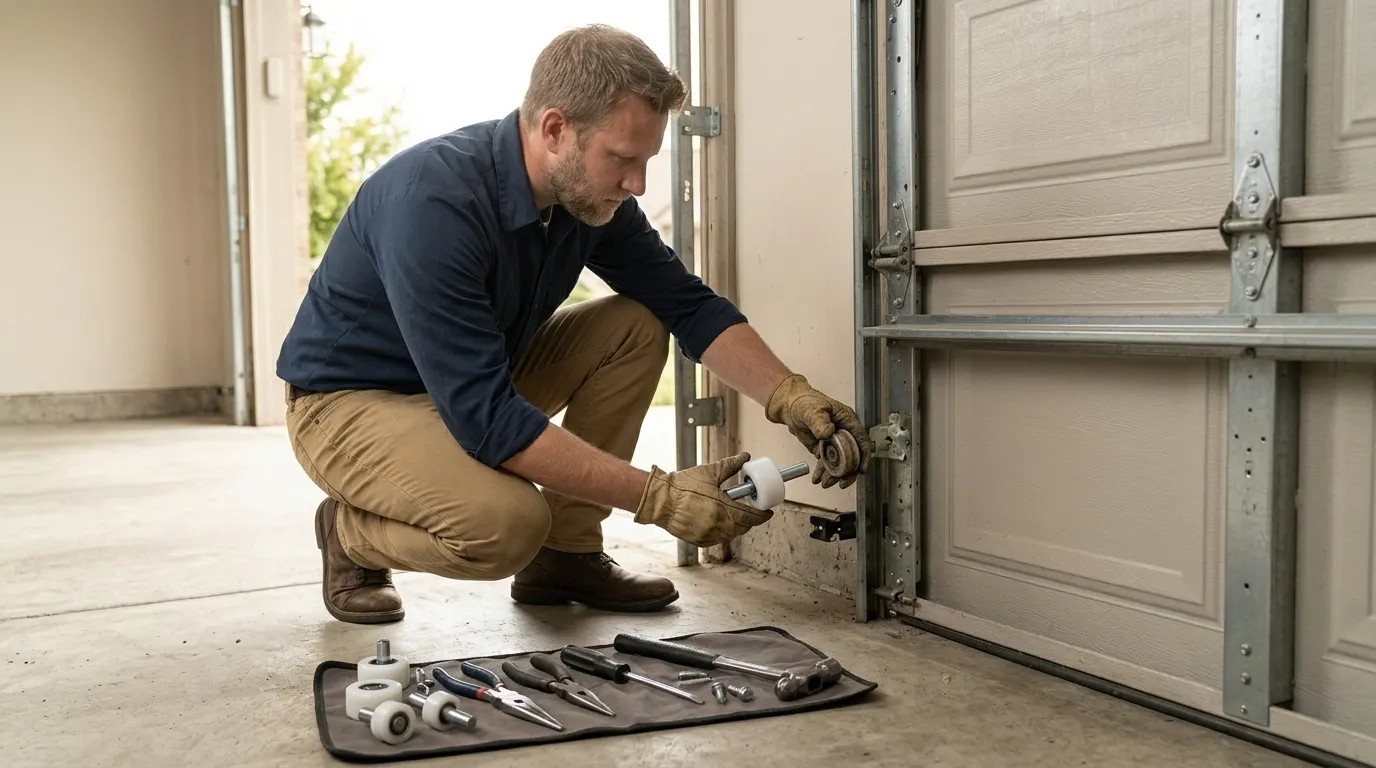
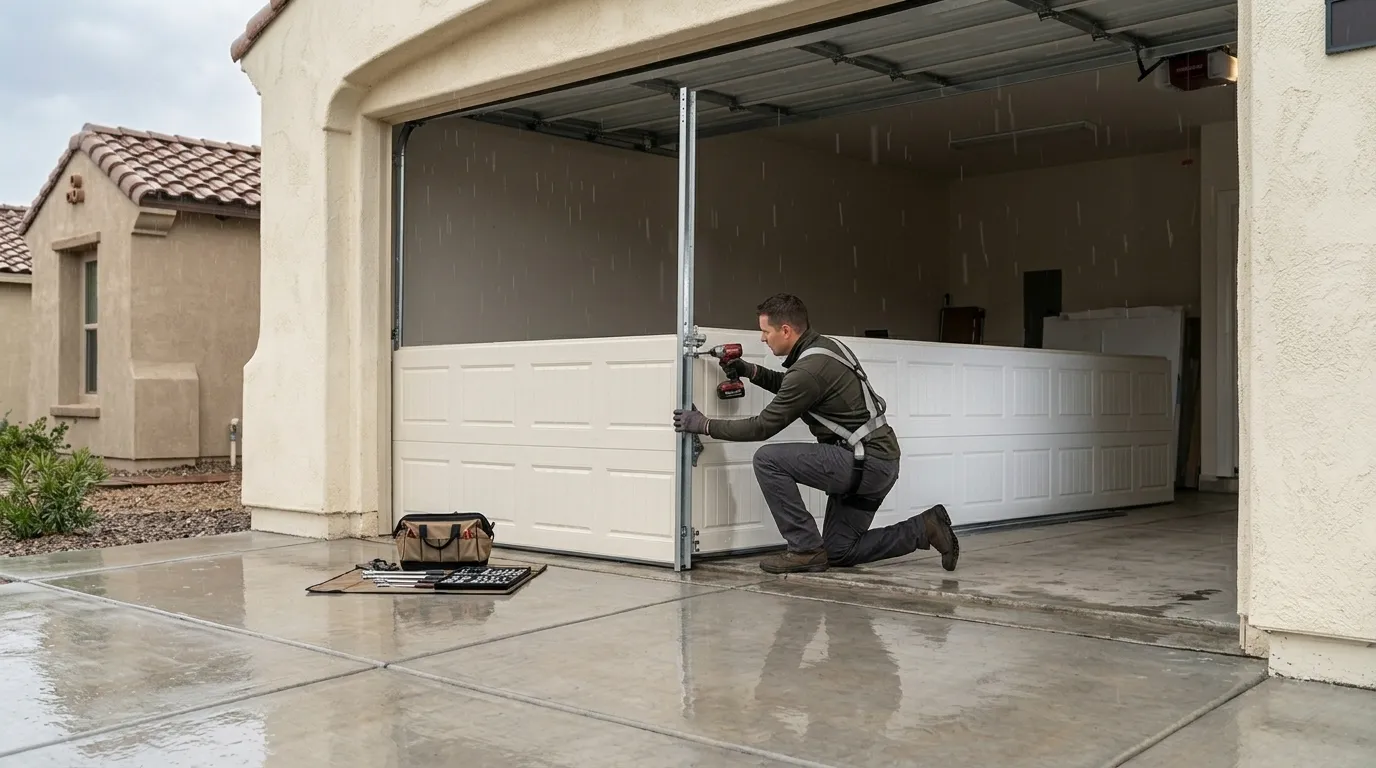
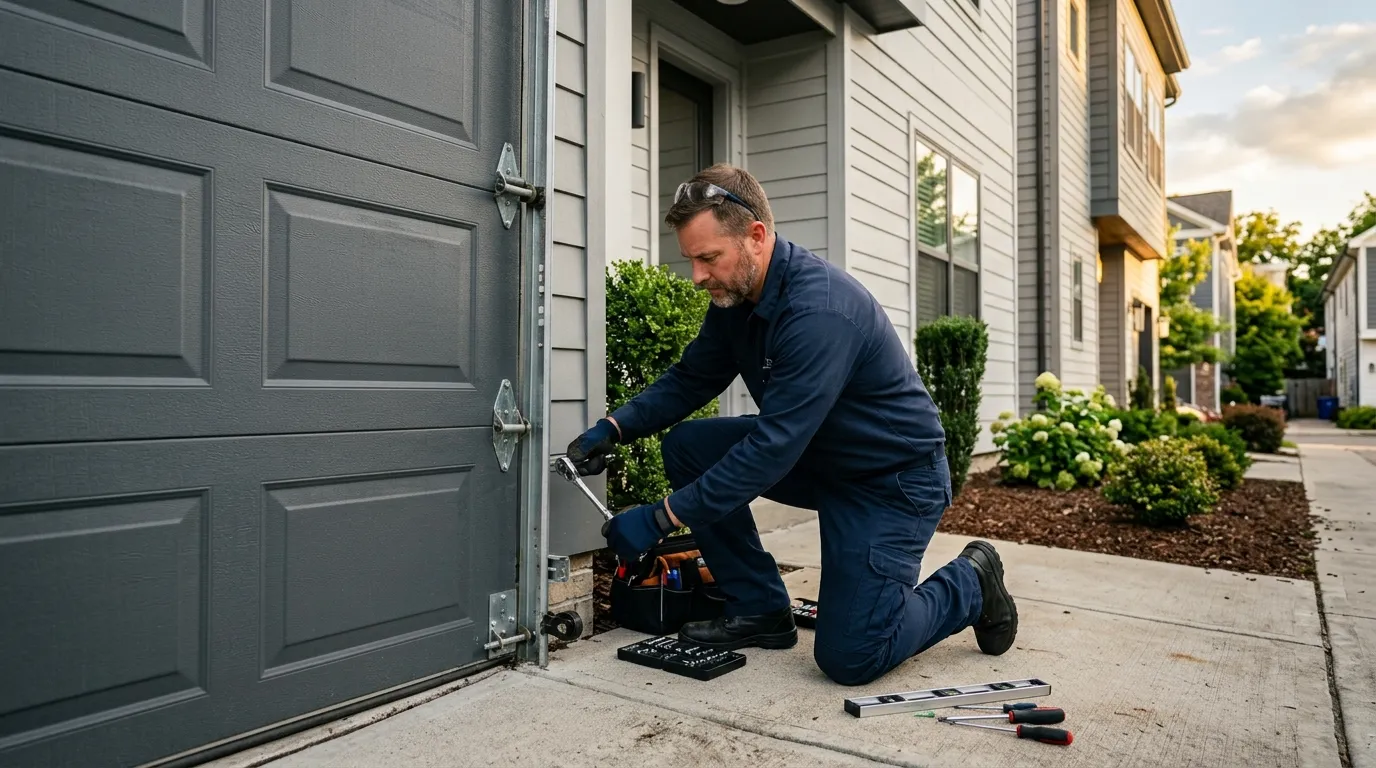
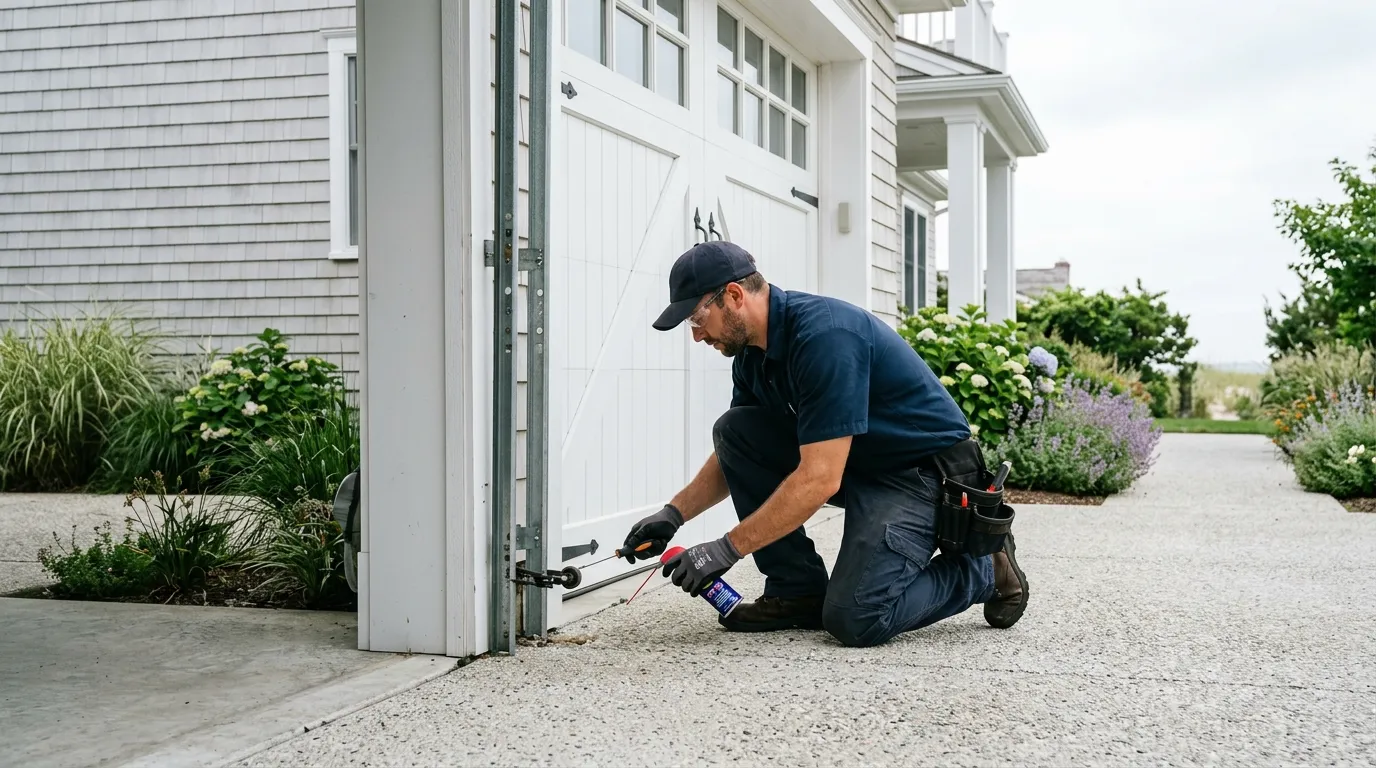
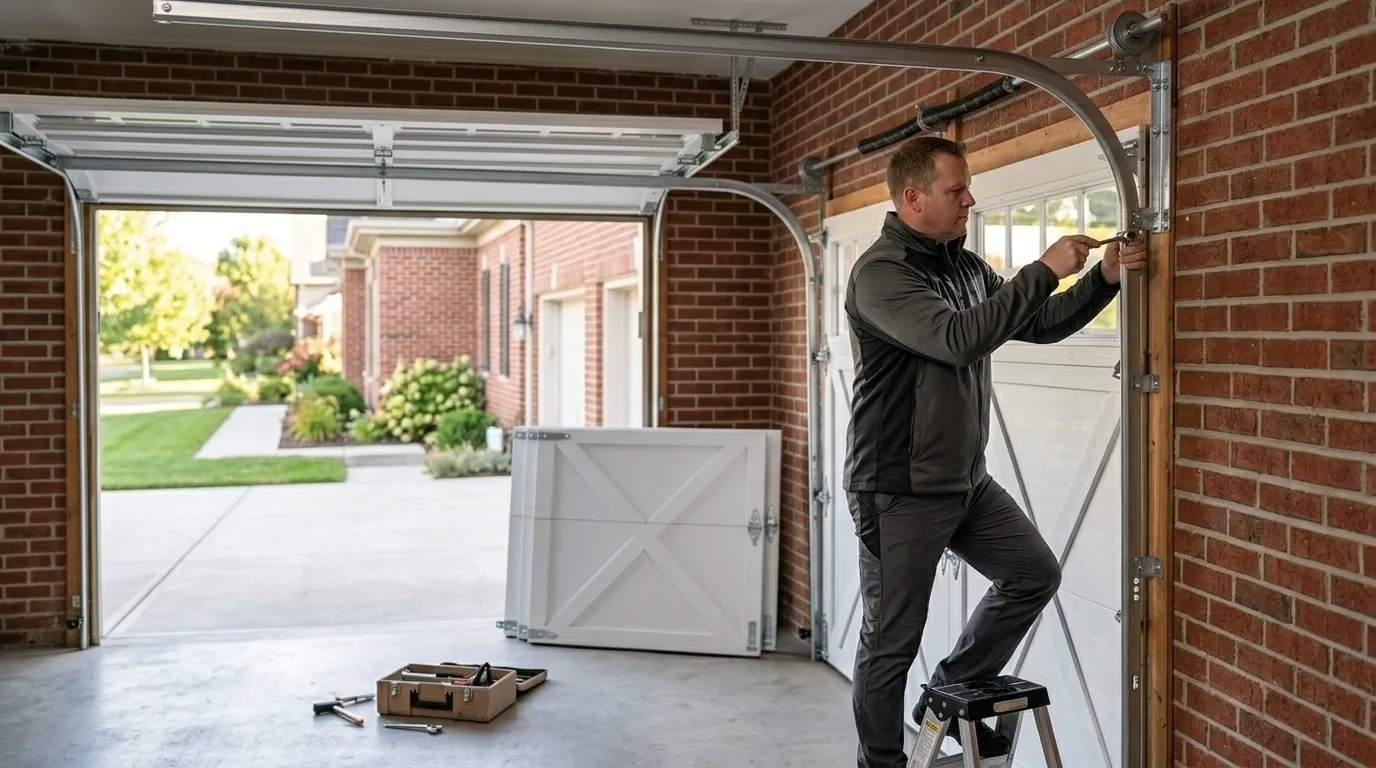
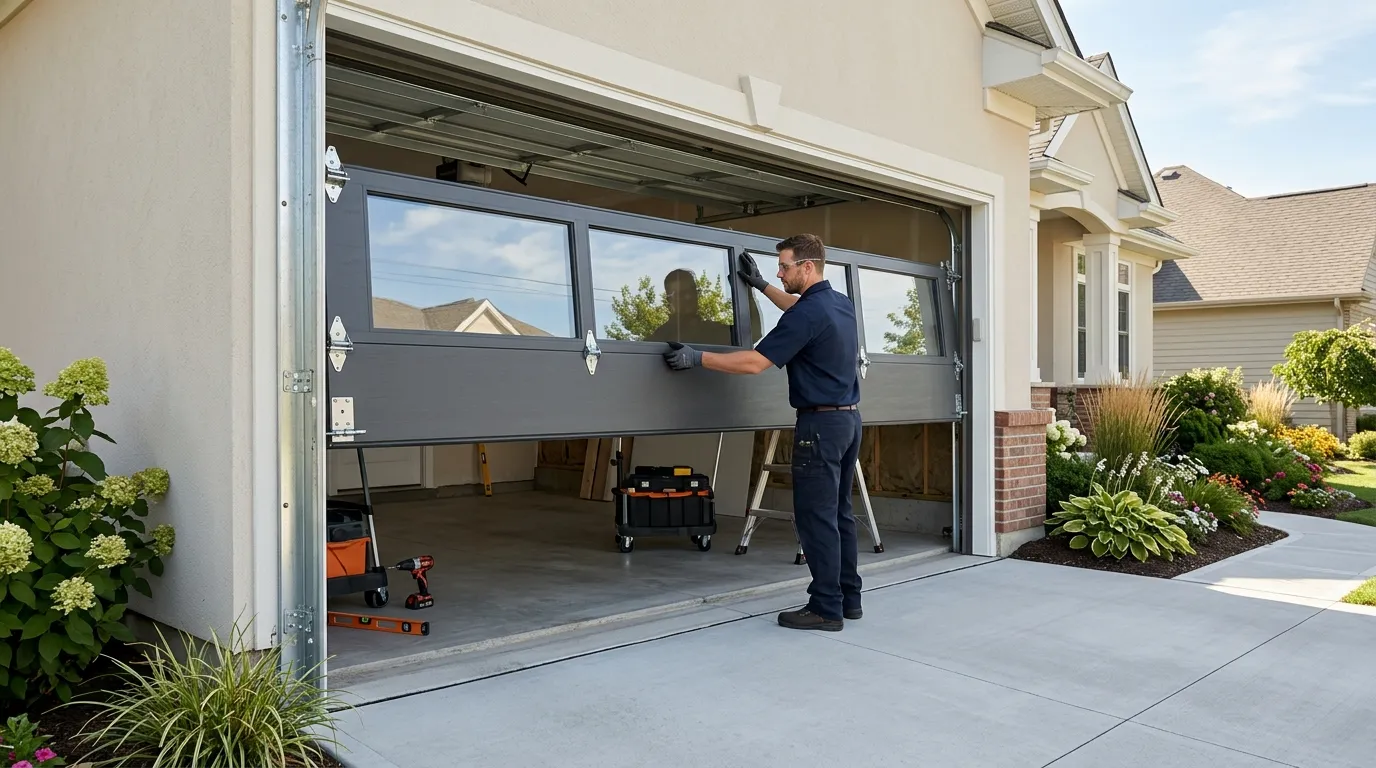
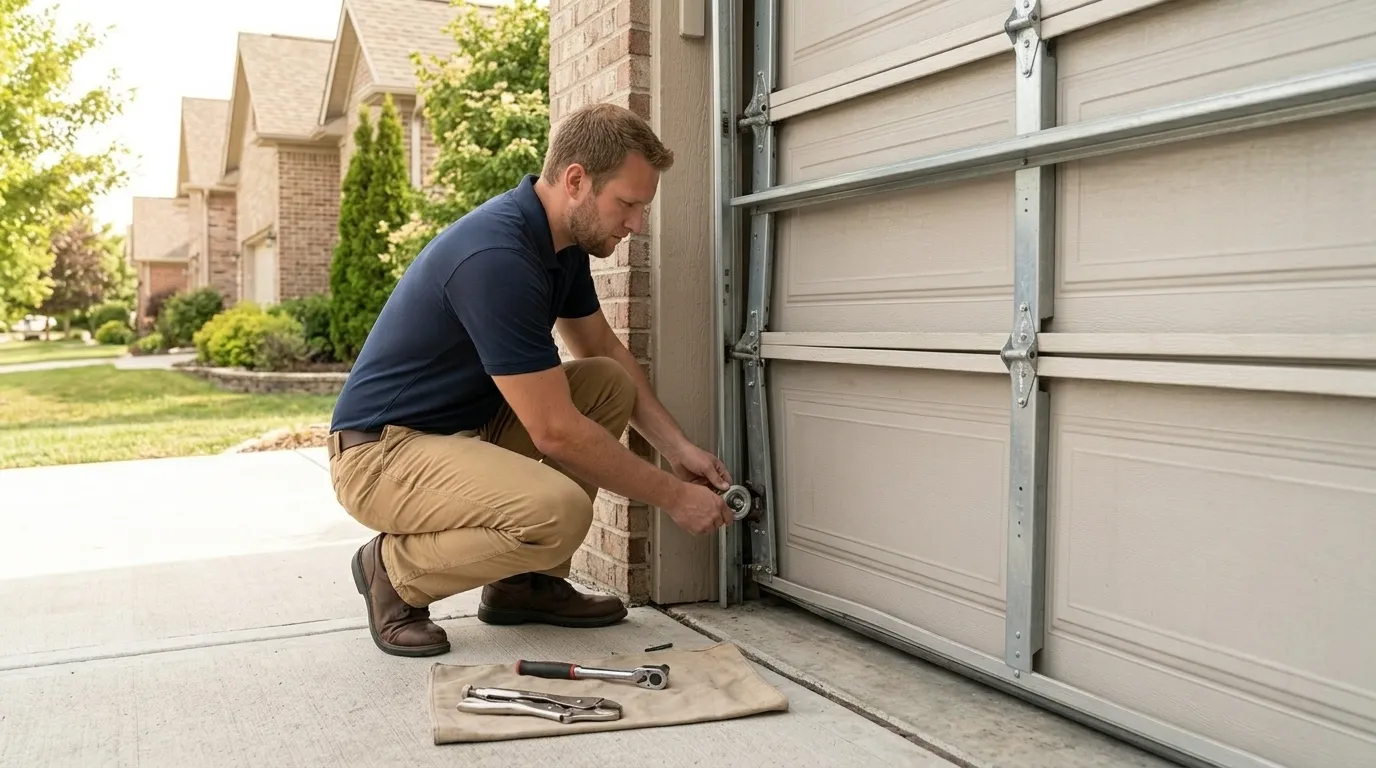
Most installs on this vintage of house need new track and new spring sizing to match the door's actual weight, since the original hardware was sized for a lighter door than what's sold today. Where the framing has shifted, we shim and square before hanging anything - skipping that step is how you end up with a door that racks or a opener that strains against a bind.
We also check the header for insulation and air sealing, since the cold moderate winters here mean gaps around an old jamb cost real heat. If the opener is original to the house, it's almost always past its safe service life and gets replaced as part of the job, not left in place to save a step.
How It Shows Up
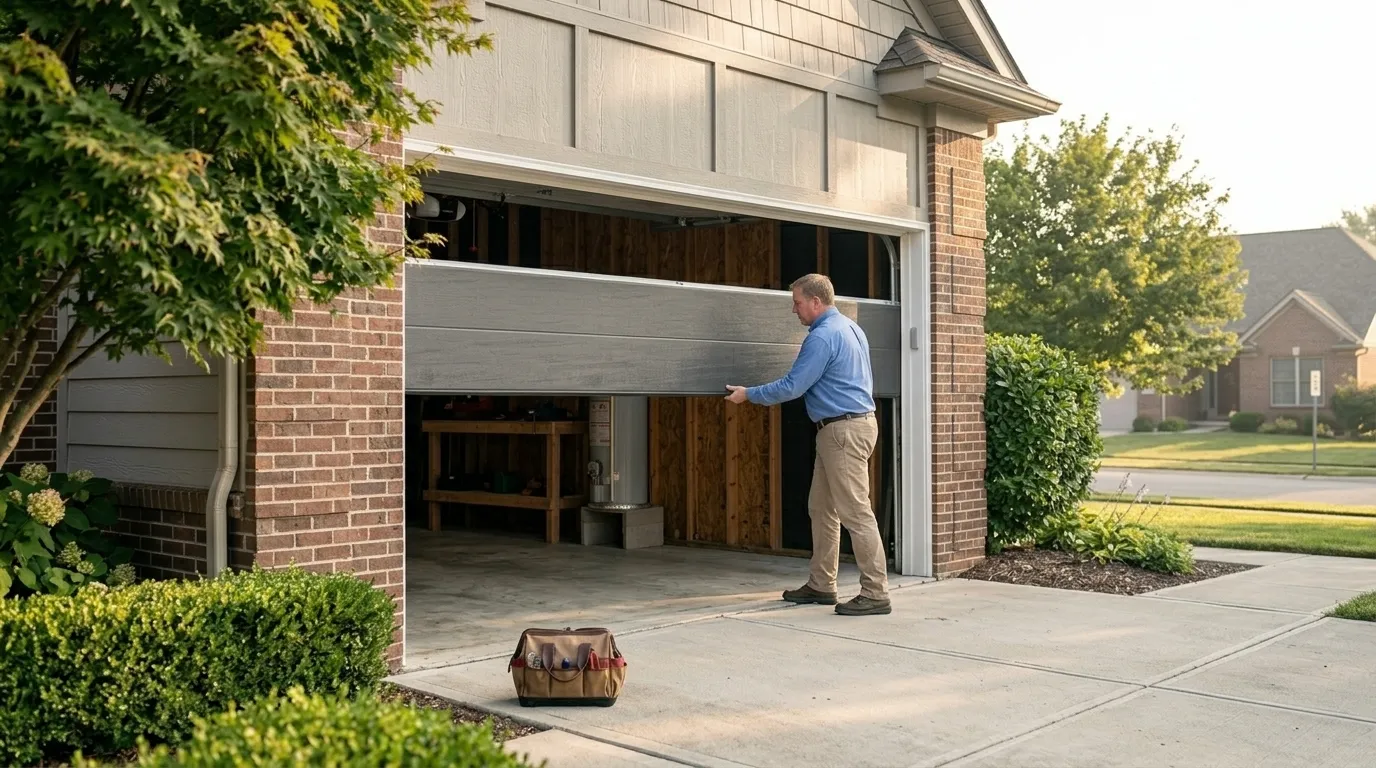
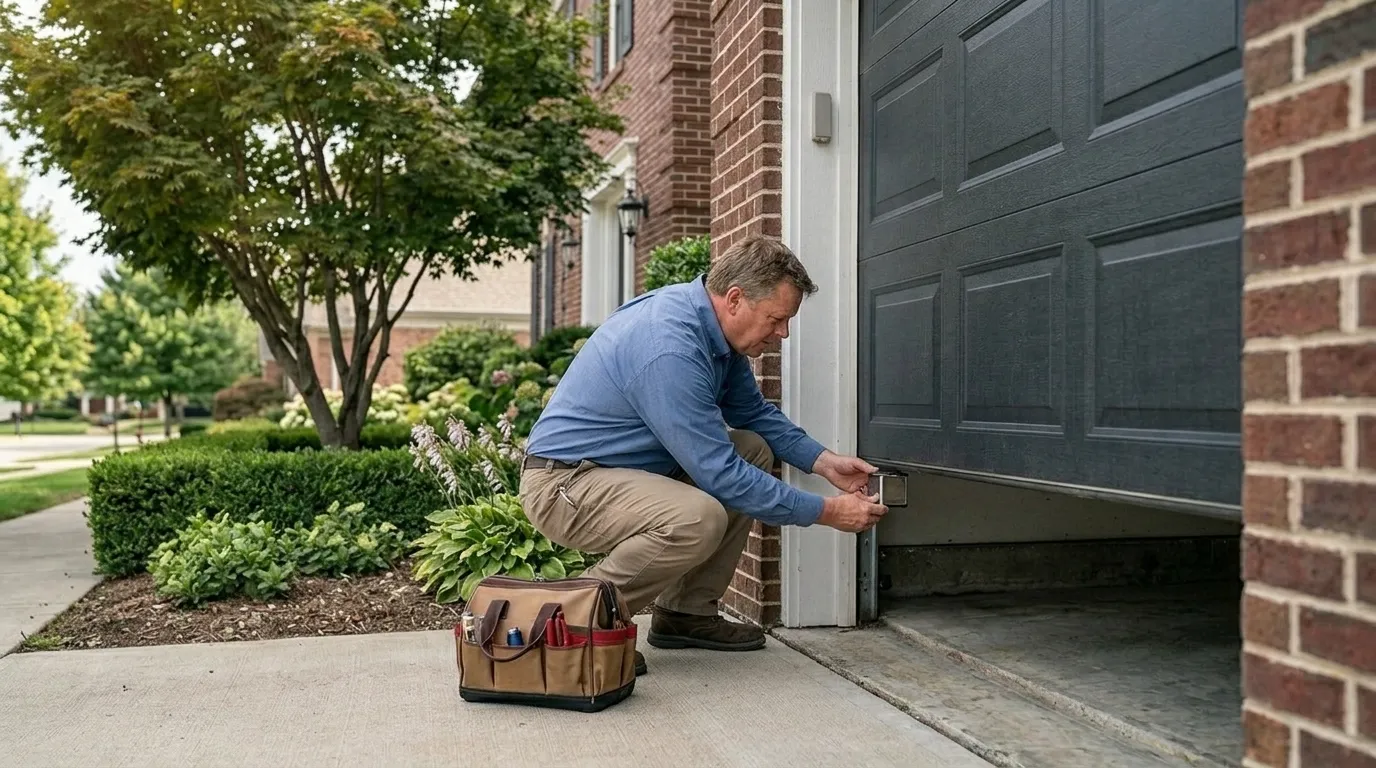
On these older Wenatchee houses, the tell is usually a door that goes up crooked - one side lifts a beat before the other, or it stalls partway and the opener strains against it. That's the mismatch between original track spacing and a door that's heavier or a different size than what the opening was built for.
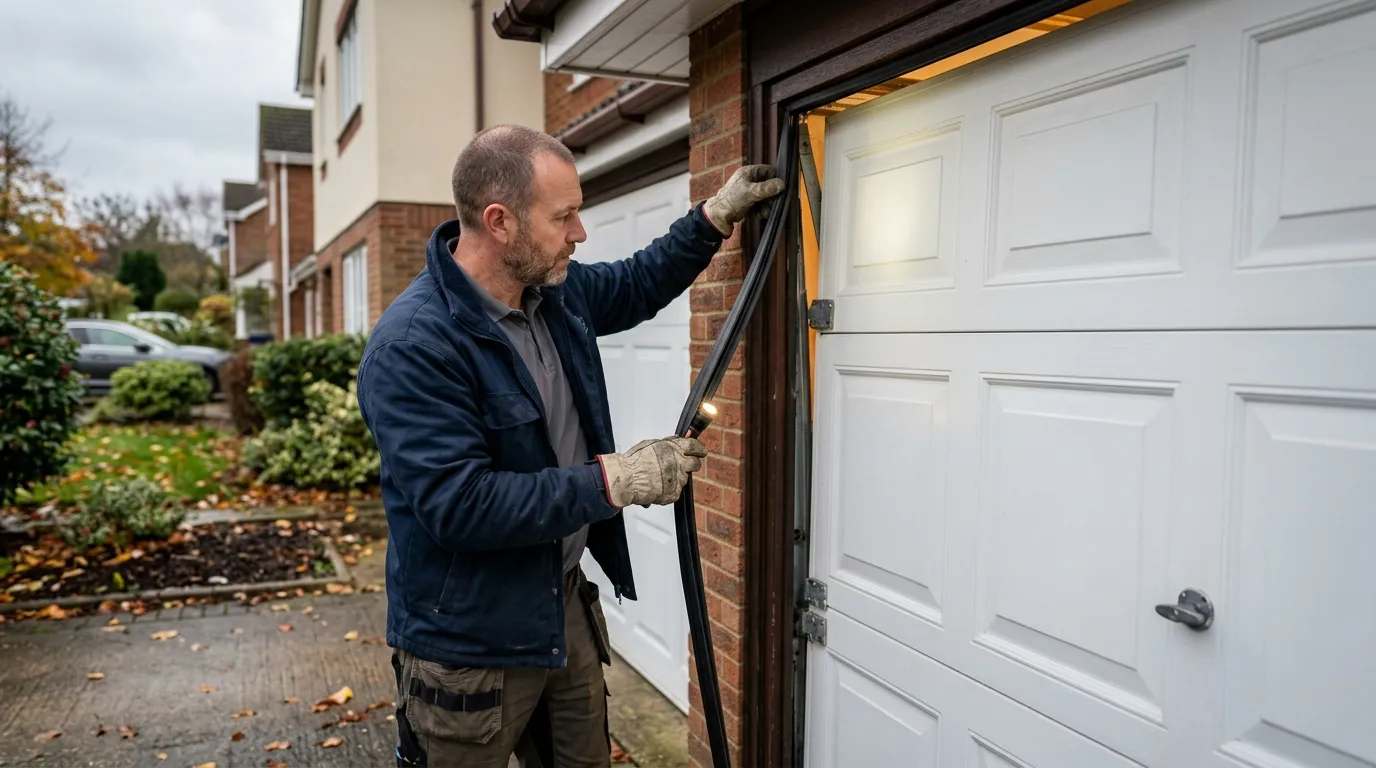
Another common sign is daylight around the bottom seal even when the door looks shut tight. On a house built in the median 1977 range, the jamb has usually shifted enough over the years that a stock-size door no longer sits flush, and in a cold moderate climate that gap is where the cold gets in.
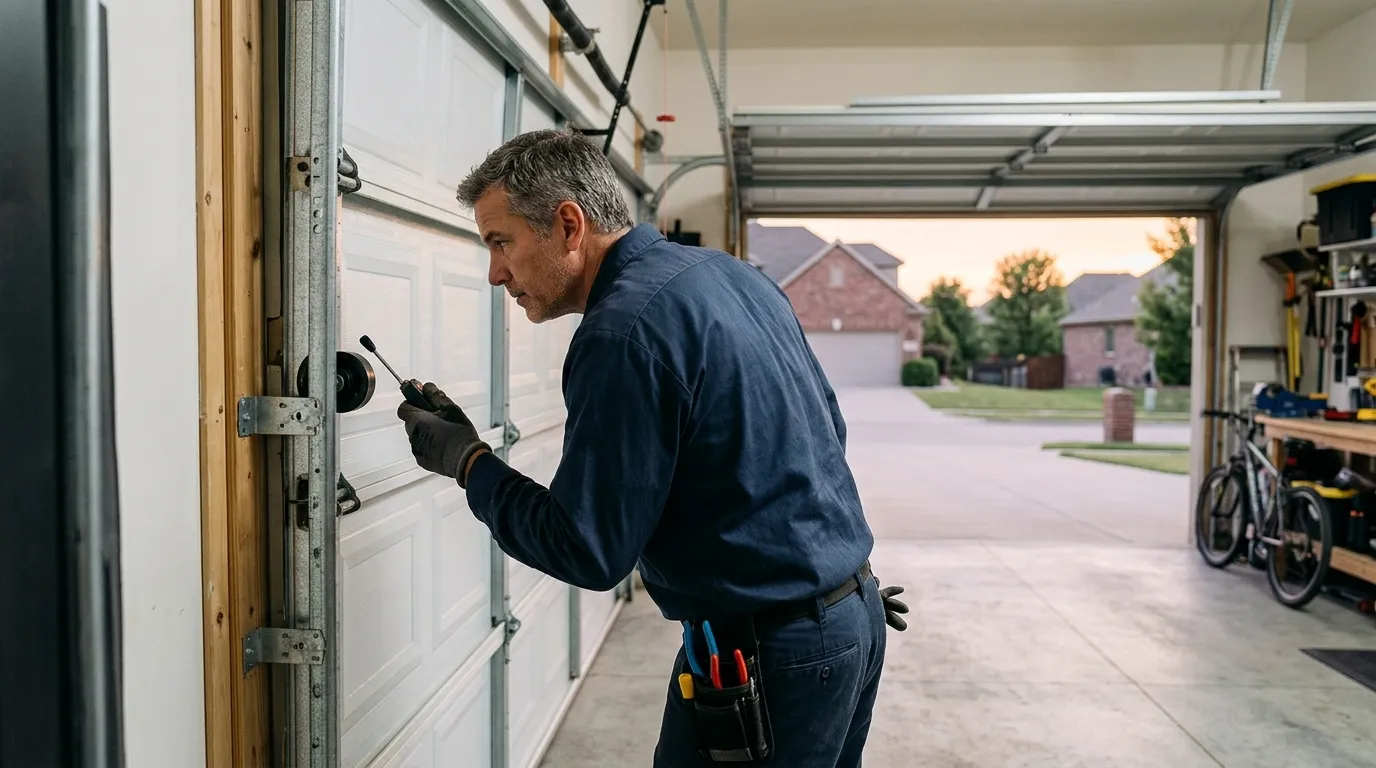
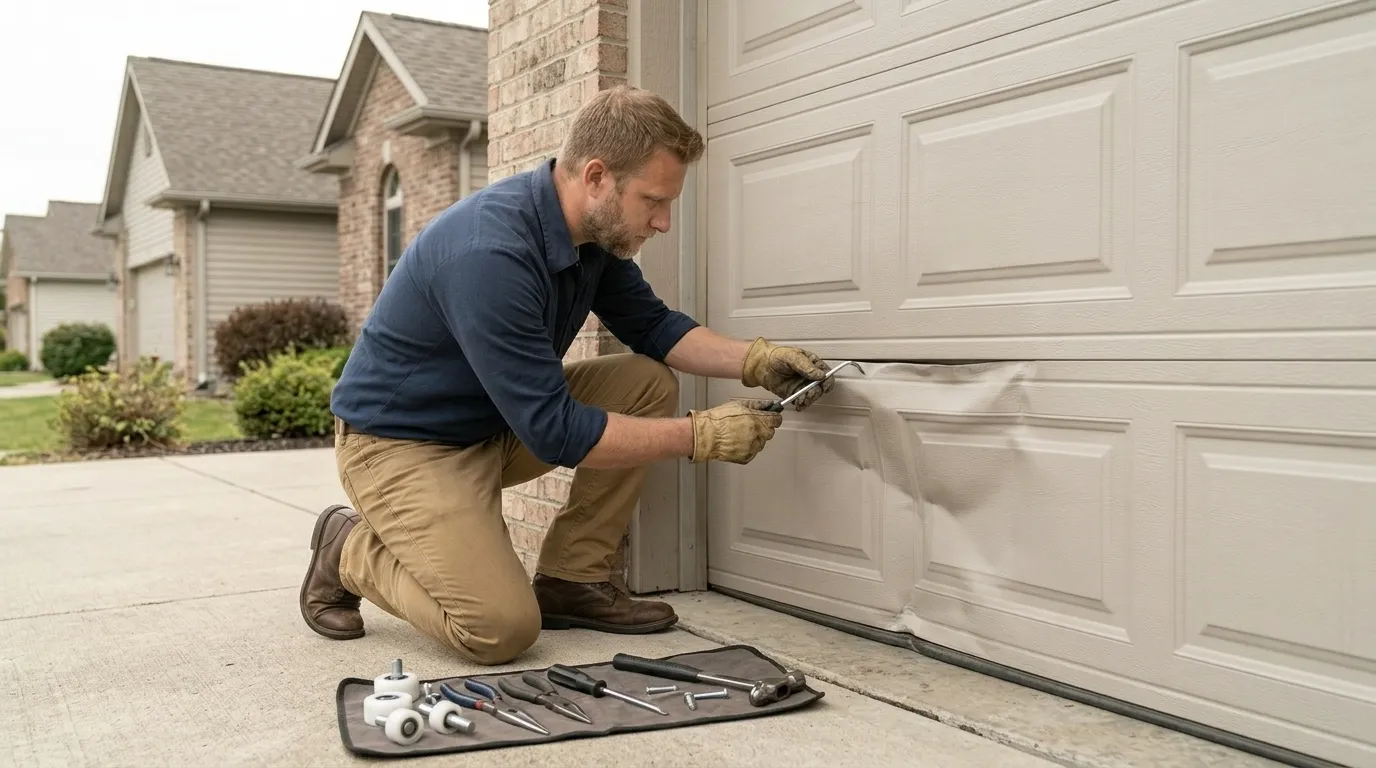
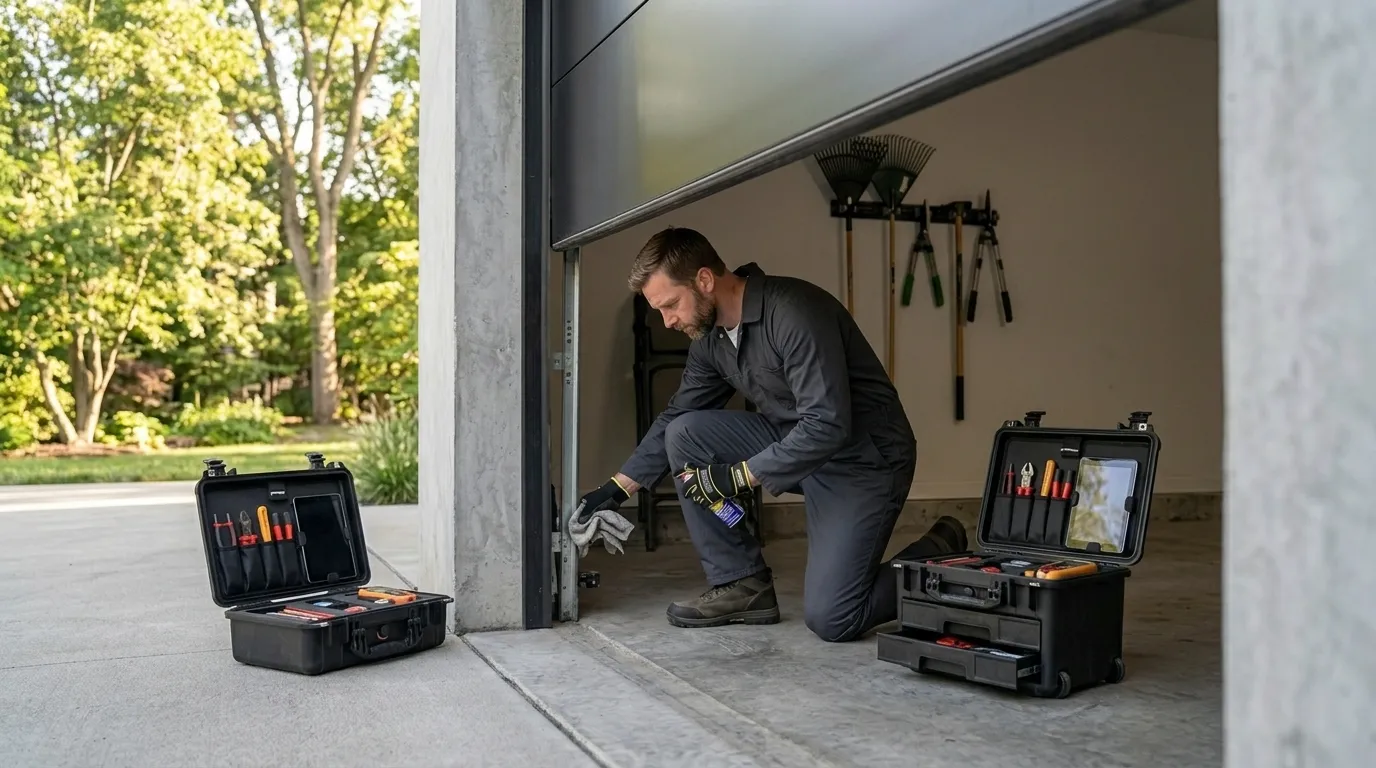
Some owners just notice the door's gotten loud - rattling track, a grinding opener, rollers that clunk instead of roll. That's wear catching up on hardware that's outlasted its expected life several times over. None of these are cosmetic. They're the opening telling you it was built for a different door than the one it's carrying now.