
Why This Fails Locally
Most of the Wenatchee service area we cover was built between 1944 and 1993, with the median landing around 1977. Sunnyslope sits at the newer edge of that range - the typical house here went up close to 1993, not the 1960s-70s stock you'll find in a lot of the other named areas we work. That fifteen-plus year gap matters more than it sounds like it should. A door and opener installed in the mid-1990s used different spring wind counts, different track gauge, and early circuit-board openers instead of the pure electromechanical units common on older houses. When something fails on a Sunnyslope door, it's usually not the same failure we'd expect on a 1965 house five miles away - it's a worn drive gear or a dying logic board rather than a rusted hinge or a track bent from decades of settling. We drive out from Wenatchee, about 5 miles, and the first thing we check is what generation of hardware we're actually looking at before we guess at the fix. Guessing wrong on parts means a second trip, and that costs everyone time.
What the Fix Involves
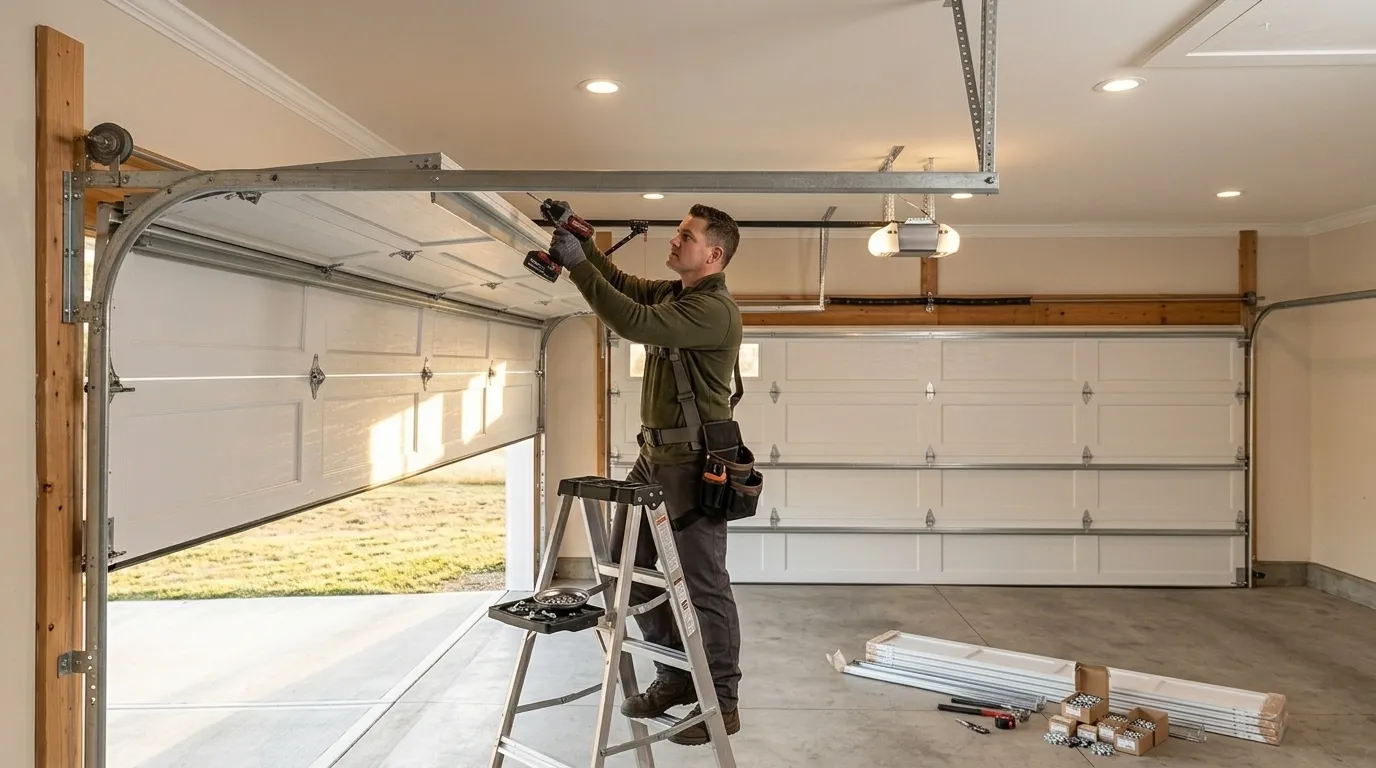
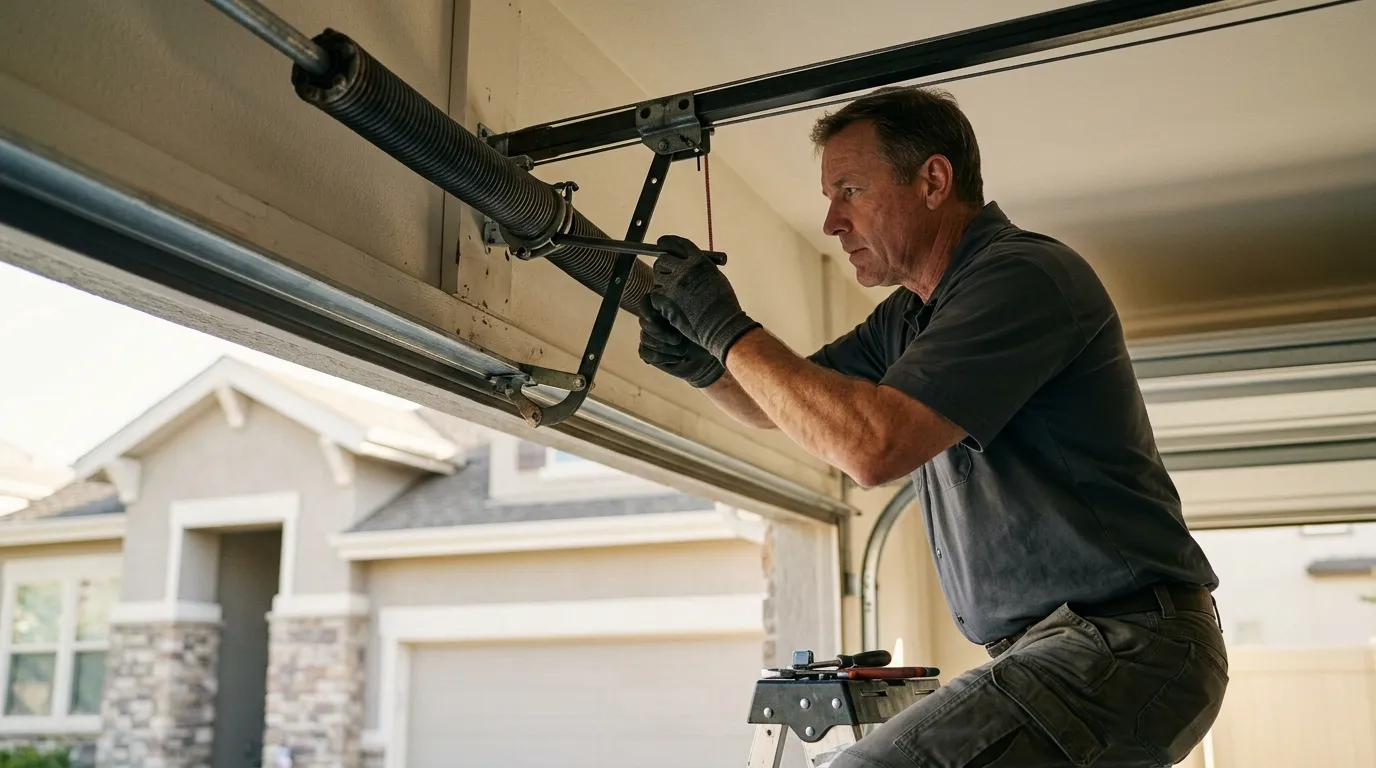
On a door from this build era, the fix usually starts at the opener, not the springs. Circuit-board openers from the early-to-mid 1990s run on logic boards that fail outright rather than degrading slowly, so a dead opener here is often a full board or full unit swap, not an adjustment. Springs on these doors are typically still on their original torsion bars, and at 30-plus years old they're due regardless of symptoms - we don't wait for one to snap before recommending replacement. Track and rollers hold up better on houses this age than on the 1960s stock nearby, so we spend less time straightening bent rail and more time on the moving parts that actually cycle: springs, cables, and the opener drive. We match spring wind and drum size to the door we find, not to a generic size, because doors from this period vary more than people expect.
What Can Go Wrong
The biggest risk on houses this age is misdiagnosing an opener problem as a spring problem, or vice versa. A door that's hard to lift by hand points to springs; a door that won't respond to the remote but lifts fine by hand points to the opener - and on 1990s-era boards, a failing capacitor or relay can mimic several other faults. The second risk is cable wear that isn't visible until it's frayed near the drum, which happens on original 30-year cable regardless of how well the rest of the door has held up. We also see owners tighten or lubricate the wrong thing trying to quiet a noisy door, which can mask a bearing that's actually failing and turn a $150 fix into a broken spring under load.
What It Costs
I don't have pricing figures to publish here that would hold up as accurate for every job - cost depends on whether it's a spring pair, a full opener, or a board-only repair, and I'd rather point you to a real quote than a number that turns out wrong once we're on site. What I can say is that Sunnyslope's median household income, at roughly $131,250, runs well above the wider service area's $75,854, and we see that reflected in how often owners here choose full opener replacement over patching a 30-year-old board - it's usually the better math once labor is factored in either way.