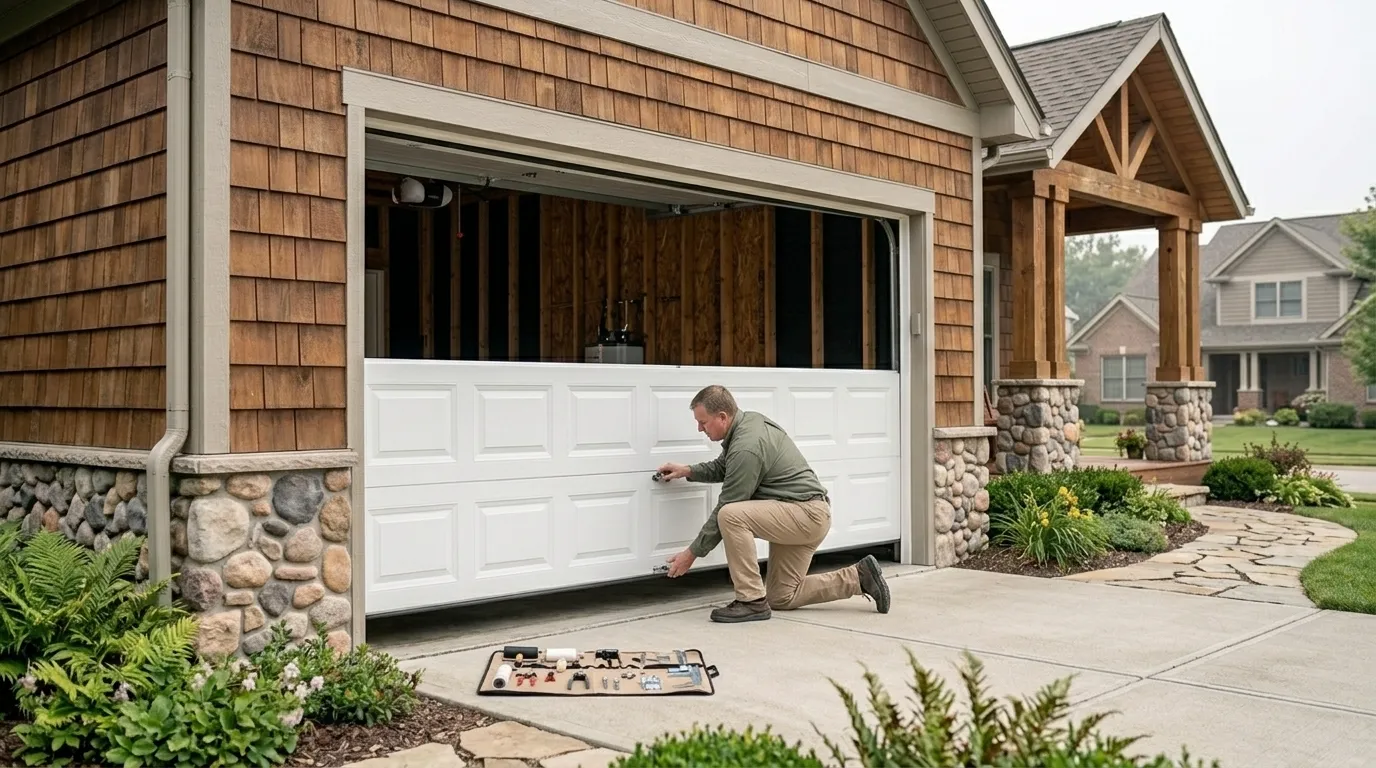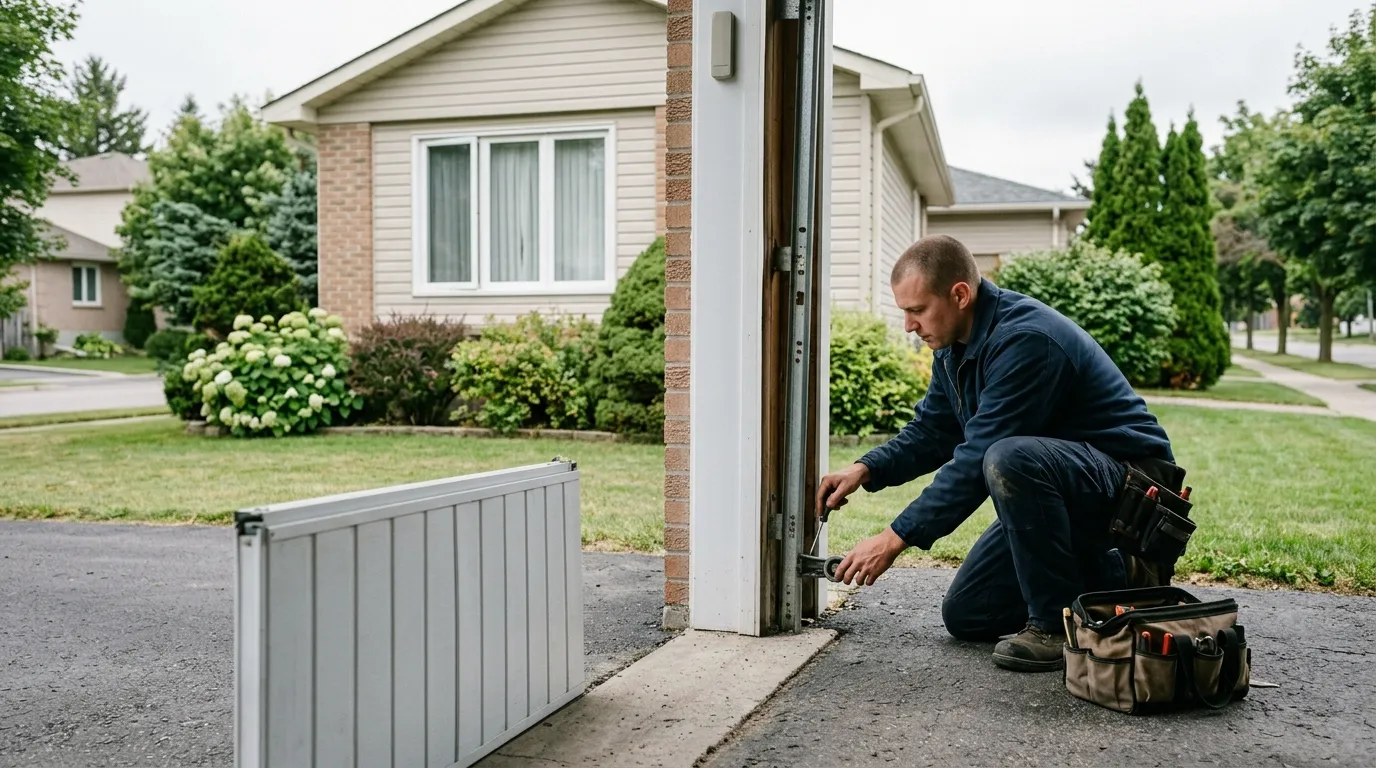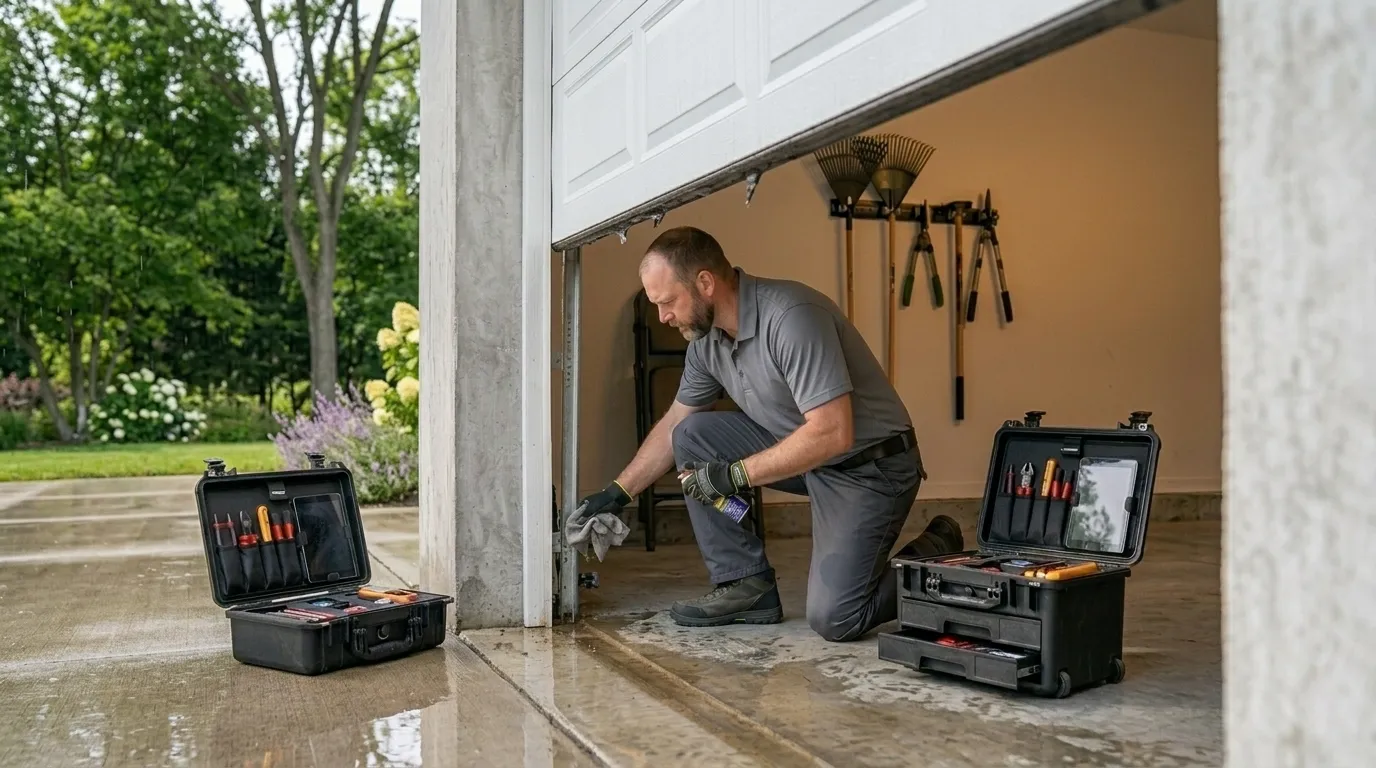
What the Fix Involves
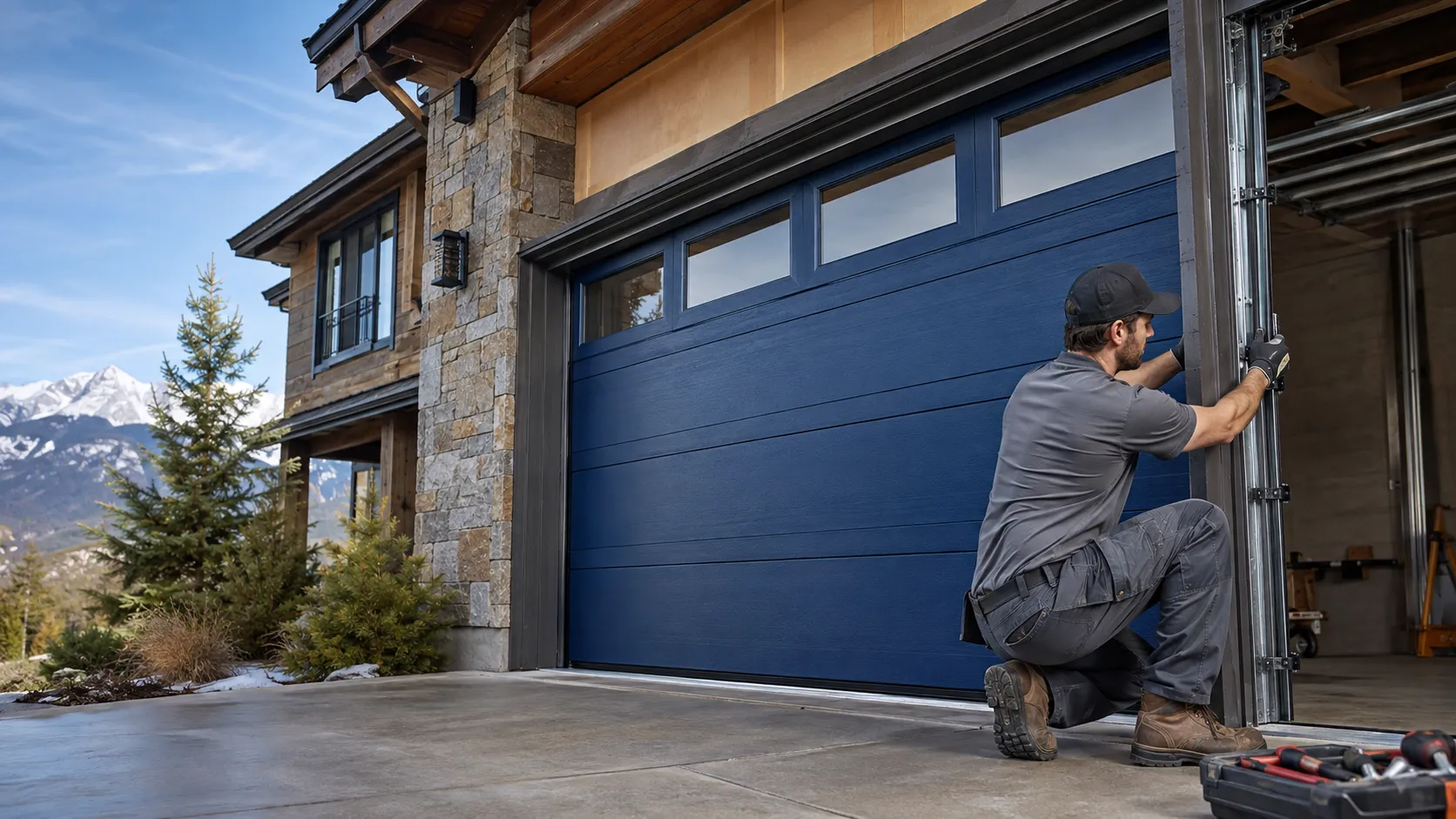
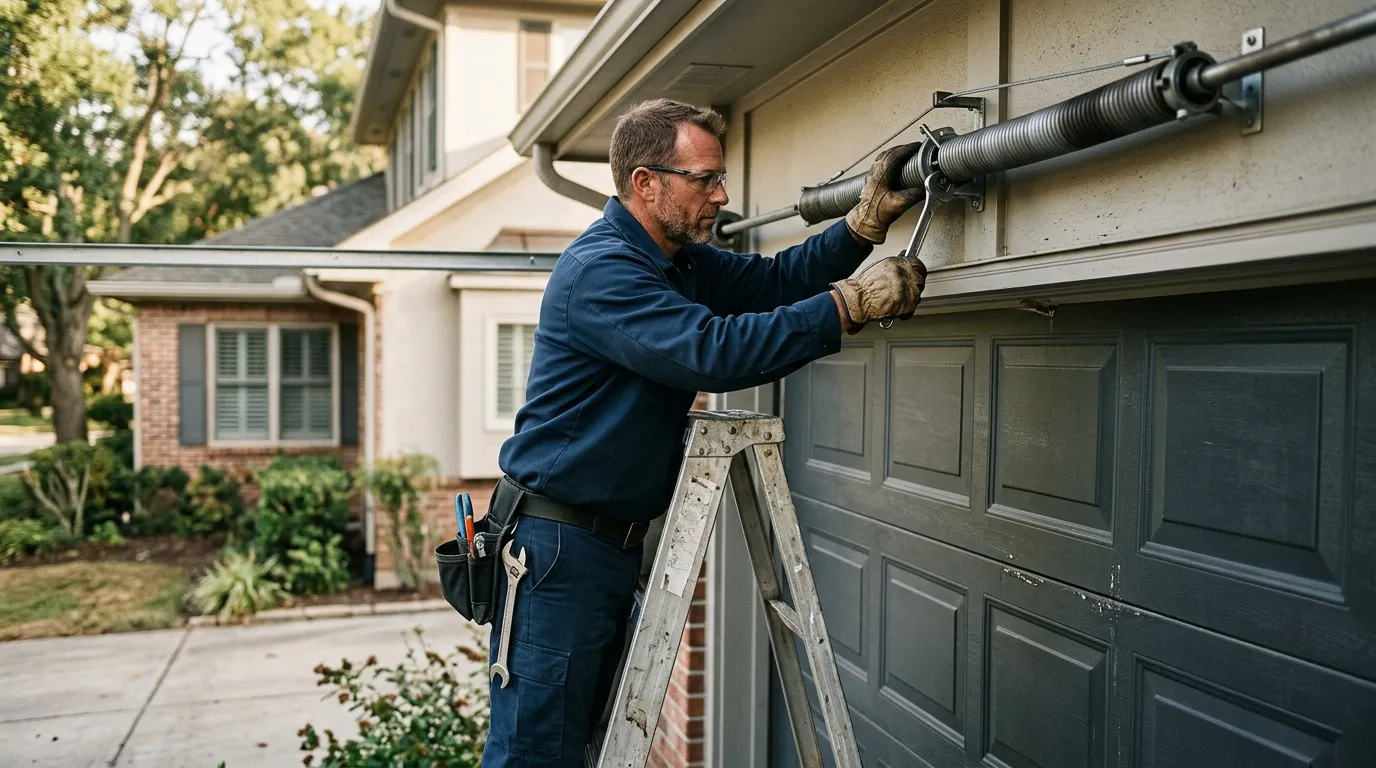
Cashmere's median house went up around 1963, and that year matters more than the town name does. A door from that build era is usually a single-layer steel or solid wood panel door, hung on an extension-spring system with the springs mounted along the horizontal track rather than over the header on a torsion shaft. That's a different animal from a modern insulated sectional door, and it fails in different ways: the door itself is heavier per square foot with no foam backing, the track brackets are older stamped steel, and the rollers are usually plain steel, not nylon. When we get a call from this area, the fix almost always starts with the extension spring itself - cracked, stretched, or its safety cable missing entirely - rather than a torsion drum or cable drum problem, which is what you'd expect to see on a house built after the mid-80s. We check the door panel next, since single-layer steel from this period dents and rusts along the bottom section where snowmelt sits.
What Is on the Truck
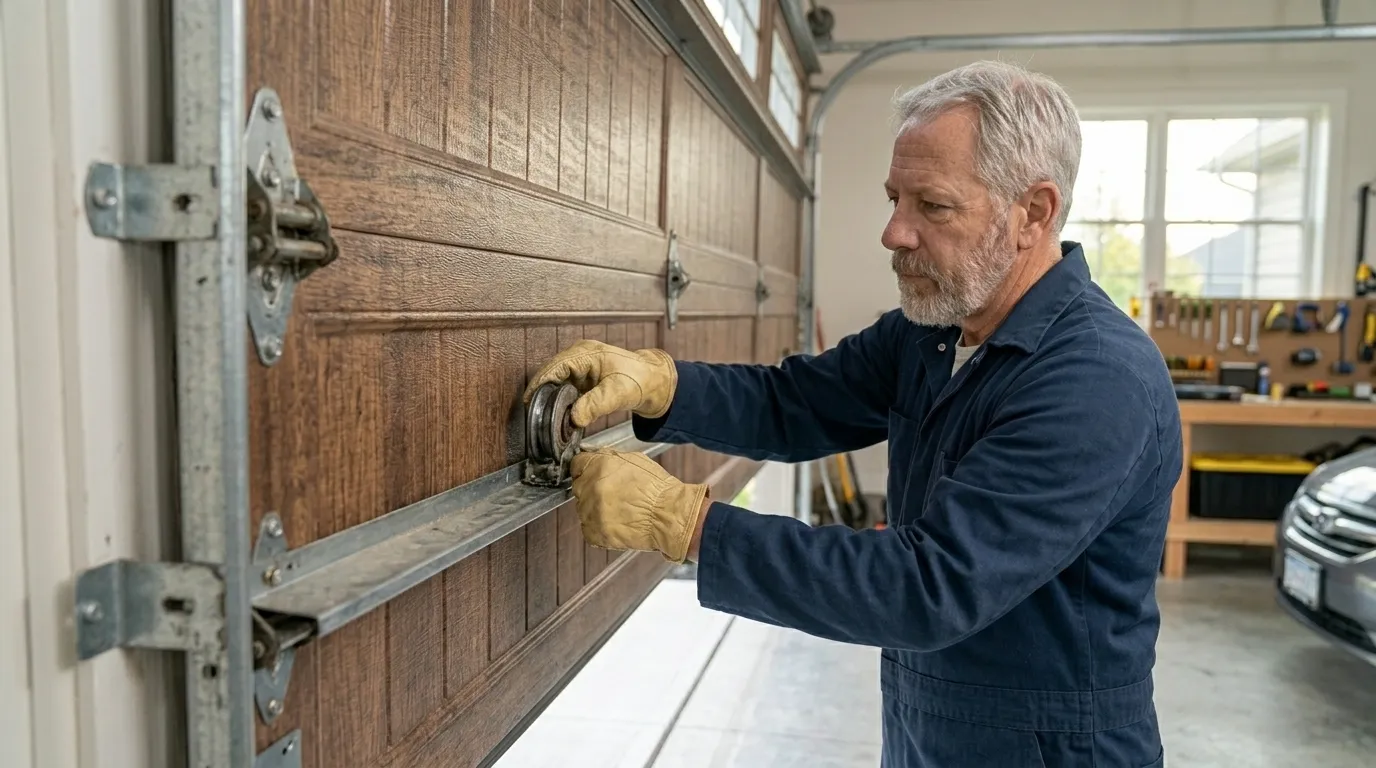
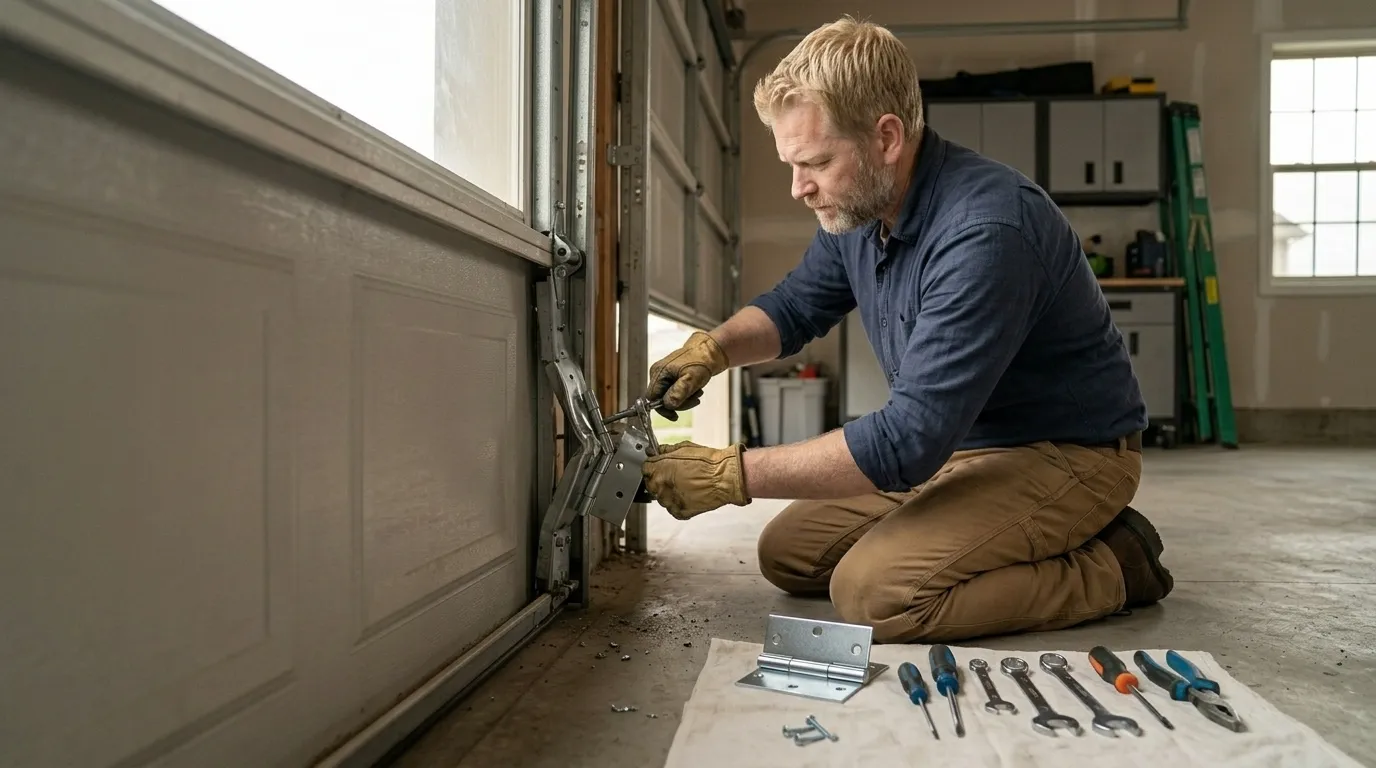
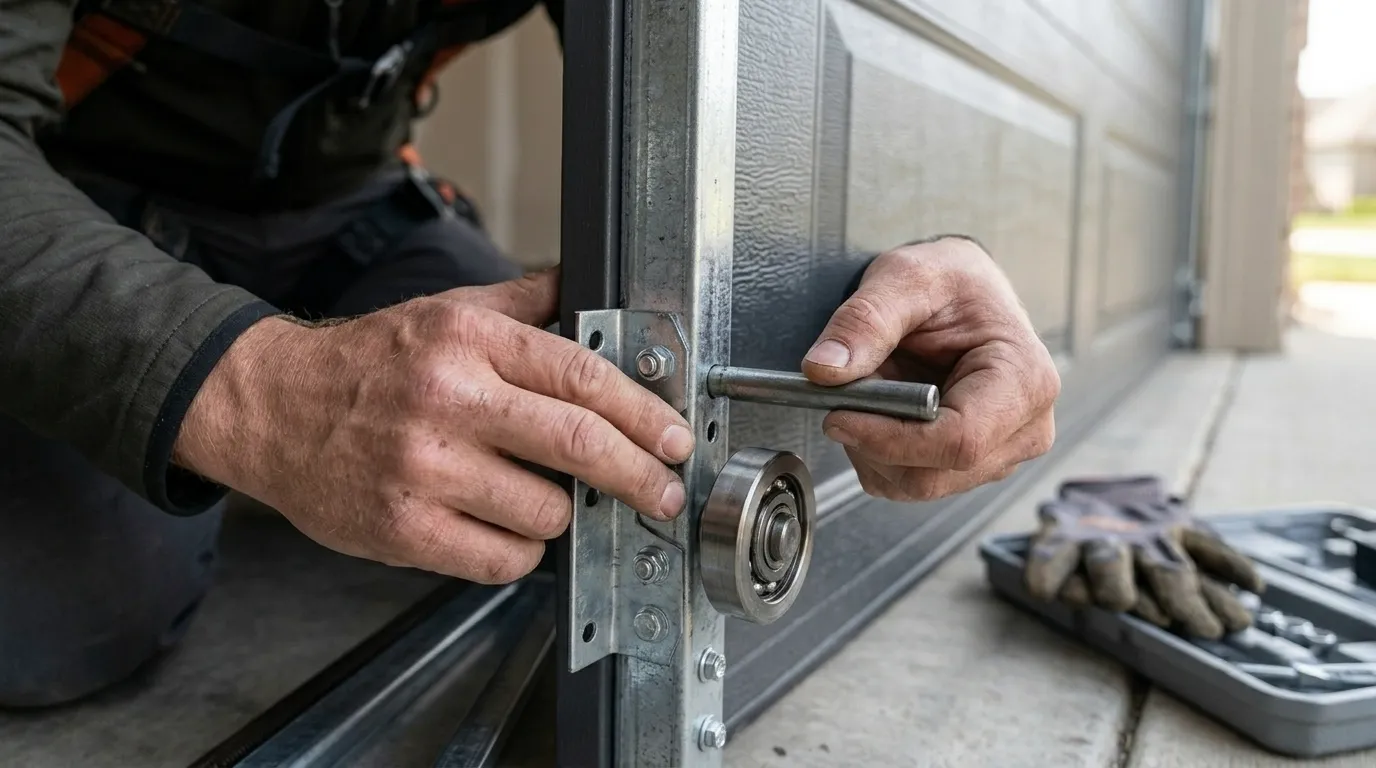
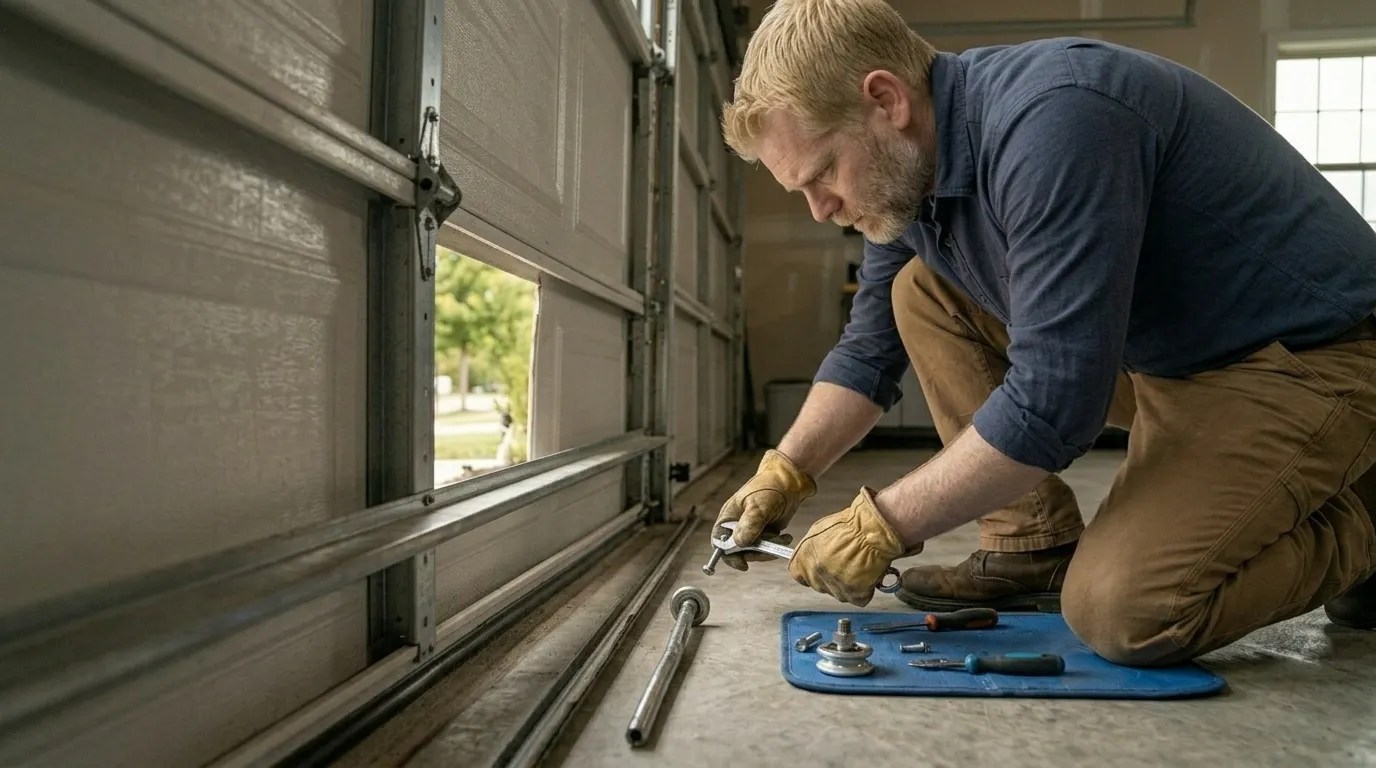
For a service area where most doors match a 1960s-70s build, we stock extension springs in the common weight ranges for that door size and weight, plus the safety cables that should have been retrofitted onto them years ago but often weren't. We carry steel rollers and the older-style track brackets that fit doors built before torsion hardware became standard. We also bring weatherstripping kits sized for older jamb widths, since a lot of these doors were never re-sealed after the original install. What we don't carry as standard stock is anything for high-cycle commercial doors or custom-width residential doors over 16 feet - those get special-ordered, and we'll tell you that on the call before we drive out, not after.
Can You Do This Yourself
Extension springs are under real tension, and on an older door like the kind common here, the spring is usually not fitted with the safety cable that's supposed to run through its coil - meaning if it lets go while you're working near it, there's nothing to keep it from becoming a projectile. Adjusting spring tension or replacing one yourself on a door this heavy isn't a weekend project we'd recommend. Lubricating hinges, tightening loose roller brackets, and swapping worn weatherstripping are all fair game for a homeowner with basic tools. Anything involving the spring, the cable, or the track itself is where we'd tell you to make the call instead.
Why This Fails Locally
With a median household income of $63,825 and 1,149 households in this pocket of the service area, a lot of homeowners here are weighing a repair against a full door replacement on a house that's now over 60 years old. The math usually favors repair on doors that are structurally sound but have failed hardware - a spring or roller job is a fraction of a new door's cost. Where it stops making sense is a door with rusted-through panels or a frame that's racked out of square, which we do see on houses from this era that have never had the garage door touched since it was installed. In cold-climate winters, an old single-layer door with failing weatherstripping also loses more heat than the fix is worth patching around - at some point the honest answer is a new door, not another repair.