What Can Go Wrong
Most of the calls we get from this part of the valley aren't about the same worn-out one-piece doors and side-mounted torsion setups you find on the older streets closer to Wenatchee. Entiat's housing stock skews newer - the area's median build year sits around 1989, a good decade past the 1977 median for the wider service territory. That means sectional doors on center-mounted torsion springs, factory-installed openers with circuit boards instead of simple relay logic, and photo-eye safety sensors that came standard rather than as a retrofit.
The faults we see out here match that hardware. Circuit boards fail from age and moisture rather than from decades of rust. Photo-eye sensors get knocked out of alignment or fogged by seasonal cold, and the opener won't close the door until they're straight. Torsion springs on a newer center-mounted system still break - they're rated for a set number of cycles no matter what year the house went up - but when they let go, the whole assembly comes down harder than it would on the older side-mounted setups a few miles south.
How It Shows Up
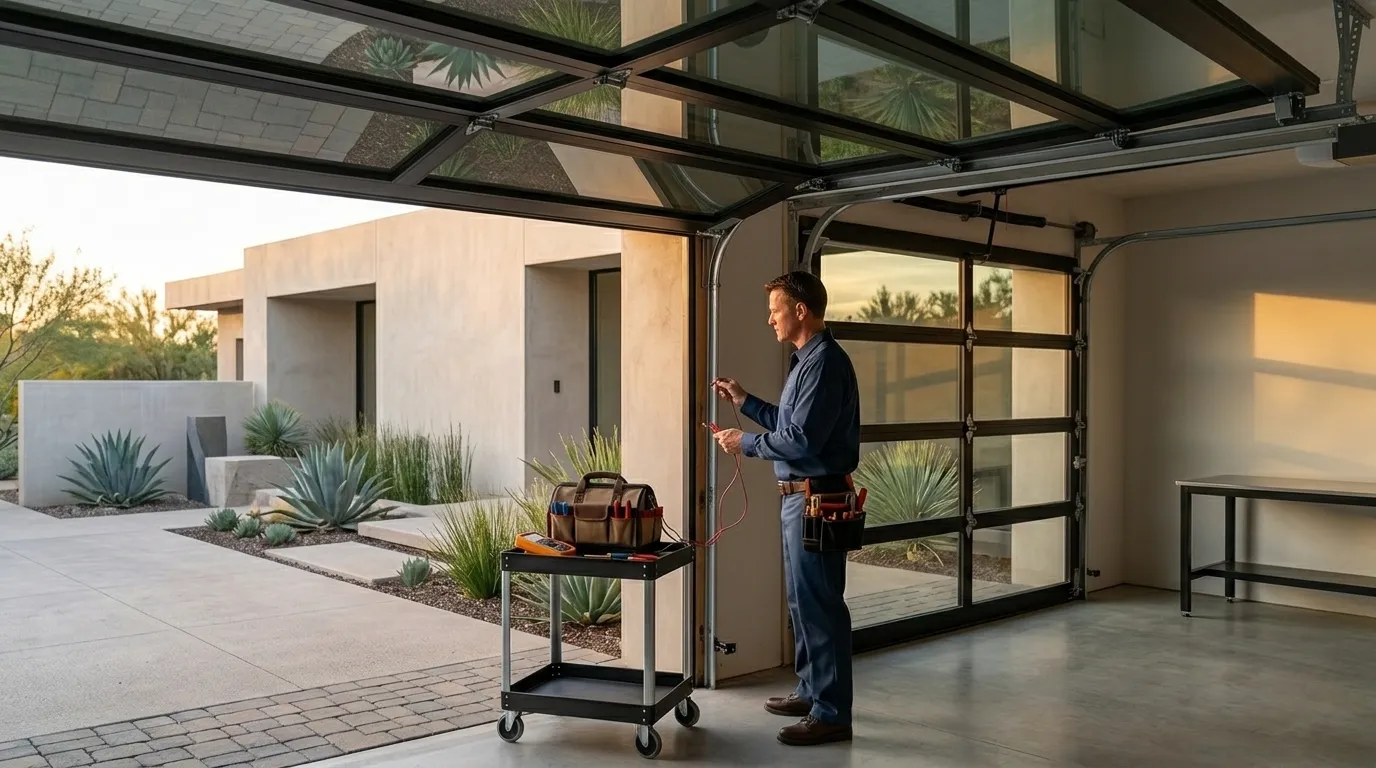
A dead opener is the most common way this reaches us: the wall button does nothing, the remote does nothing, and the light on the opener unit is either dark or blinking a fault code. On newer circuit-board openers, that blinking code usually points to the photo-eye sensors rather than the motor itself - worth checking before assuming the worst.
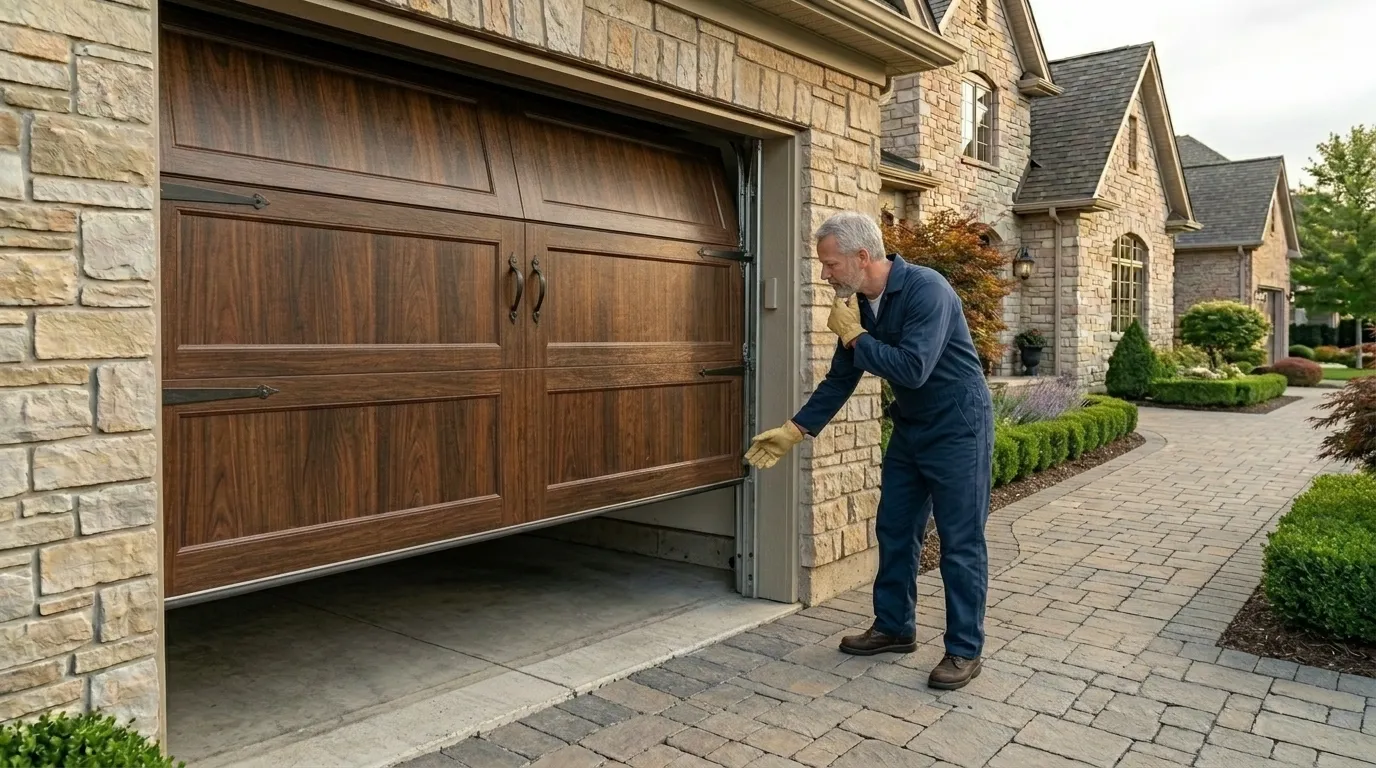
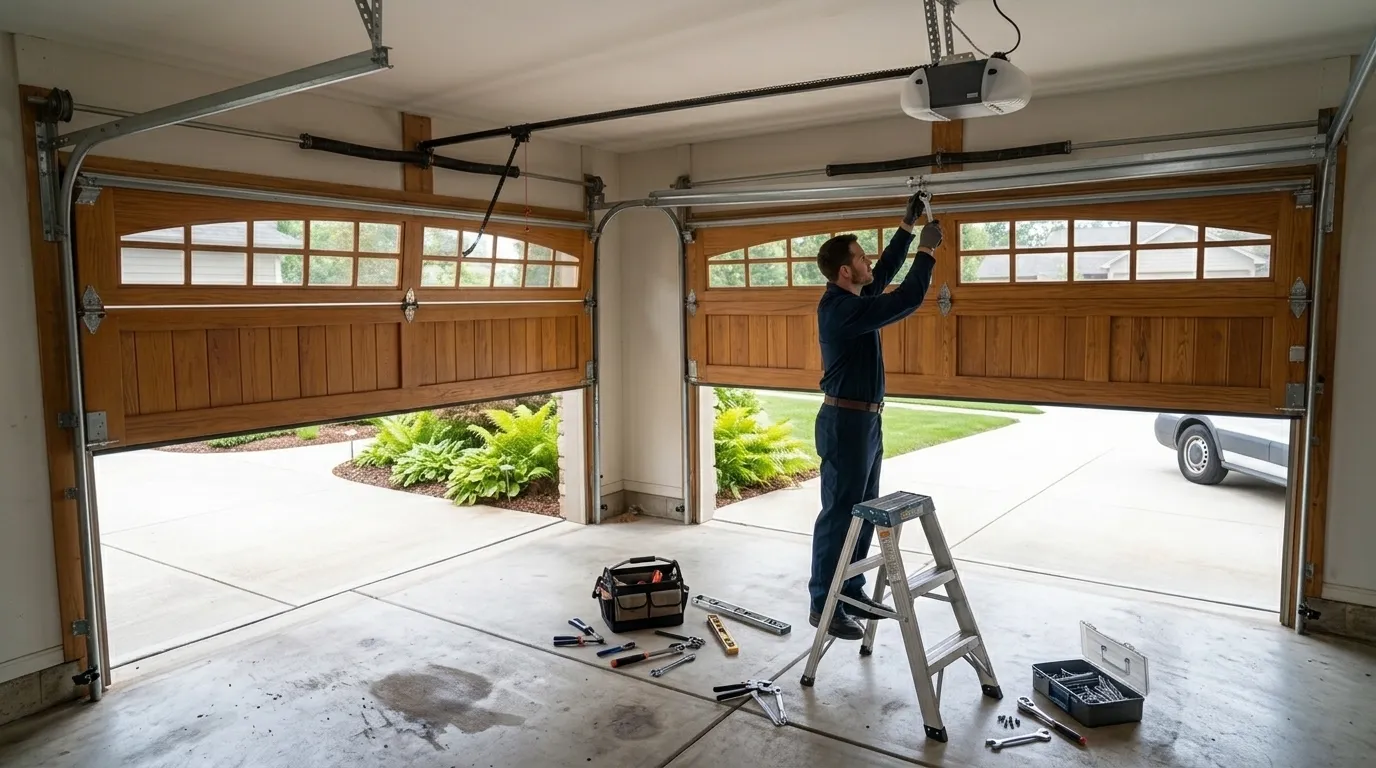
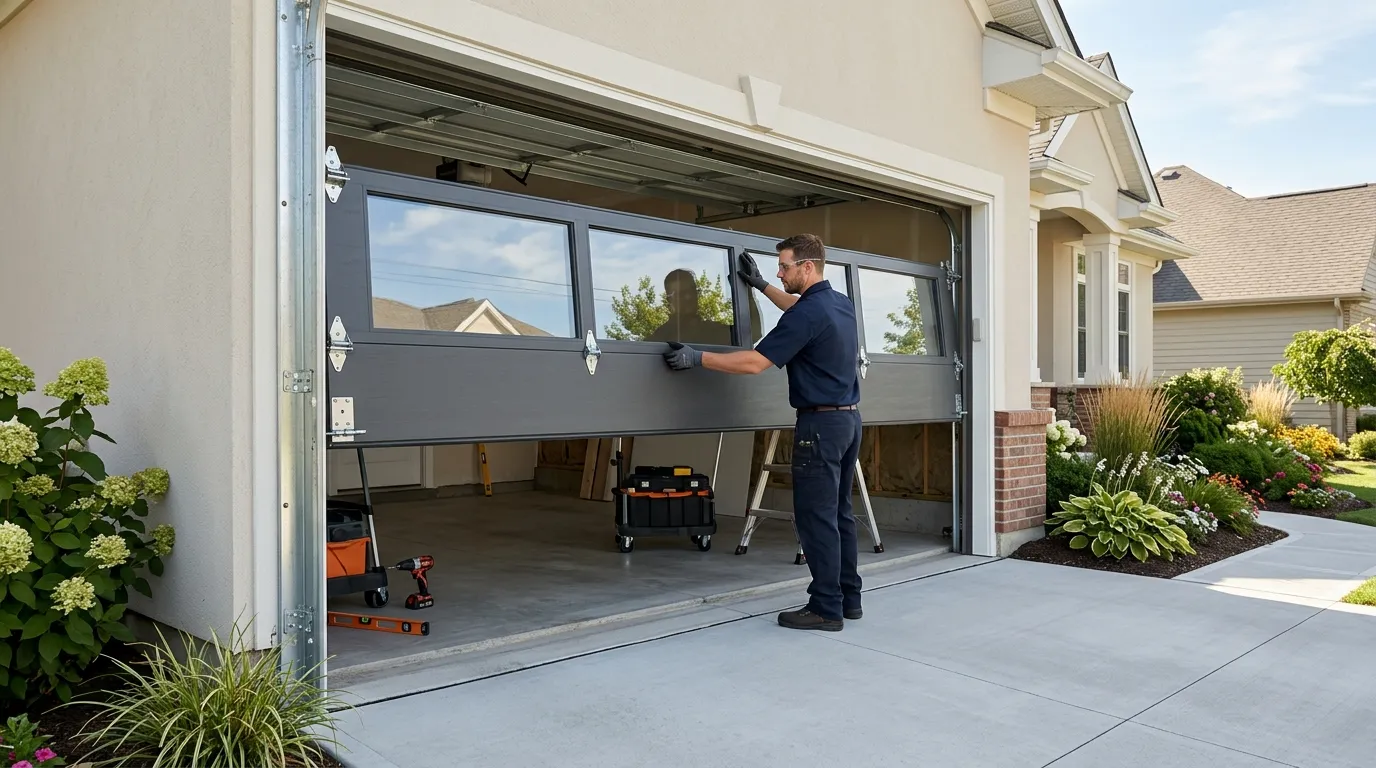
A broken spring shows up differently. The door won't budge, or it moves a few inches and stops, or it slams down fast when someone tries to lift it by hand. On a center-mounted torsion system, one spring failing under a double door often still leaves enough tension on the working side to make the door look level at a glance - it isn't safe to force it either way.
Cold plays a role here too. This area sits in a moderate-cold climate band, and low temperatures stiffen door hardware and grease enough to slow openers down or trip a sensor that's slightly out of true. If the problem only shows up on cold mornings, that's a hardware and alignment issue, not a sign the whole unit needs to be replaced.
What the Fix Involves
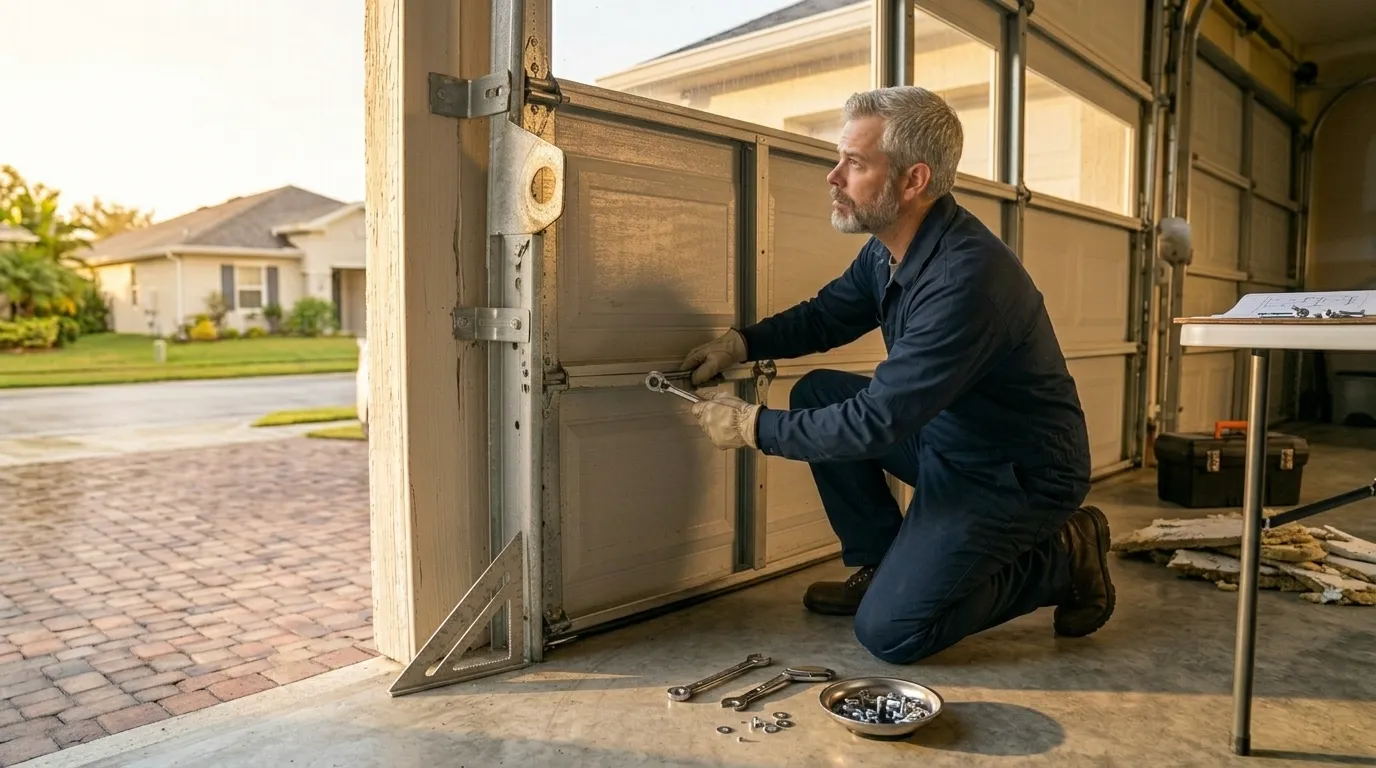
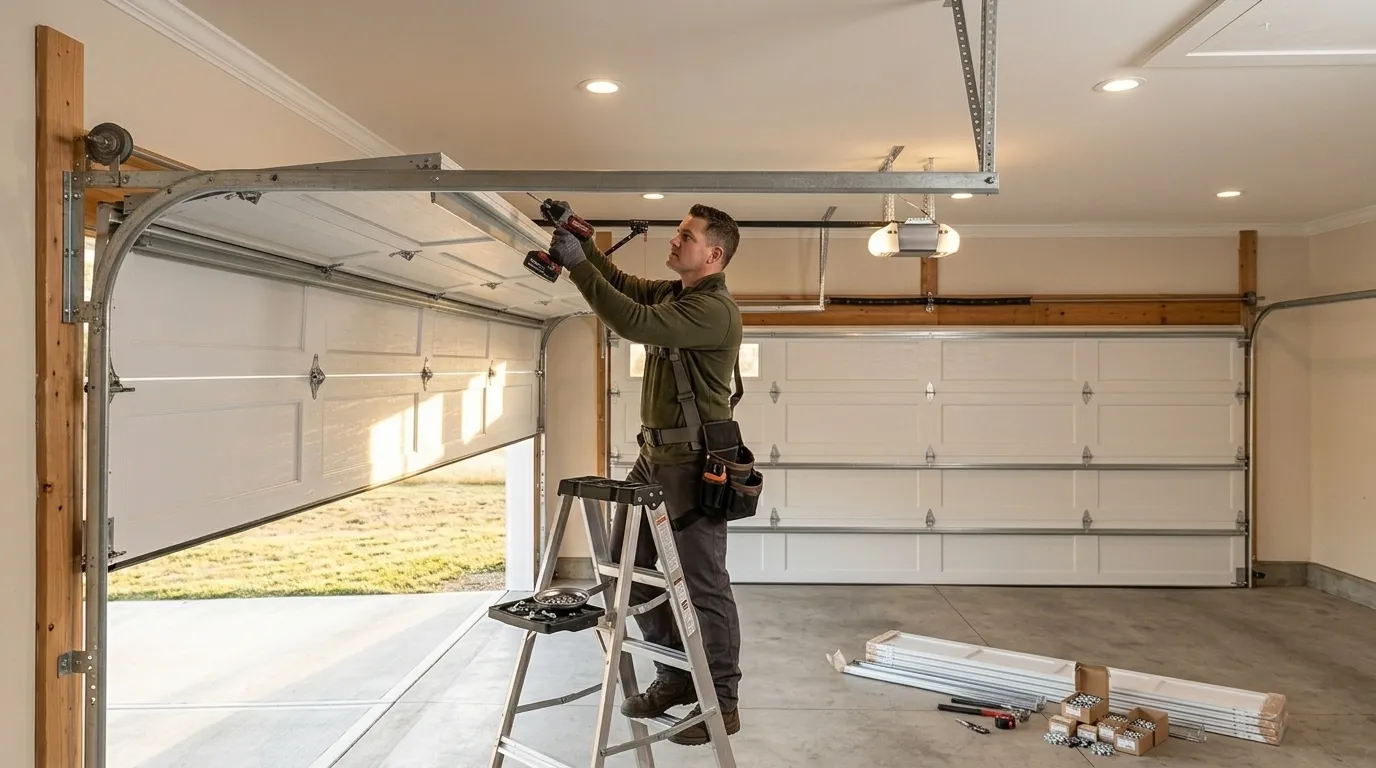
For a broken torsion spring, we match the replacement to the door's weight and cycle rating rather than grabbing whatever's on the truck - a spring rated for a lighter door will fail again within a year on a heavier one, and that's a callback nobody wants. On the sectional doors common to this area's 1980s-and-later construction, that usually means a matched pair even if only one spring broke, since the other is close behind it on the same install date.
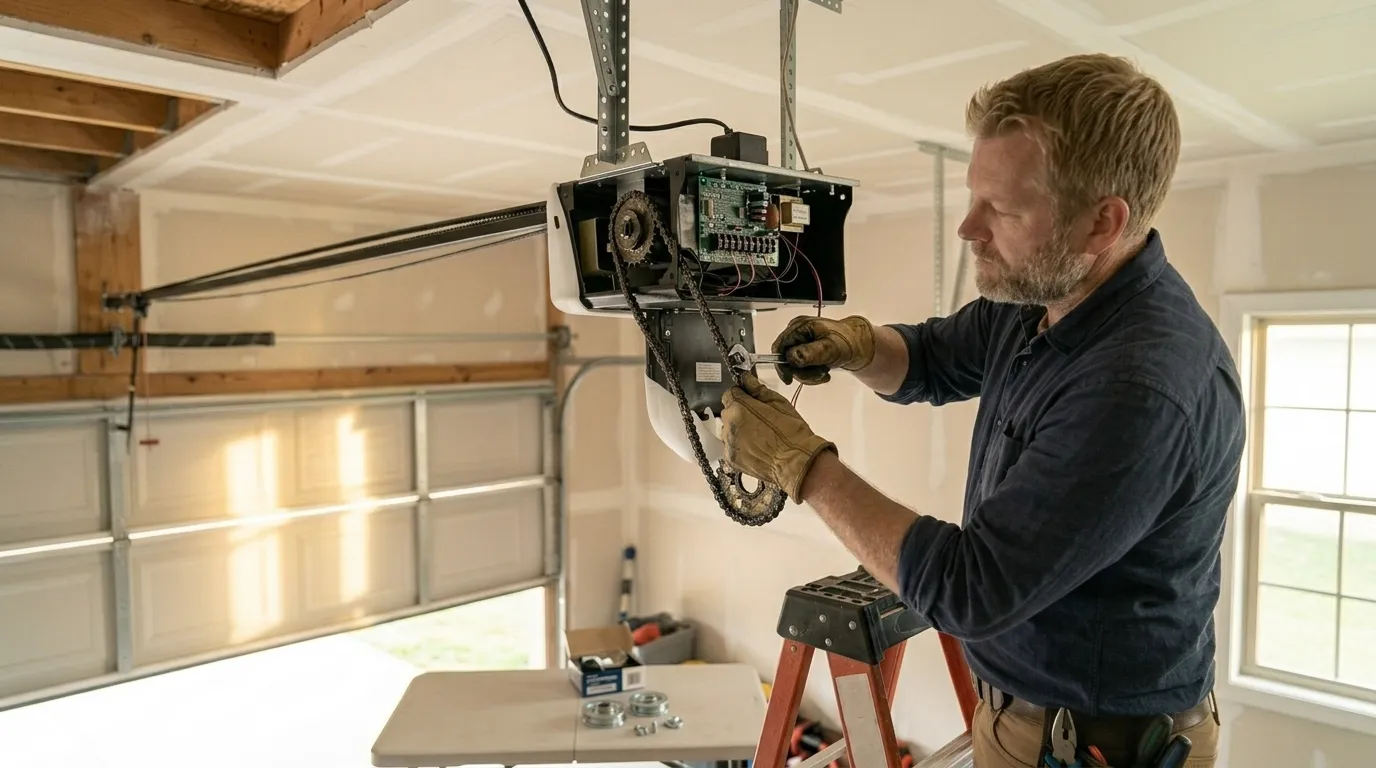
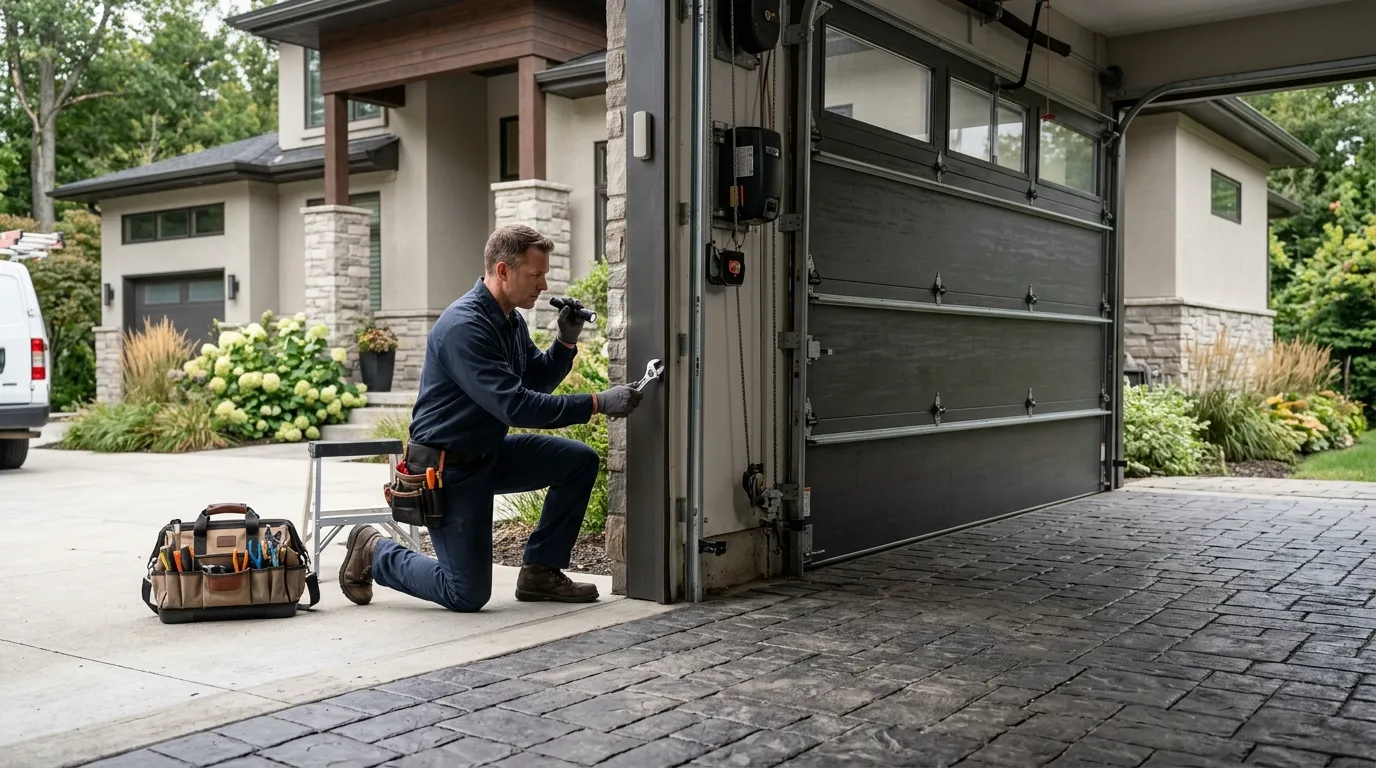
For opener faults, we start with the photo-eye sensors and the circuit board before touching the motor - it's the cheaper fix and it's right more often than not on units from this era. If the board itself has failed, replacement parts for some older circuit-board openers can take a few days to source, and we'll tell you that up front rather than promise a same-day fix we can't back up.
What we won't do is talk you into a full opener replacement when a sensor realignment solves it. If the unit's failing repeatedly and parts are getting hard to find, we'll say so - but that's a smaller share of the calls out here than it is on the older housing closer in.