What Can Go Wrong
Most houses in Entiat went up around 1989, which puts this town's stock noticeably younger than a lot of what we see closer to Wenatchee, where the median build year runs closer to 1977. By the late 1980s, sectional doors with steel tracks and stamped-steel rollers on plain bearings were standard, replacing the older single-piece doors and their heavier hardware from prior decades. That steel-on-steel setup runs loud from day one and wears the track edges faster than a nylon roller would.
On a house this age, the roller stems are usually still the original short 4-inch stems, sized for lighter doors before insulated steel became common. If a homeowner has since swapped in a heavier insulated door without upgrading to 7-ball bearing rollers and longer stems, the rollers take more load than they were built for and wear out well ahead of schedule. We also see galvanized coating wearing through on the roller wheel itself, which starts the rust that eventually seizes the bearing.
One limitation worth naming: we can't tell you which of these you have without seeing the door. A 1989-era garage in Entiat could still have its original hardware or could have been upgraded twice since, and the fix is different in each case.
How It Shows Up
The first sign on a steel-roller door is noise - a grinding or clunking as the roller passes through the track bend near the top of the opening, worse in cold weather when the bearing grease thickens. Entiat sits in a cold-moderate climate band, and that seasonal stiffening is a real factor here: a roller that rolled fine in August can start binding by December simply because the old grease has stiffened, not because anything broke.
You may also notice the door catching or jerking at the same spot in its travel every time - that's usually a specific roller that's flat-spotted or cracked, not a track problem, even though it feels like one. On doors with the original stamped rollers, a wheel splitting along the seam is common enough by now that it's often the reason for the service call in the first place.
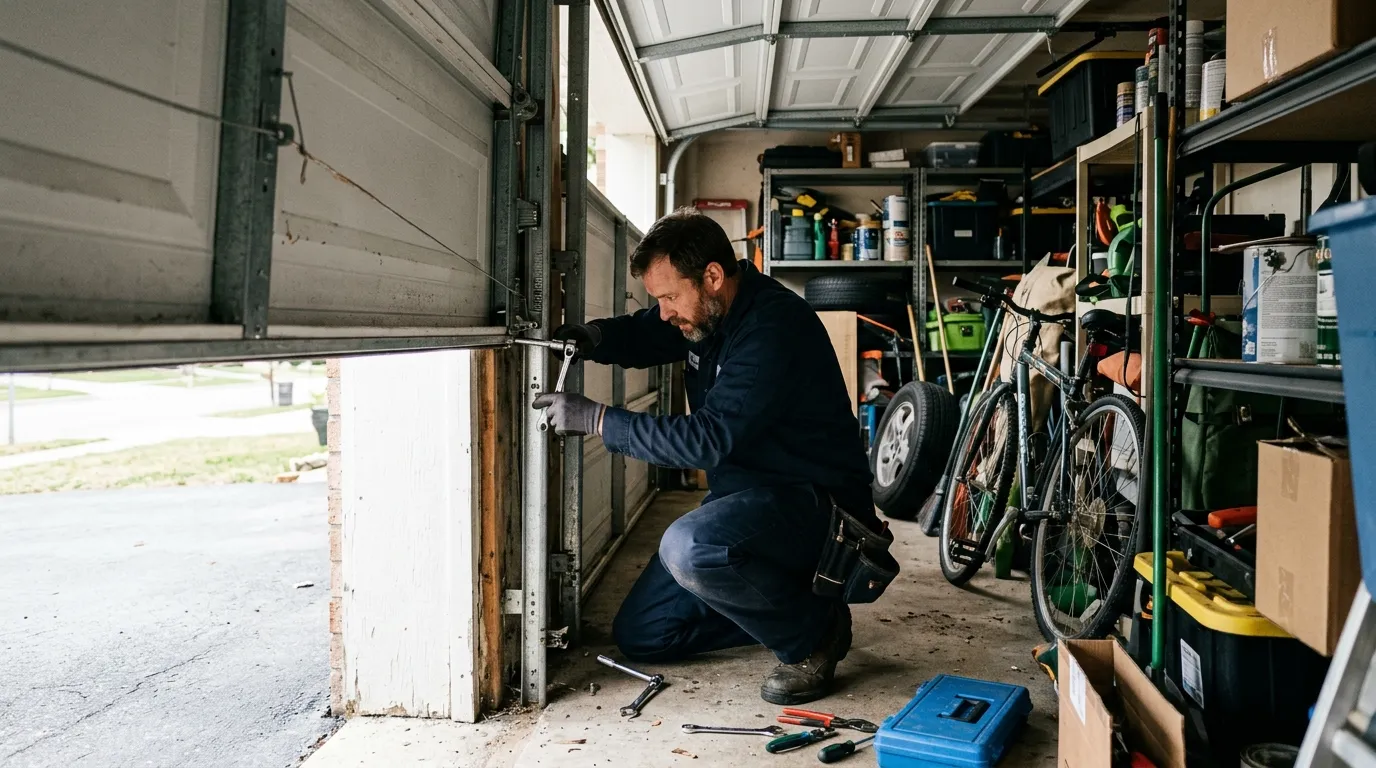
If the door is dragging on one side more than the other, check whether one roller has simply come out of its bracket - on older stamped hardware the retaining tabs bend outward over time and let the roller wheel walk sideways under load.
What the Fix Involves
For a house this age we're typically pulling stamped-steel rollers off plain bearings and replacing them with sealed nylon rollers, which run quieter and don't need the periodic lubrication the old steel wheels do - a real advantage once the cold moderate winters here start stiffening grease every year. If the door's weight has crept up since 1989 through an insulation retrofit or a full door swap, we size the new stems and roller ball bearing count to match the current door, not the original one.
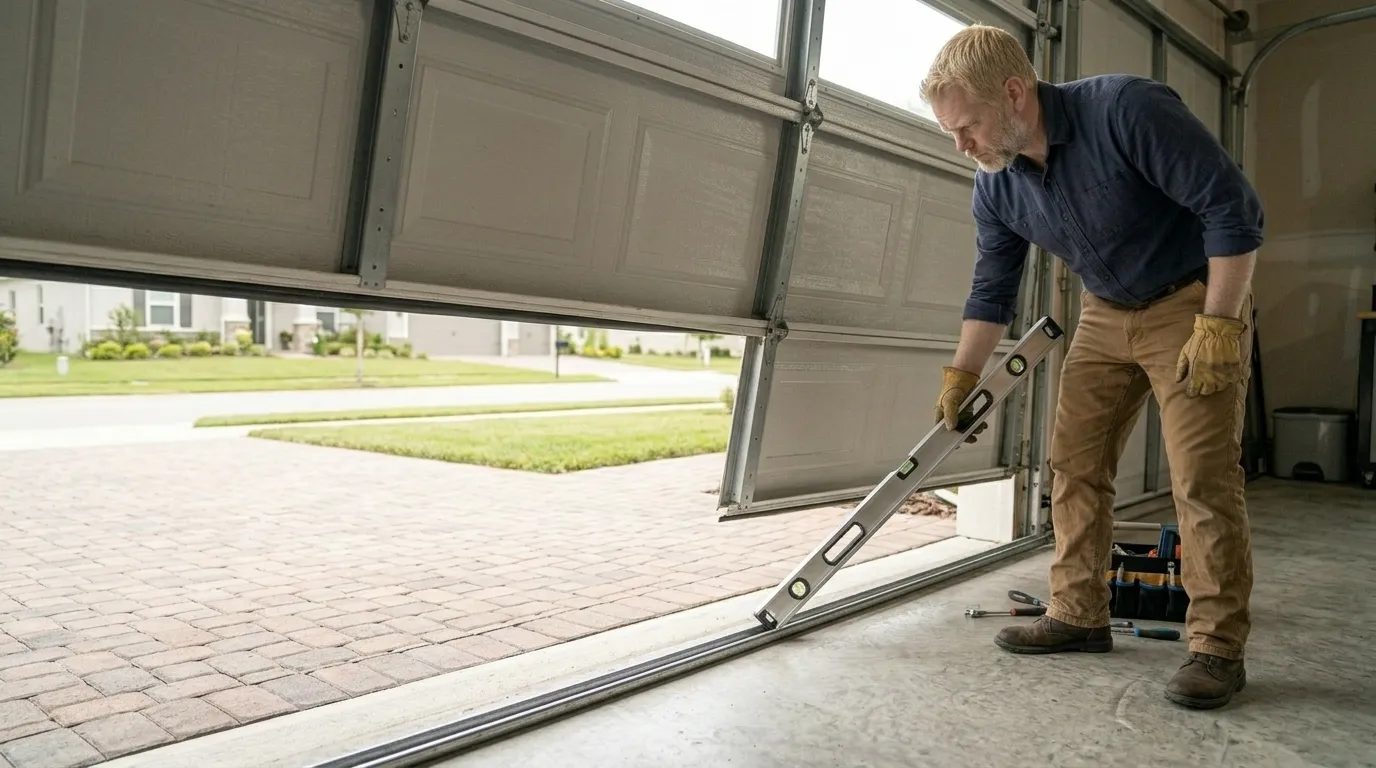
We also check the track alignment while the rollers are out, since a worn roller and a track that's drifted out of plumb often show up together, and replacing one without fixing the other just wears the new hardware the same way. What we don't do is guess at spring tension while we're in there for rollers alone - if the springs are original to a 1989 door, that's a separate conversation, not something we fold into a roller job without discussing it first.