What Can Go Wrong
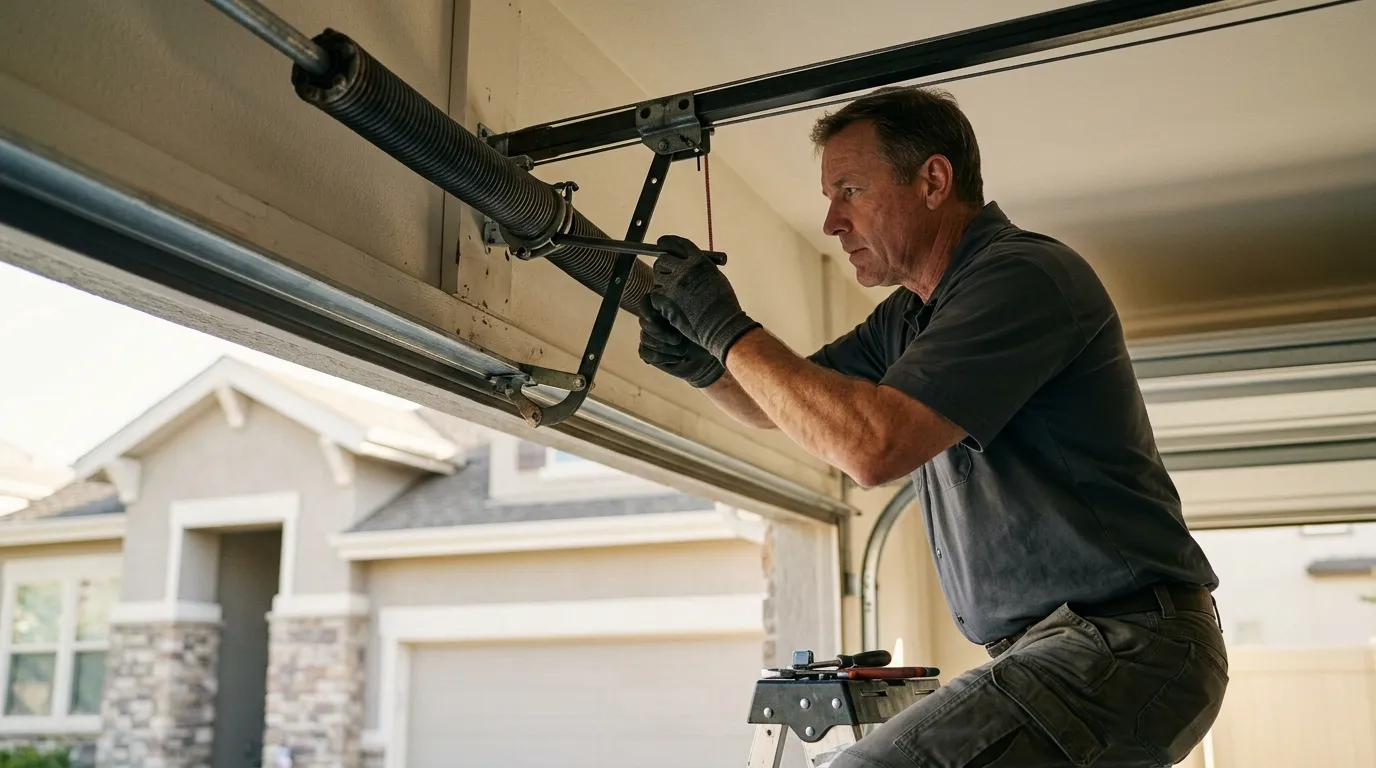
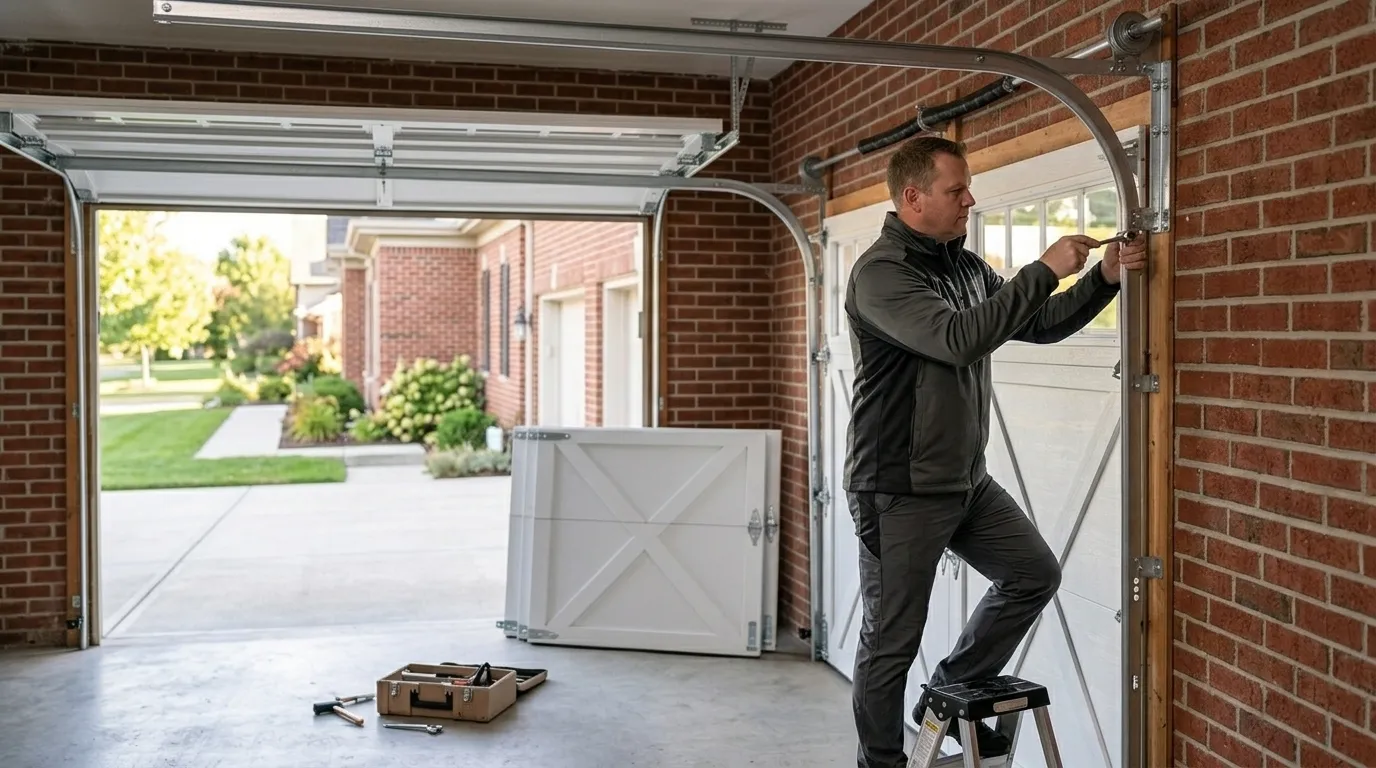
Entiat's median build year sits around 1989, noticeably newer than the 1977 median across the rest of the Wenatchee service area, where most stock dates to the 1960s and 70s. That gap matters more than it sounds like it should. A house built in the late 80s came with a different door than one built in 1965 - lighter steel skin, extension springs instead of the older side-mounted torsion setups, and a track profile that manufacturers have since revised twice over. When that original door finally gives out, the failure point is usually the extension spring cable fraying at the pulley, or the roller track pulling away from framing that was never over-built to begin with. It's not the same fault you'd chase in an older Wenatchee home, and swapping in a generic torsion kit built for that older housing stock is a mismatch waiting to happen. The fix here is sized to a late-80s opening, not a mid-century one.
One honest limit: if your door was custom-cut for an unusual opening width, we can't always get a same-day match on the panel - some sizes have to be special-ordered, and that adds lead time before install day.
How It Shows Up
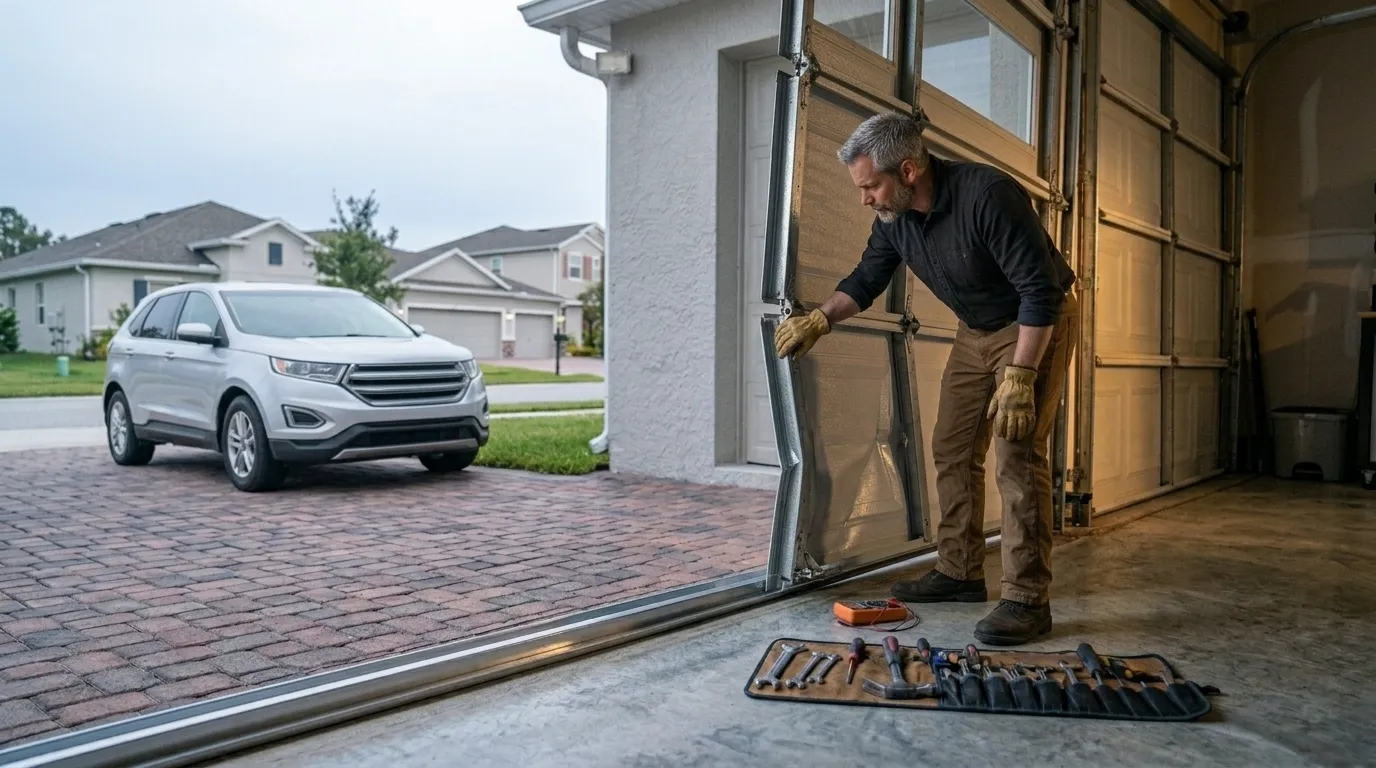
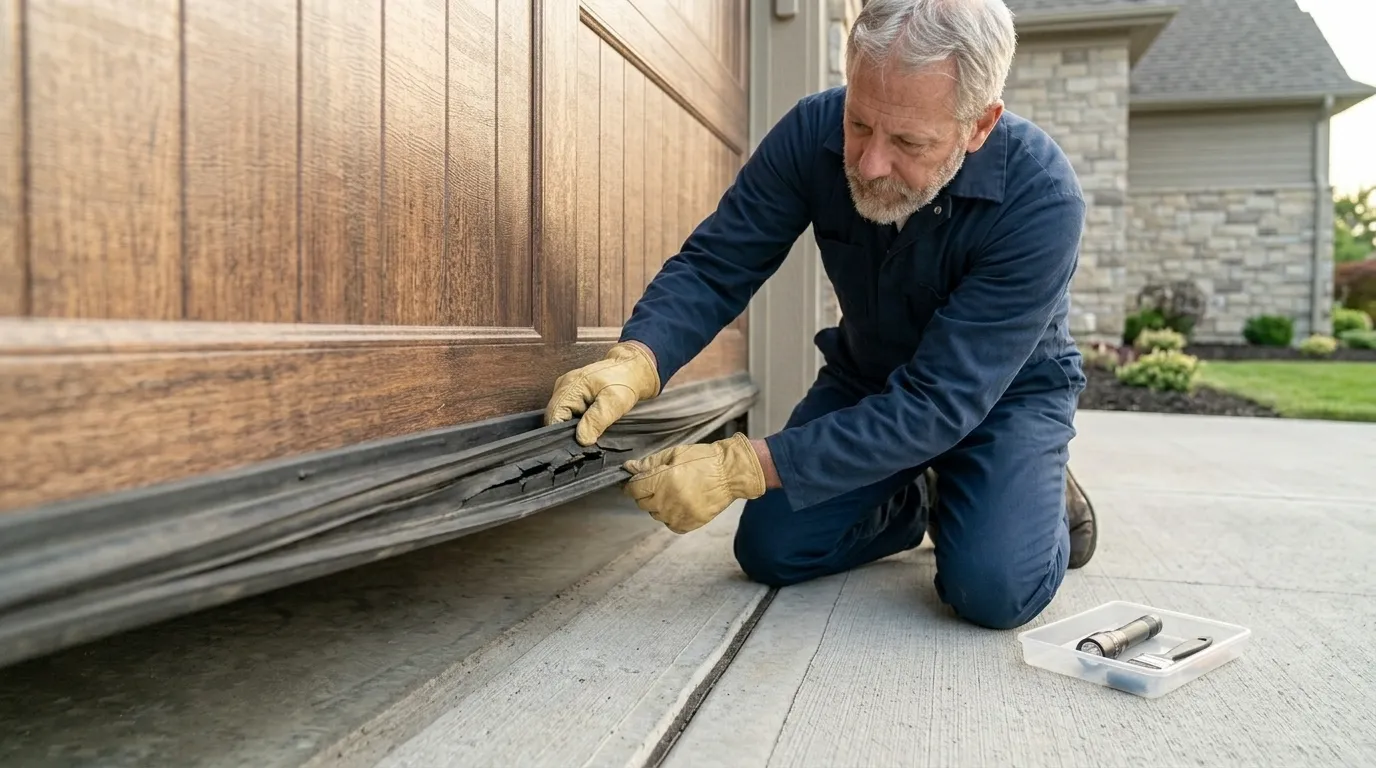
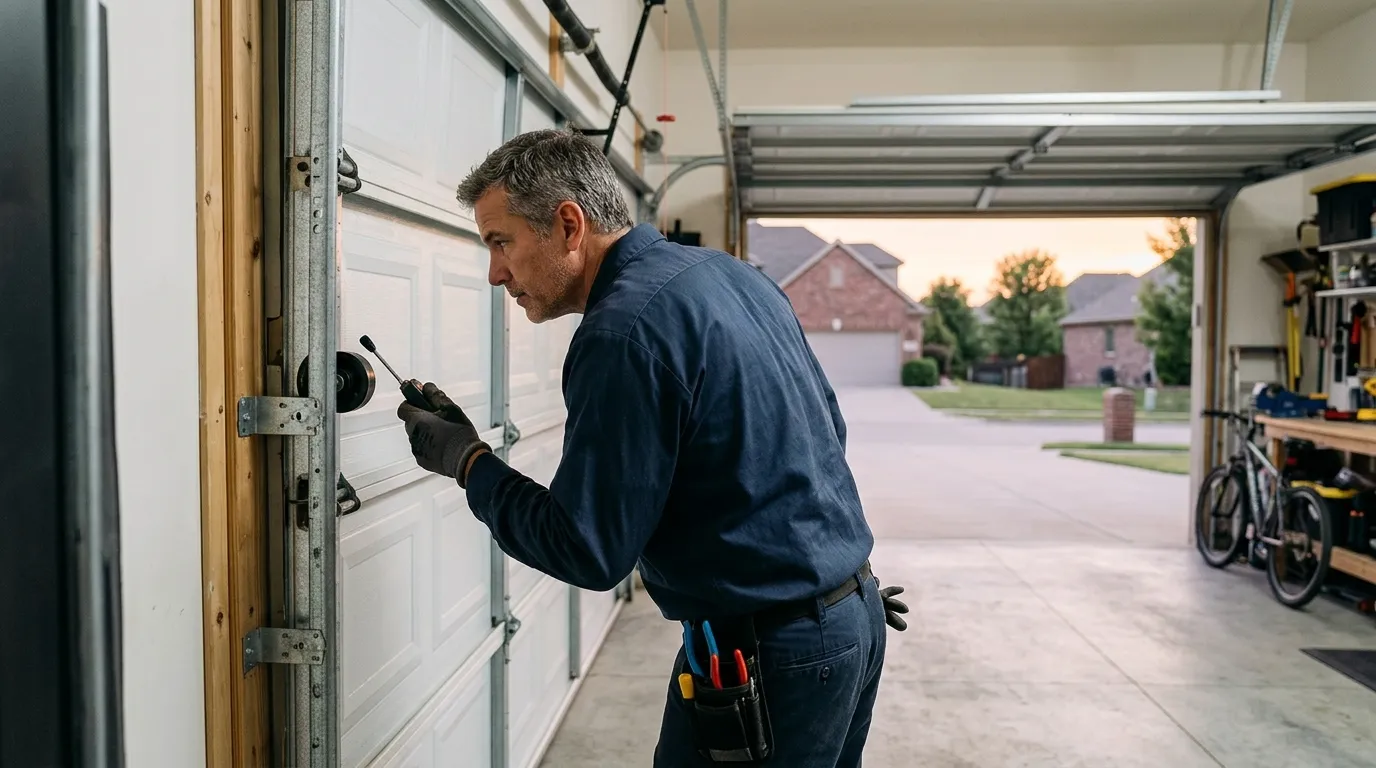
On a house from this era, the tell is usually the door dropping unevenly on one side when the opener runs, because an extension spring has stretched past its rated cycles rather than snapped clean the way an older torsion spring does. You'll also see the track separating slightly from the jamb on one side - common on the lighter framing used through the late 80s build boom that produced most of Entiat's housing. Cold mornings make it worse: in this climate band, metal track contracts enough that a door already running loose on its rollers will bind or jump the track on the first cold start of the day. None of this is dramatic. It's a slow drift toward a door that either won't seal at the bottom or won't open past halfway, and by the time it's obvious, the opener has usually been fighting the imbalance for months.
What the Fix Involves
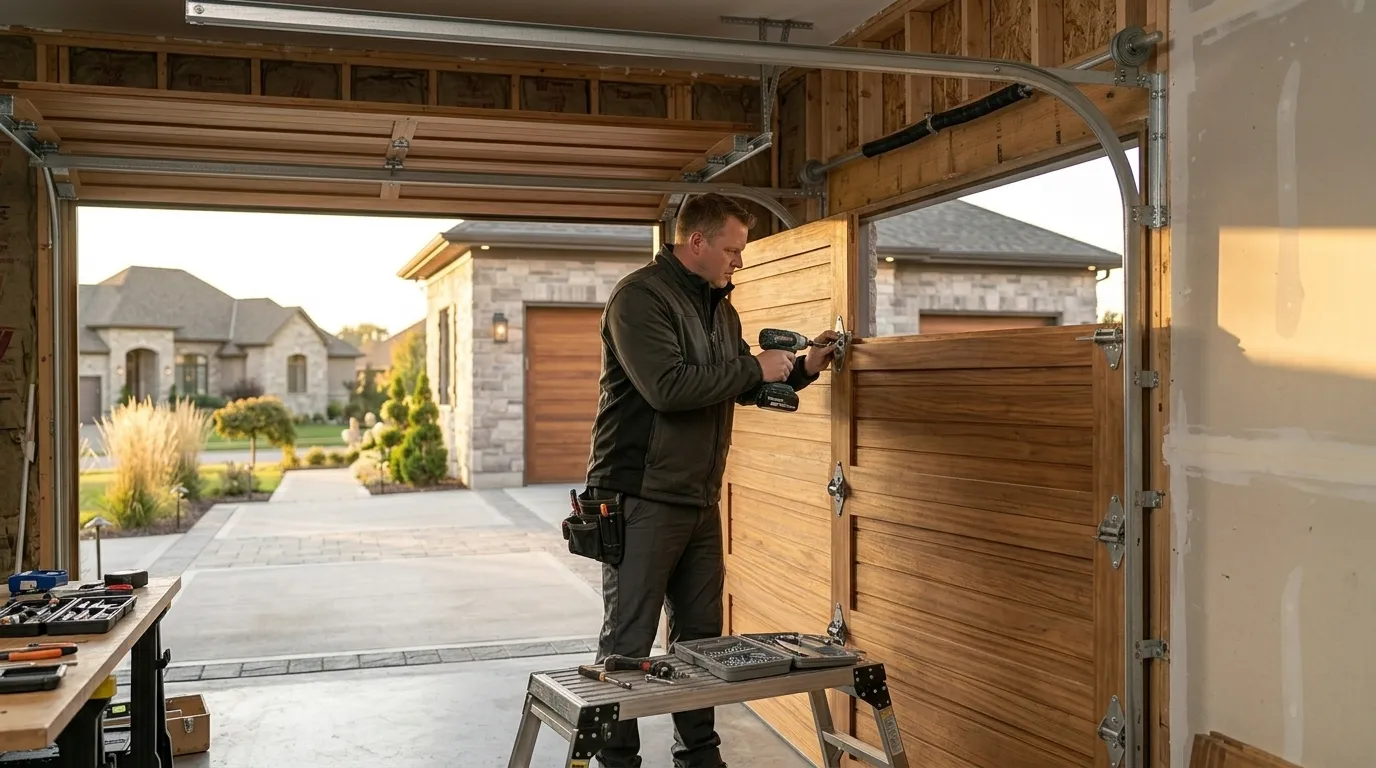
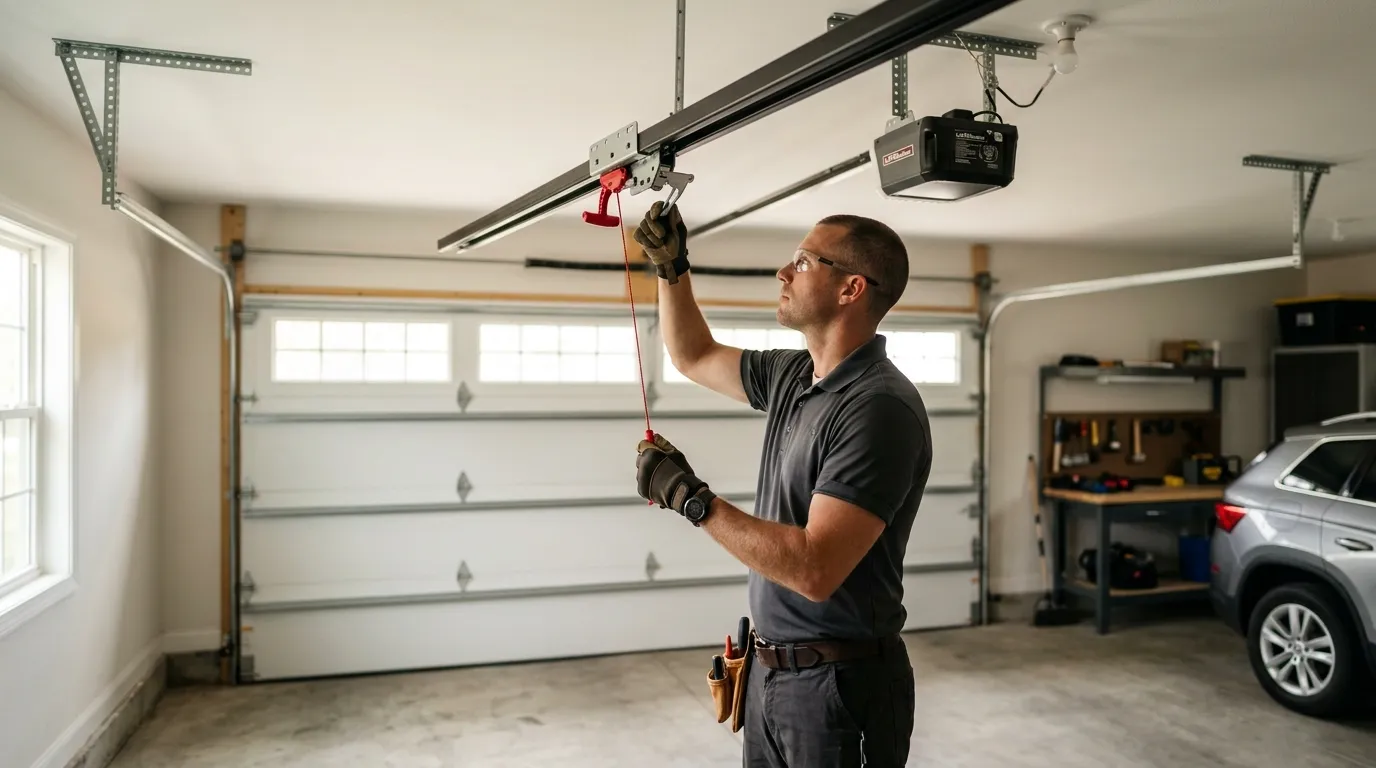
For a late-80s opening like most of what's out here, replacement means matching the door to hardware built for that generation of framing - correct spring type for the door weight, track sized to the actual jamb condition rather than assumed new-construction tolerances, and an opener with force settings set for the door you're installing, not the one that came out. We check the header and jamb for the kind of settling you get in a house pushing 35 years old, since a door hung plumb on a header that's shifted a half-inch will bind within a season no matter how new the parts are. With 454 households in Entiat and a median income around $76,250, most of what we install here is a mid-range steel insulated door rather than a premium custom order - solid, sized right, and built for winters that call for a real seal at the bottom panel.