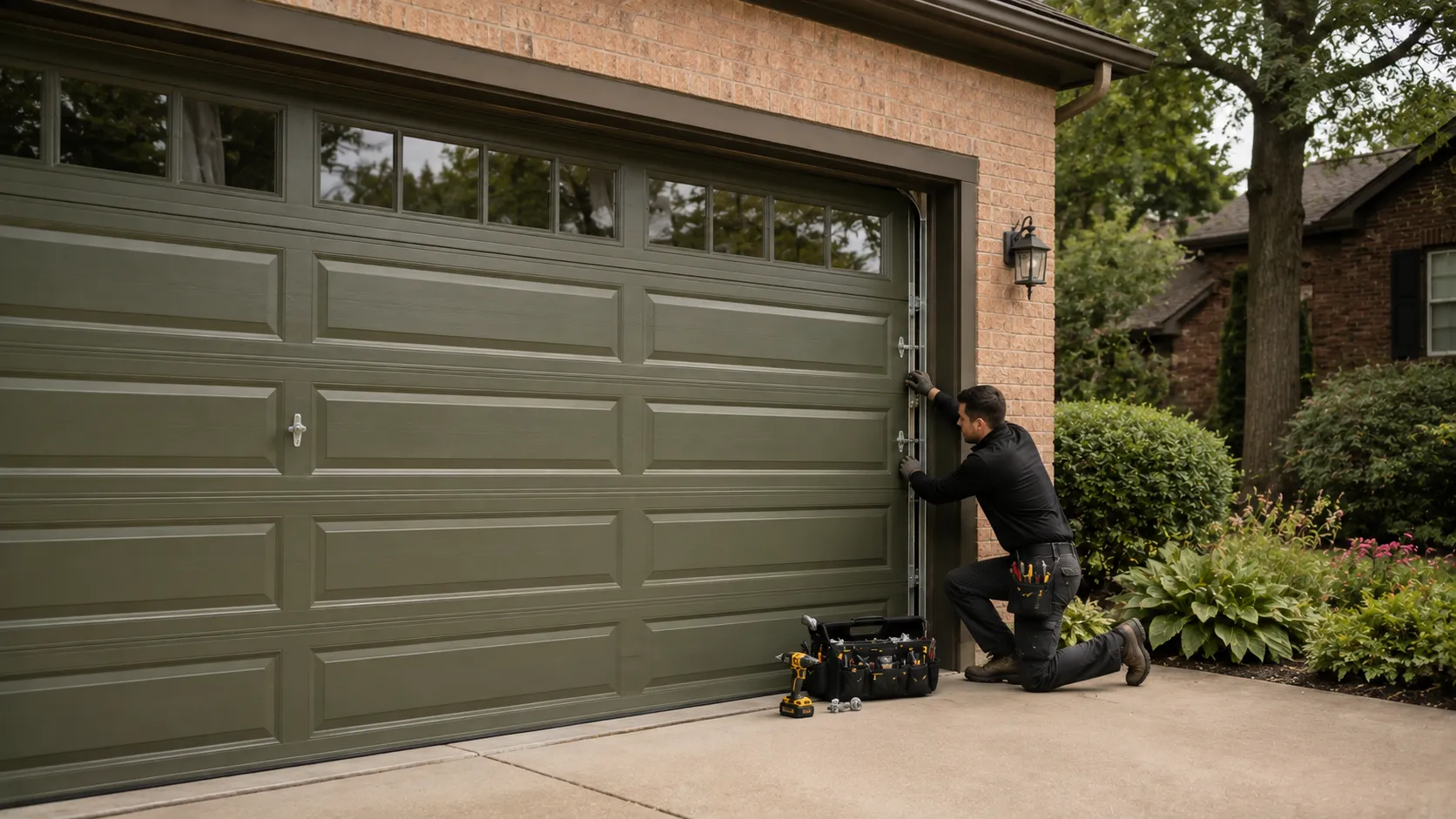
What Can Go Wrong
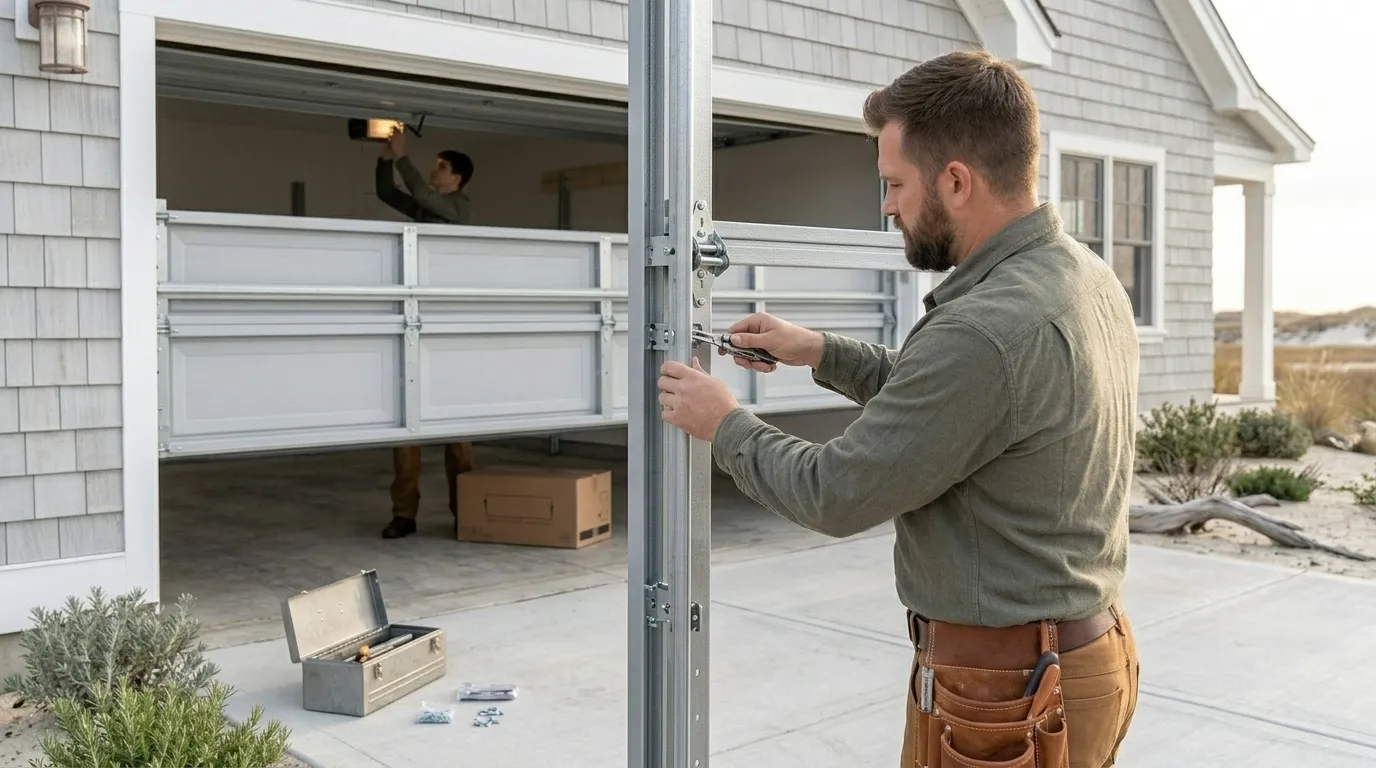
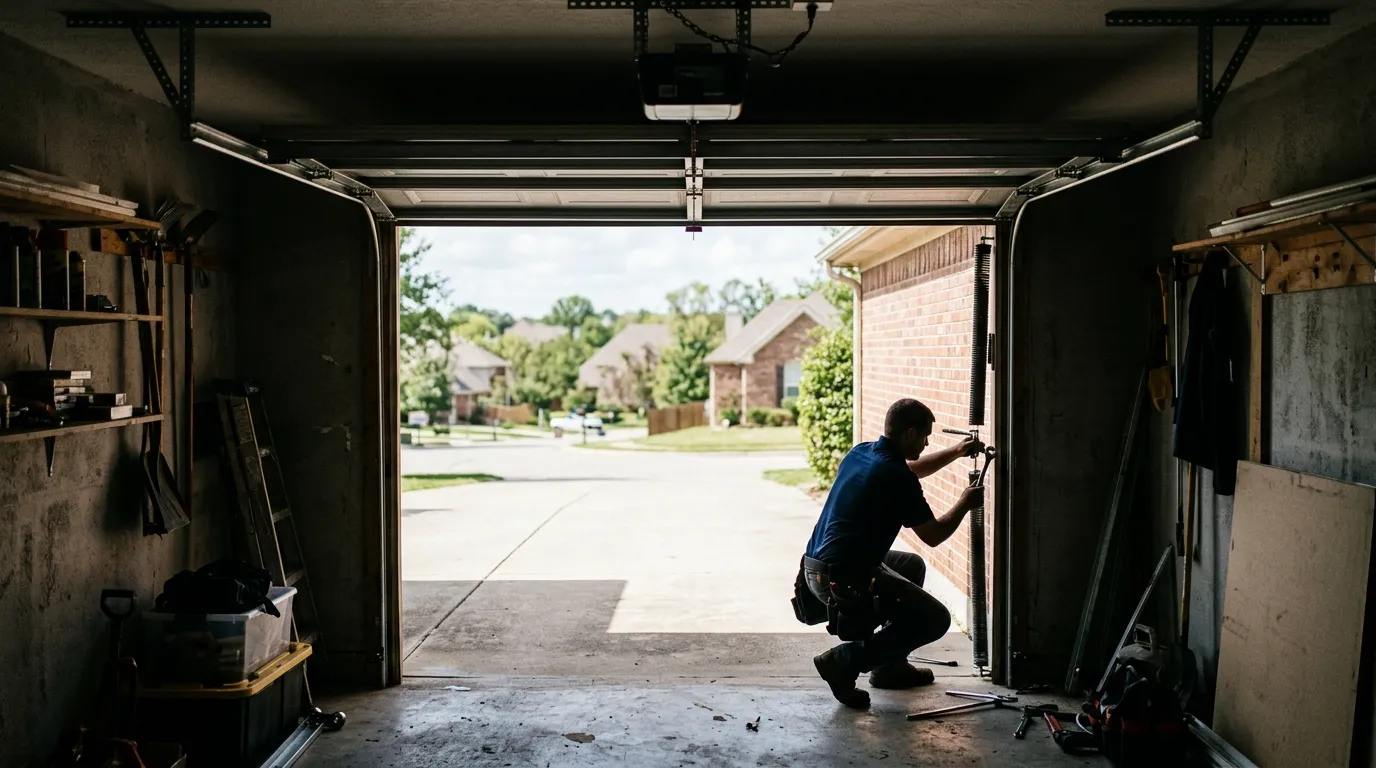
South Wenatchee's median house went up in 1959, which puts it ahead of most of the broader service area, where the typical build year runs closer to 1977. That gap matters because a lot of what went into a garage in 1959 is still bolted to the wall. Extension springs instead of torsion, single-wire safety sensors that predate the federal photo-eye requirement, and openers with chain drives that have outlived two or three motors already. When one of these fails, it usually fails all at once - a snapped extension spring lets the door slam down, or a stripped gear inside an old chain-drive opener leaves the door stuck halfway. We're not going to tell you every door here is original, but in a neighborhood built this early, it's common enough that we check the spring type and the opener age before we touch anything else. With only 431 households in South Wenatchee, this isn't a neighborhood with a lot of matching newer builds diluting the older stock - most of what's here is what's been here.
How Long It Takes
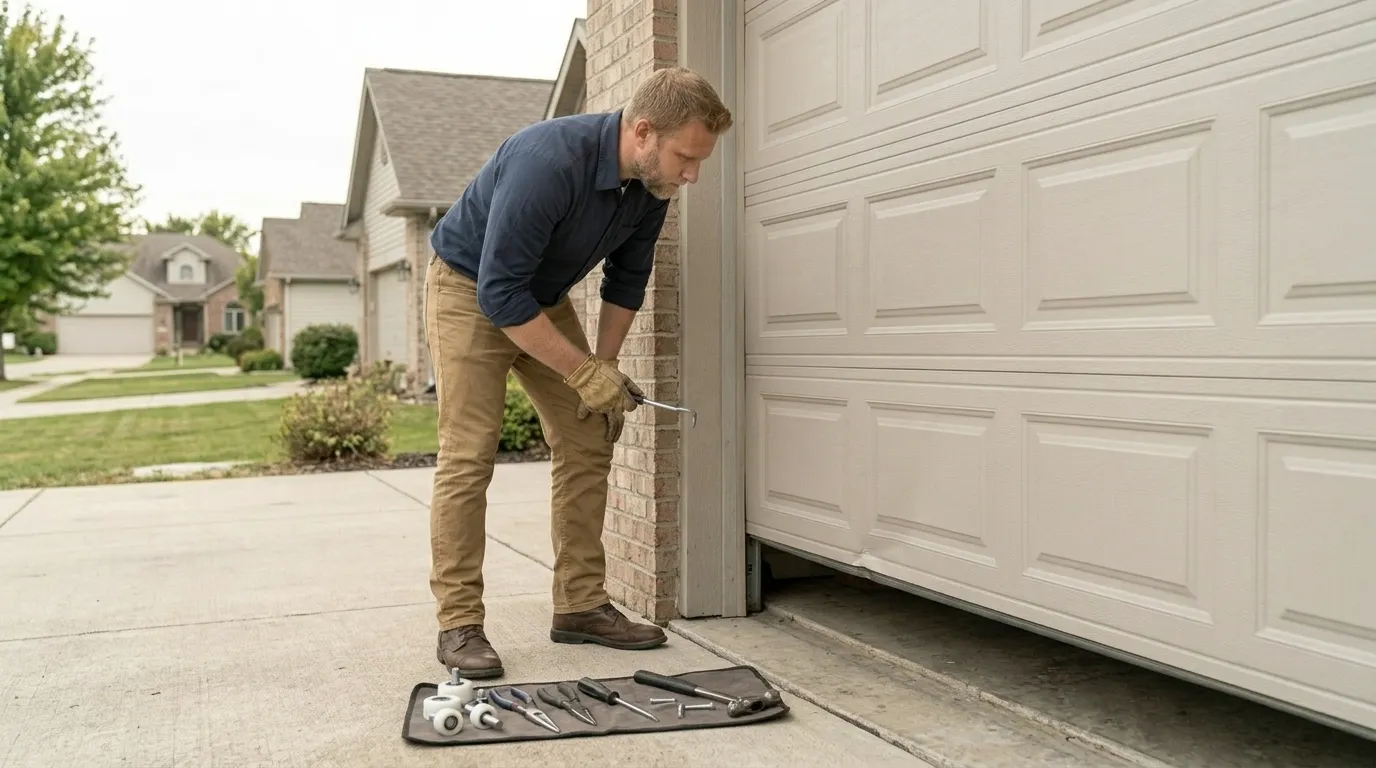
The service area sits in a cold-moderate climate band, and that shows up specifically in how these older doors fail in winter. Extension springs lose tension faster in cold, dry stretches, and a spring that's been stretching since the Eisenhower administration doesn't give much warning before it lets go. We come from Wenatchee, three miles out, so the drive itself isn't the bottleneck - what takes time is sourcing parts for hardware this old. A standard torsion spring is a same-visit fix. A period-correct extension spring kit, or a replacement gear for a chain-drive opener from that era, sometimes means a short wait while we track down the right part rather than swapping in something that doesn't match the drum or the drive. We'll tell you straight when that's the case instead of jury-rigging a fit that won't hold.
How It Shows Up
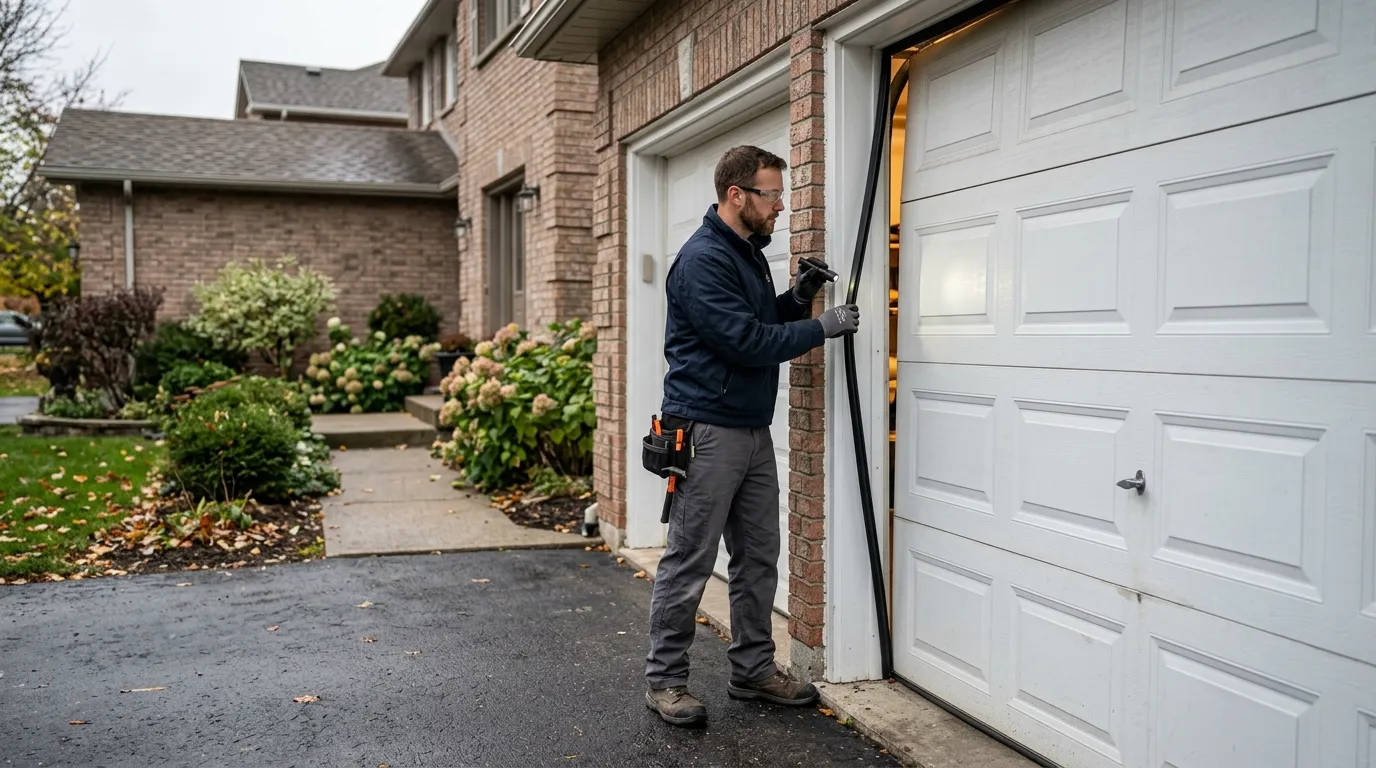
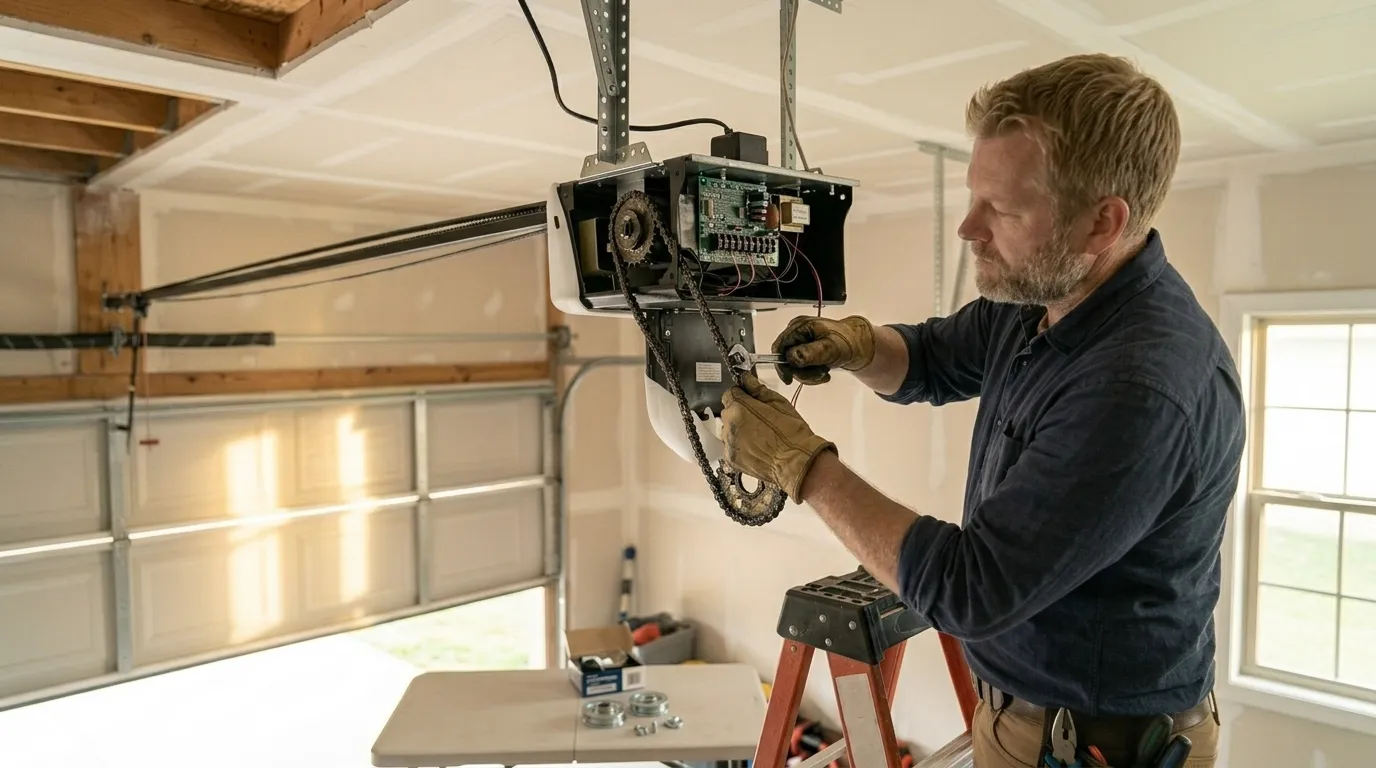
On a house from this era, the failure usually announces itself in one of a few ways. The door drops fast and hard instead of easing down - that's a broken or badly worn extension spring, not a slow opener issue. The opener hums but the door doesn't lift - often a stripped nylon gear inside a chain-drive unit that's decades past its expected life. Cables fraying at the drum end show up as one side of the door hanging lower than the other, a sign the original hardware is at the end of its run rather than just needing a tighten. None of this is unique to South Wenatchee's houses specifically, but the odds of hitting original 1959-to-1970s hardware here are higher than in the newer pockets of the service area, and that's what we plan for on the drive over.