
What Can Go Wrong
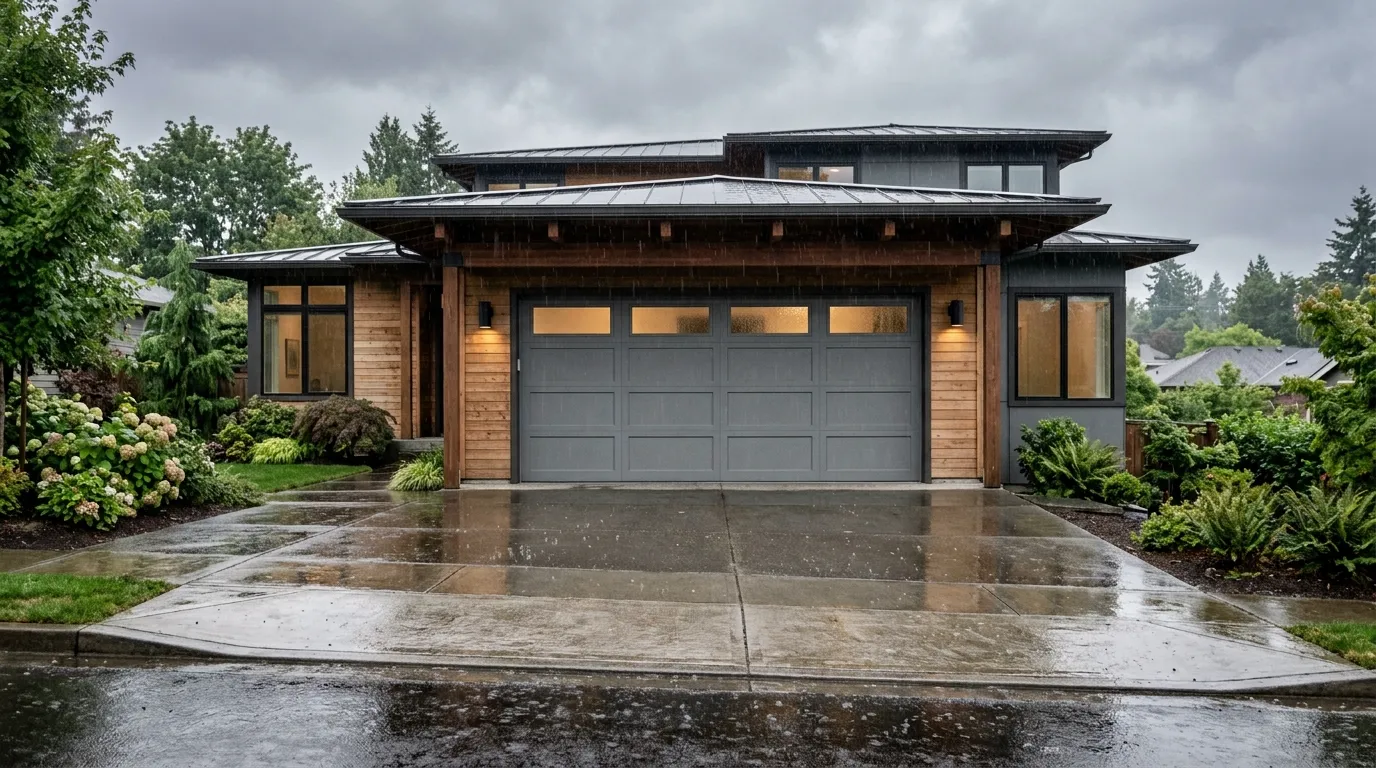
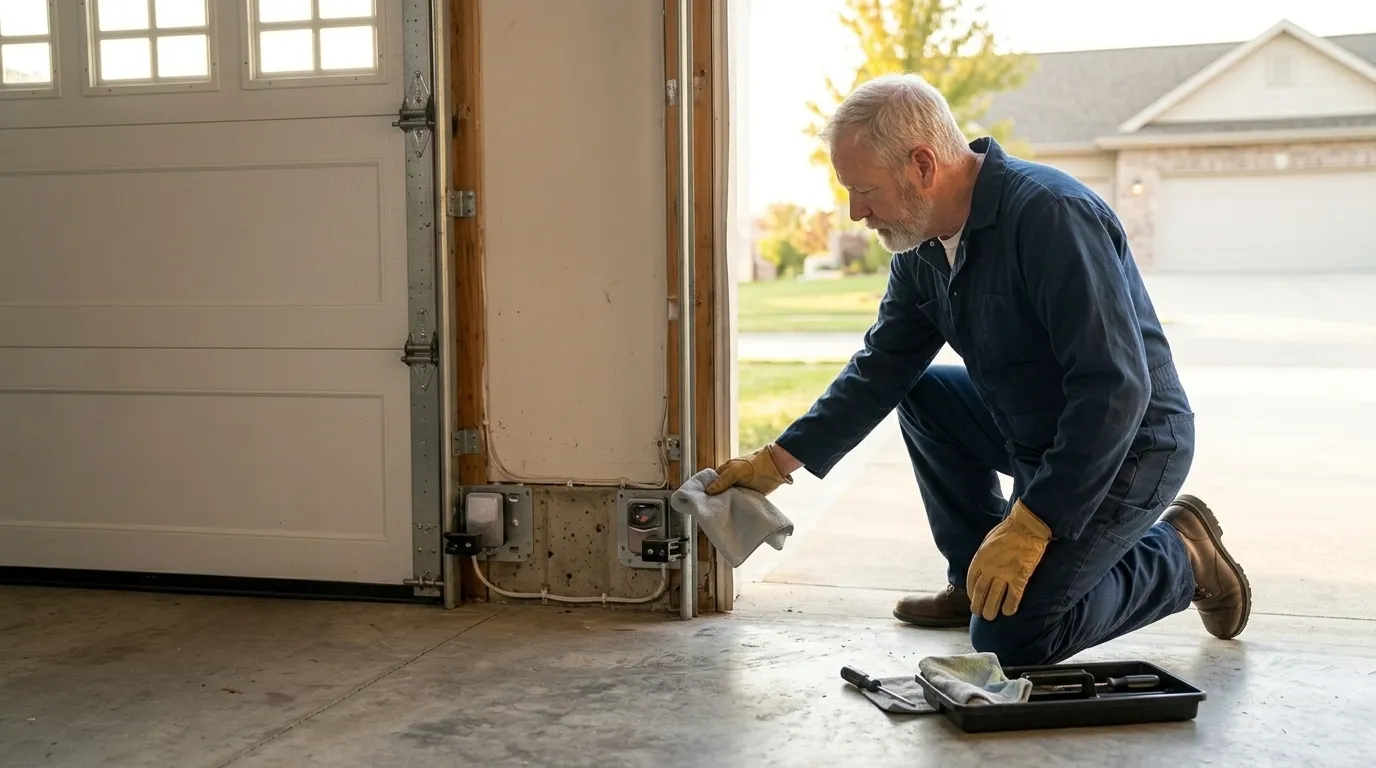
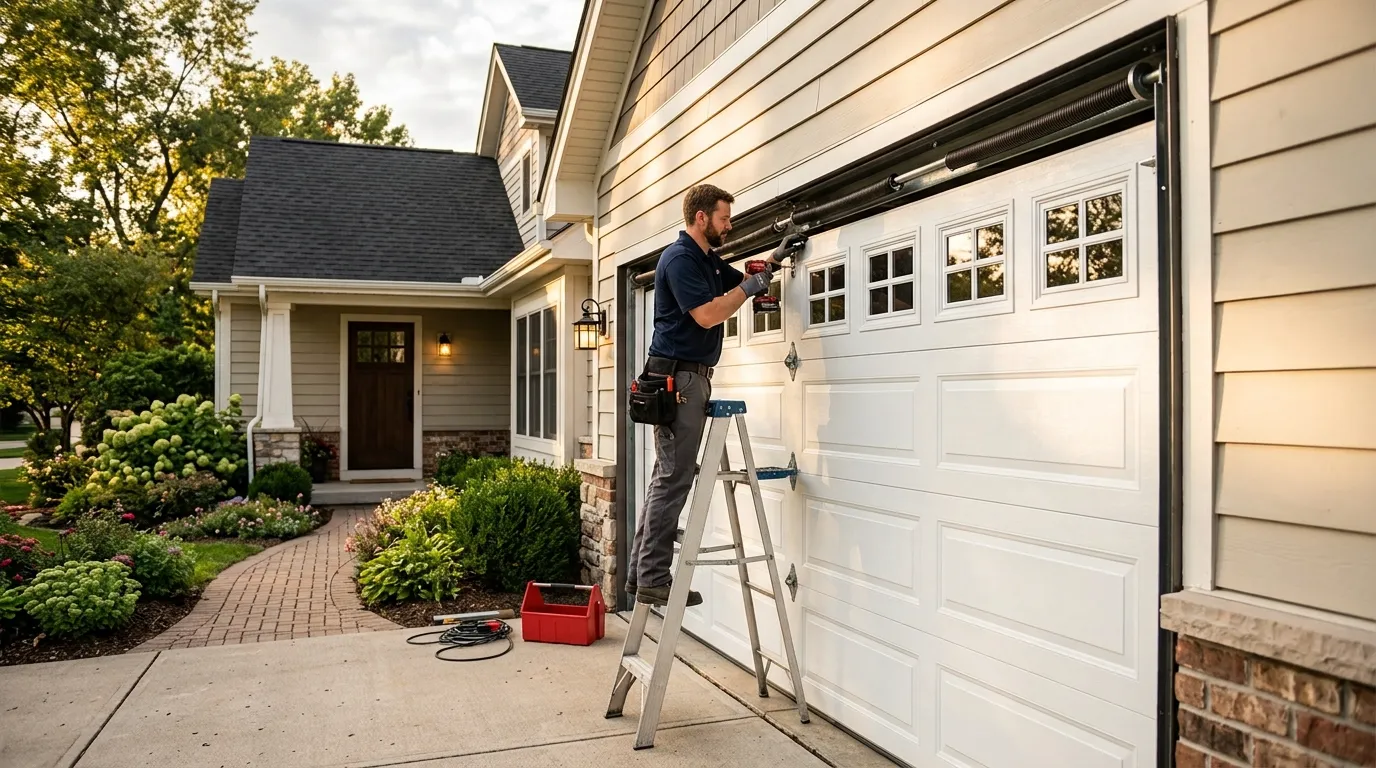
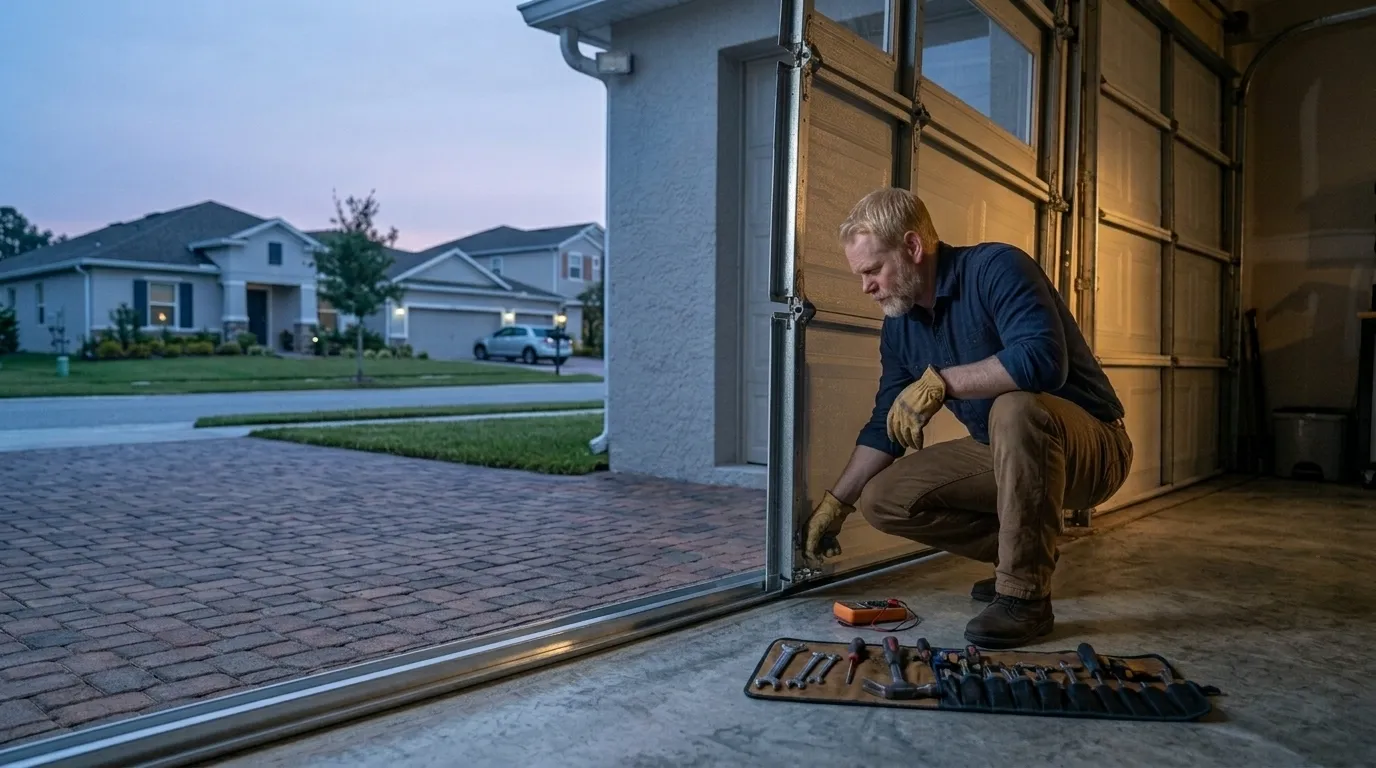
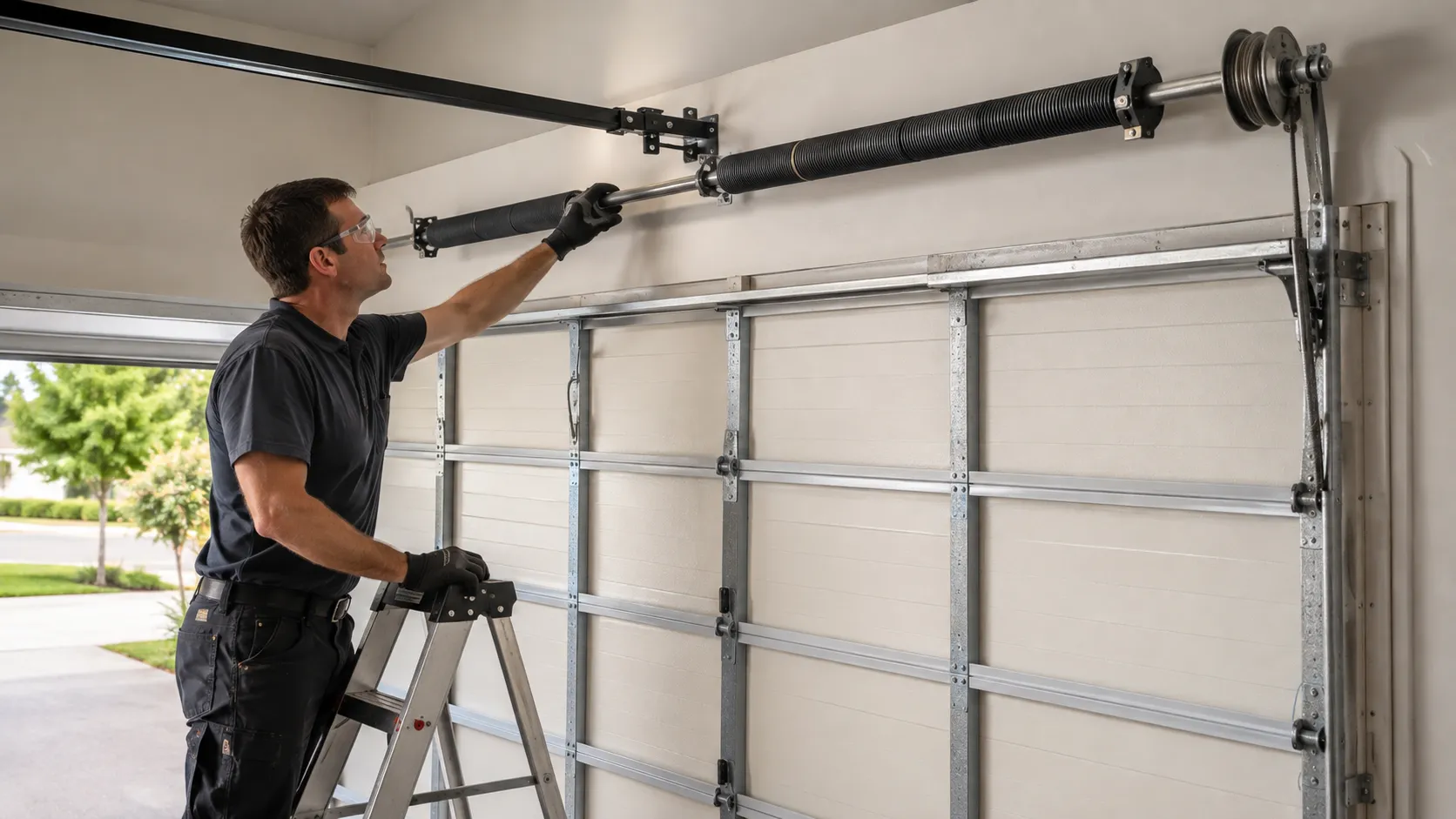
The typical house on this side of the valley was built around 1959, well ahead of the 1977 median for the wider service area. That matters because a door from that era is usually a single-car steel sectional on a narrower opening than what went into homes built in the 70s and 80s, hung on hardware nobody upsized when the door got replaced once or twice over the decades. What we see most in South Wenatchee is original track that was never widened to match a heavier replacement panel, plus torsion springs sized for a lighter first-generation door now carrying a thicker foam-filled slab. That mismatch shows up as a spring that wears out early, rollers that chatter in track that's slightly bent from sixty-plus years of settling, and cable drums that were never re-torqued when the door was swapped. None of this is dramatic on its own. It's slow wear on parts that were already working at their limit. A tune-up here means checking that the spring rate still matches the door hanging on it, not just oiling what's there.
How Long It Takes
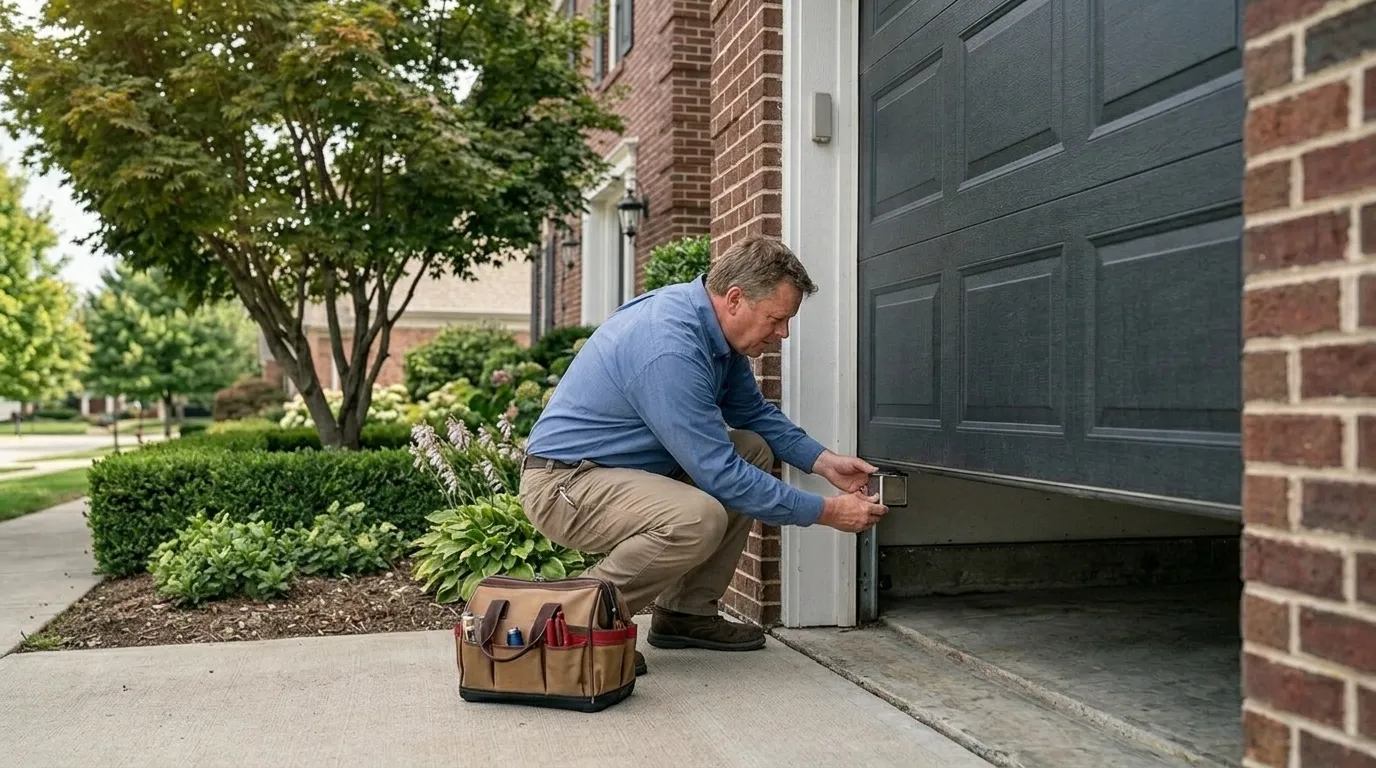
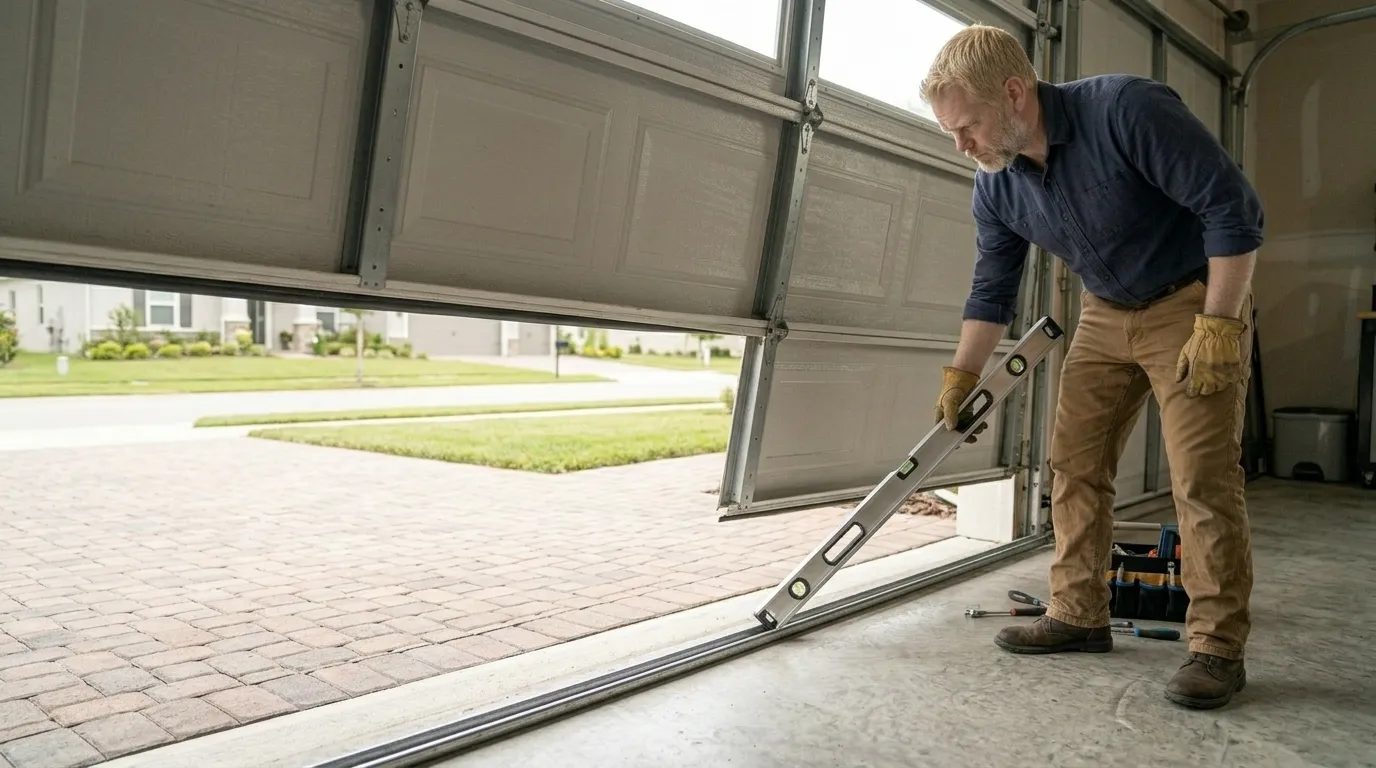
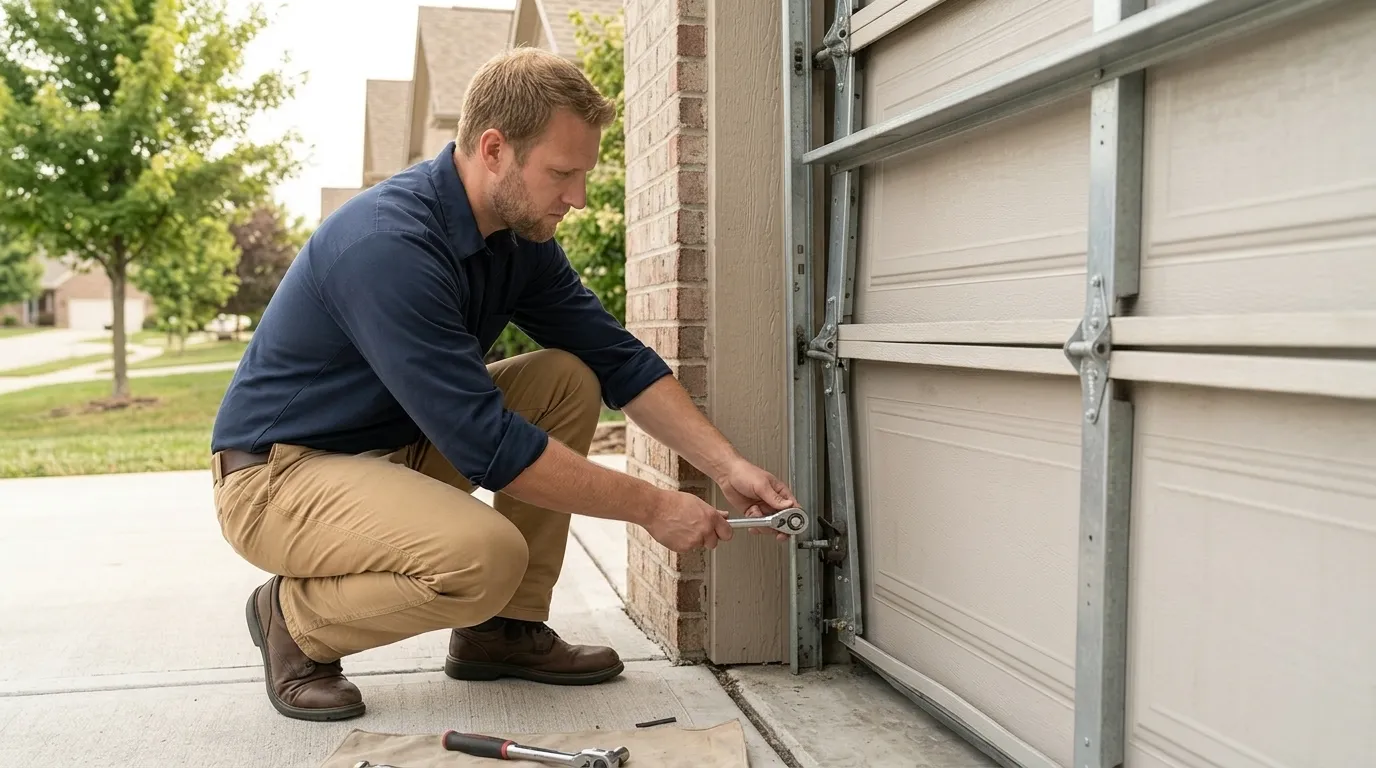
A standard maintenance visit runs the same regardless of neighborhood, but South Wenatchee jobs tend to add a step: measuring the track and spring against the door actually installed, since the pairing here is less predictable than in newer subdivisions. We're coming from Wenatchee, about 3 miles away, so travel isn't the variable - the door's history is. If the hardware matches what we'd expect for a house from around 1959, the visit moves like any other tune-up. If someone replaced the door decades back without matching the springs to it, we'll flag that during the visit rather than force a quick fix that won't hold. We don't carry every spring rate on the truck for hardware this old; if yours is a mismatch, that part may need to be ordered, and we'll tell you that up front instead of guessing at a fix.
How It Shows Up
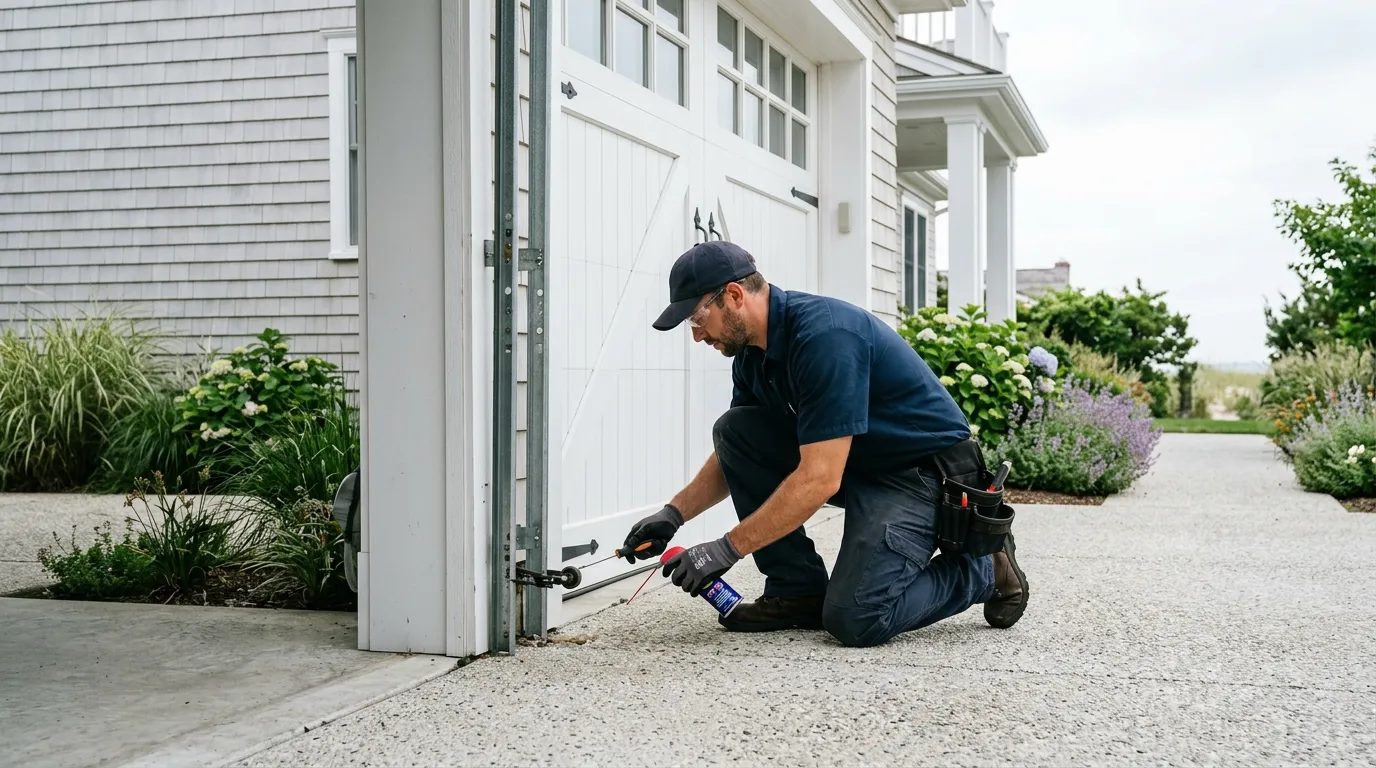
Median household income in South Wenatchee runs lower than the area's $75,854 median, closer to $61,959, and that tends to shape which repairs get done and which get deferred - a spring that's clearly failing gets fixed, a slightly noisy track gets left another season. Add the region's cold climate band, and a door that's already carrying mismatched hardware feels it first when temperatures drop: steel contracts, grease thickens, and a spring already working past its rated cycle count is the part most likely to let go on a cold morning. A tune-up before that point catches the wear while it's still a lubrication and adjustment job, not a spring replacement done in a hurry.