What Can Go Wrong
Houses on this side of Wenatchee went up around 1959, roughly two decades ahead of the 1977 median you'll find across the wider service area. That gap matters. A door installed in the late 1950s or through the 60s usually came with a lighter steel or wood panel, no insulation core, and hardware sized for a garage that was often single-car and narrower than what gets built today.
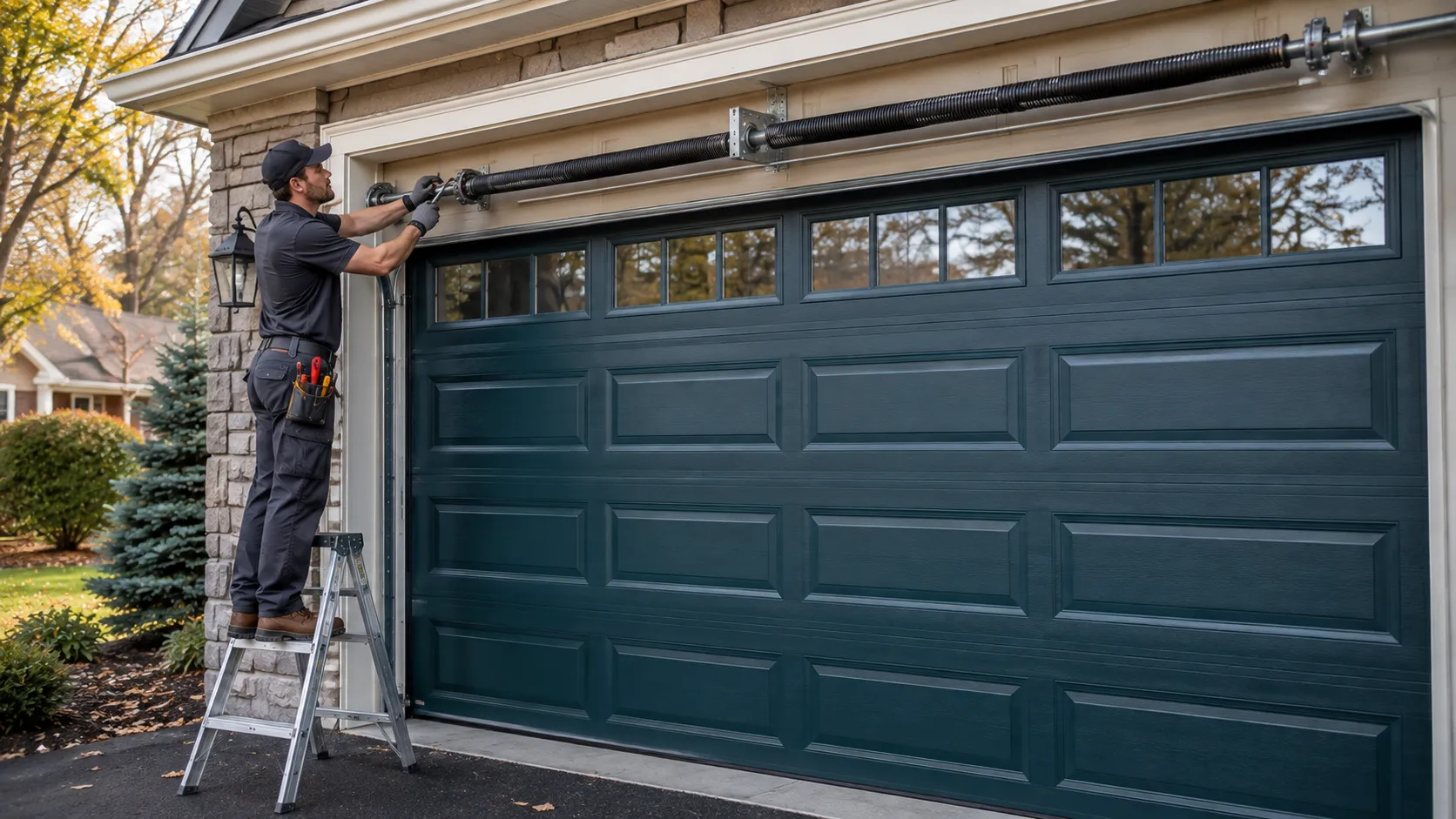
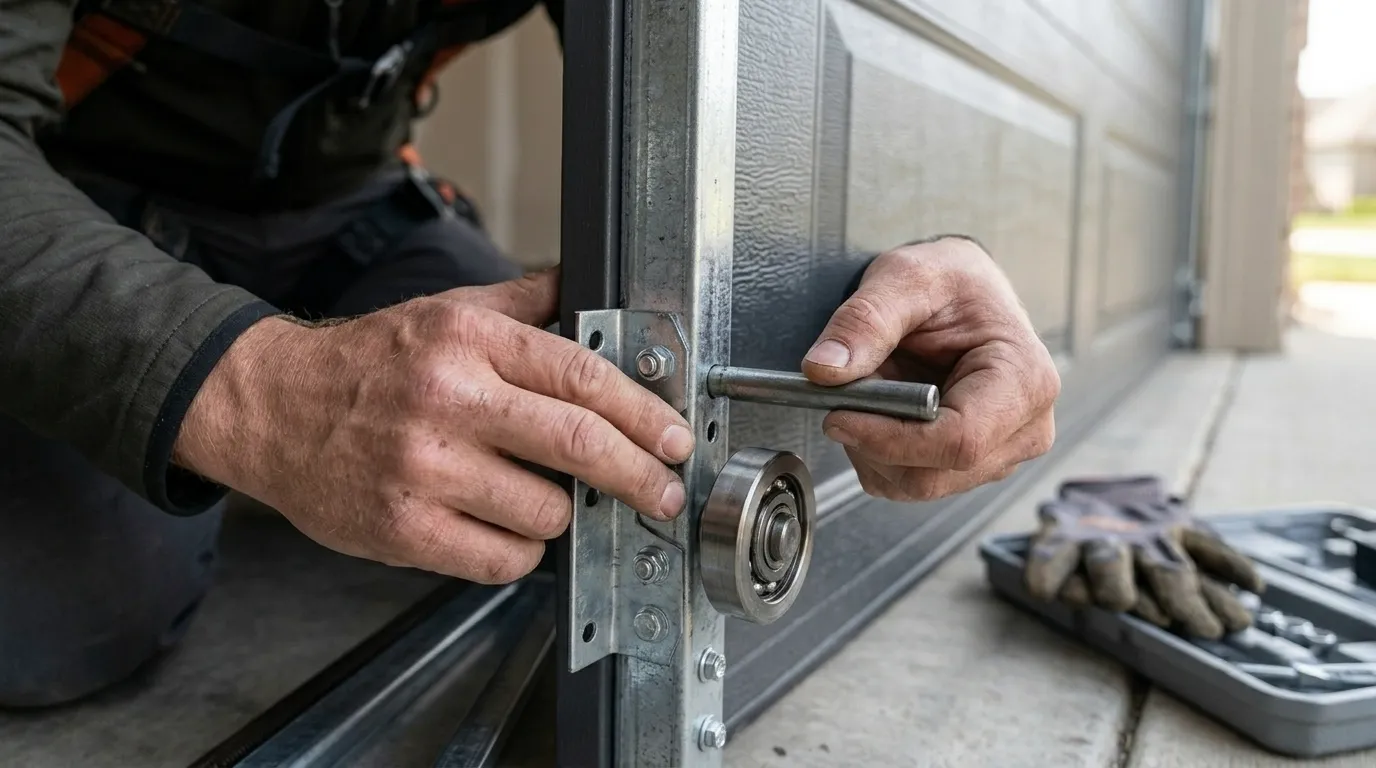
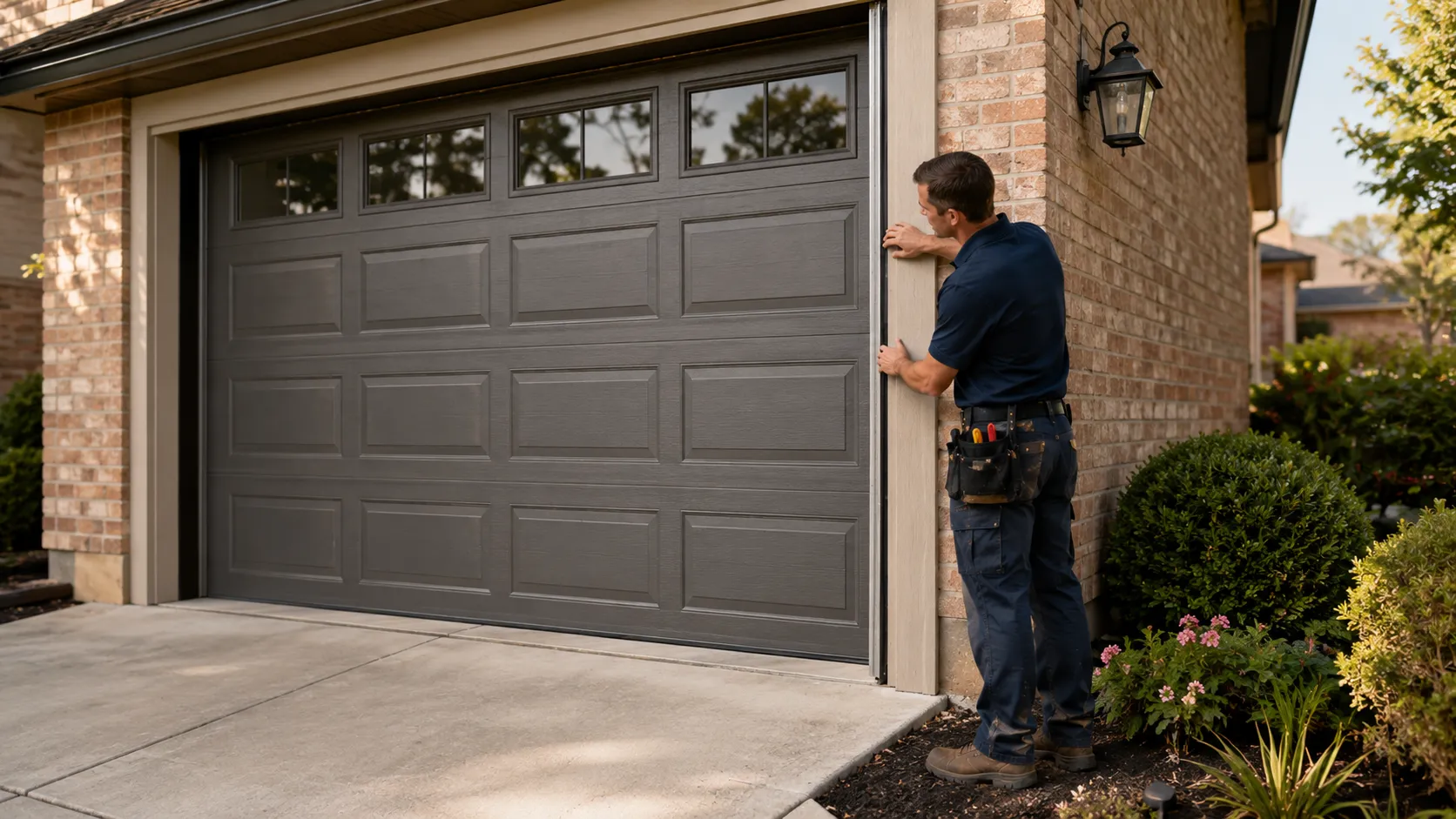
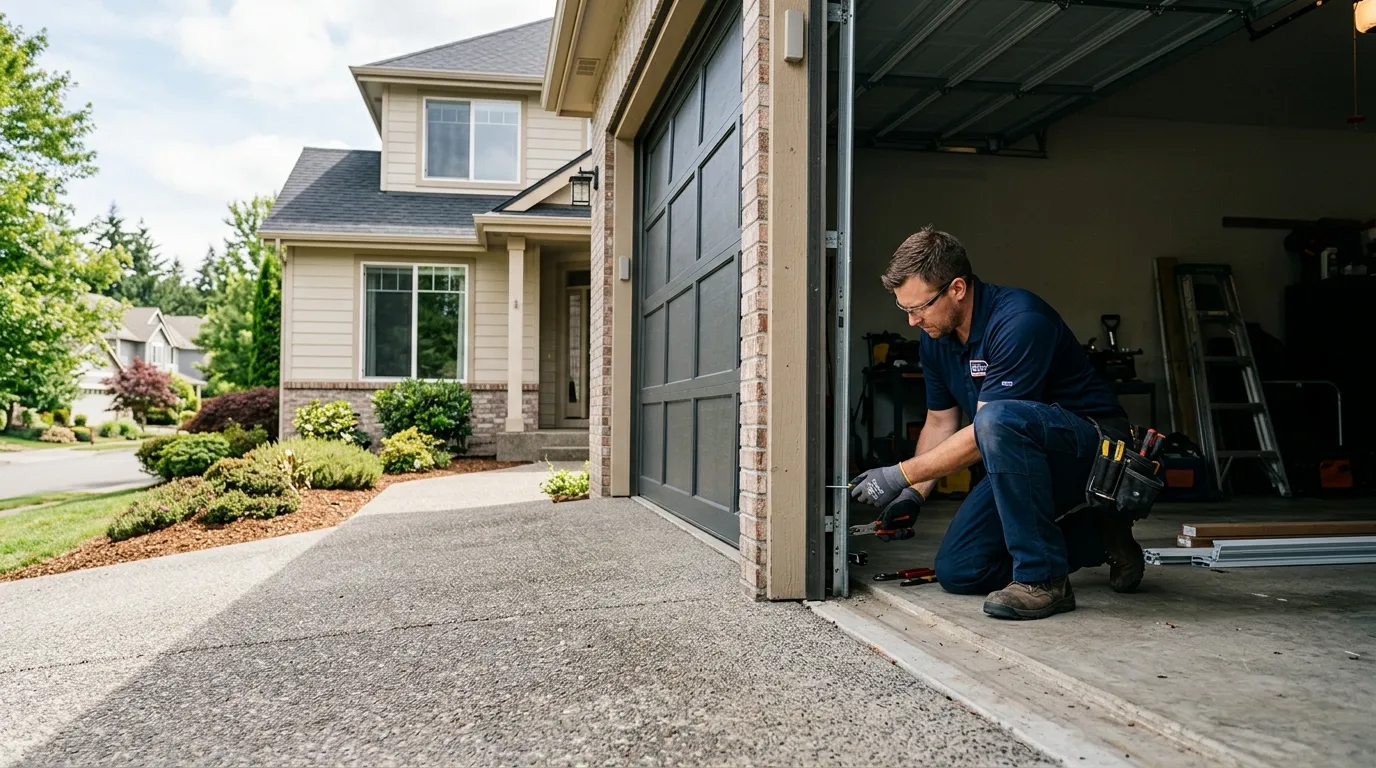
The torsion springs on these older setups have usually been replaced once or twice already, sometimes with a spring that doesn't quite match the door's original weight - which shows up as a door that's hard to lift by hand or one that slams the last foot of travel. Track brackets on houses this age are frequently lag-bolted straight into old jamb framing that's shifted a little over sixty-plus years, so a track that looks straight can still be a quarter-inch out and binding a roller.
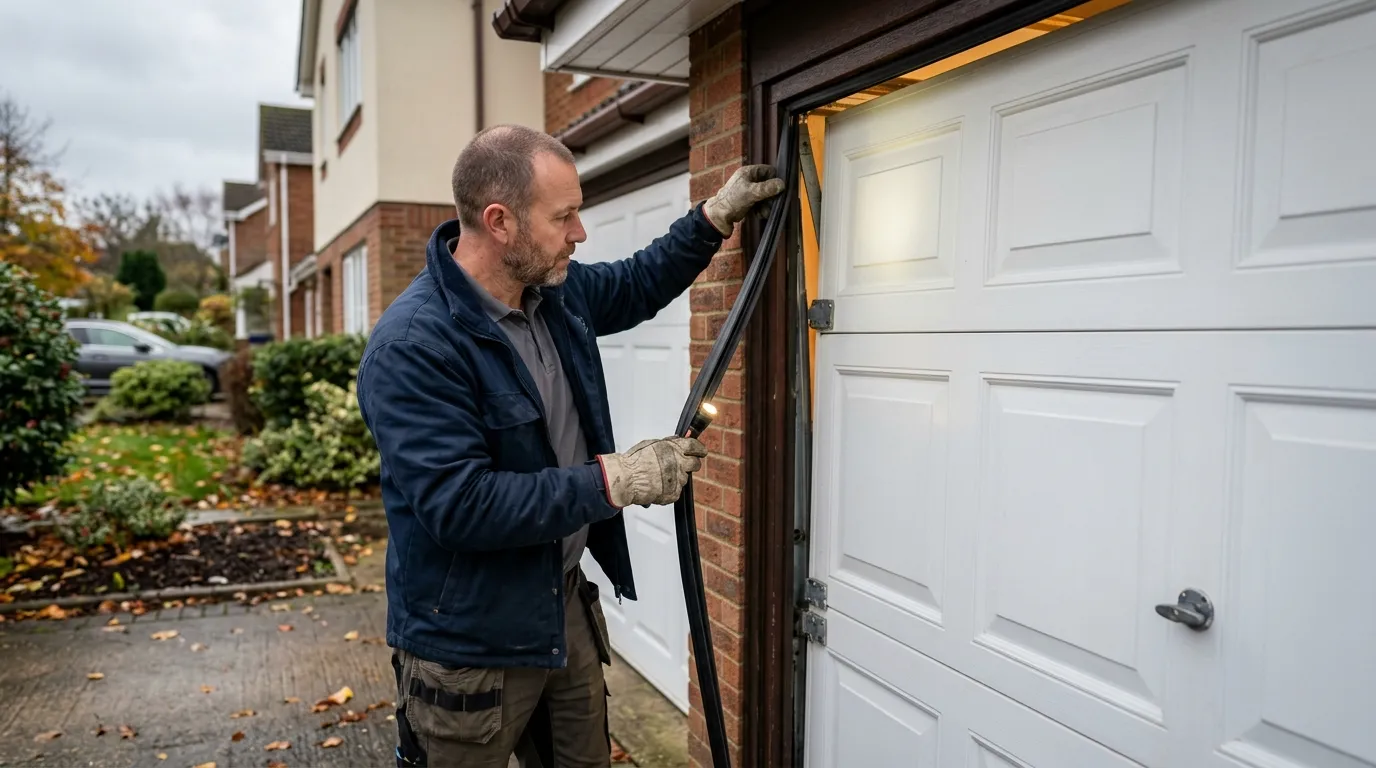
Cold-moderate winters do their own slow work on all of this. Steel track contracts, lubricant gets stiff, and a marginal spring that was fine in August starts hanging up in January. None of that is exotic - it's just what six decades of use does to hardware nobody's swapped out.
How Long It Takes
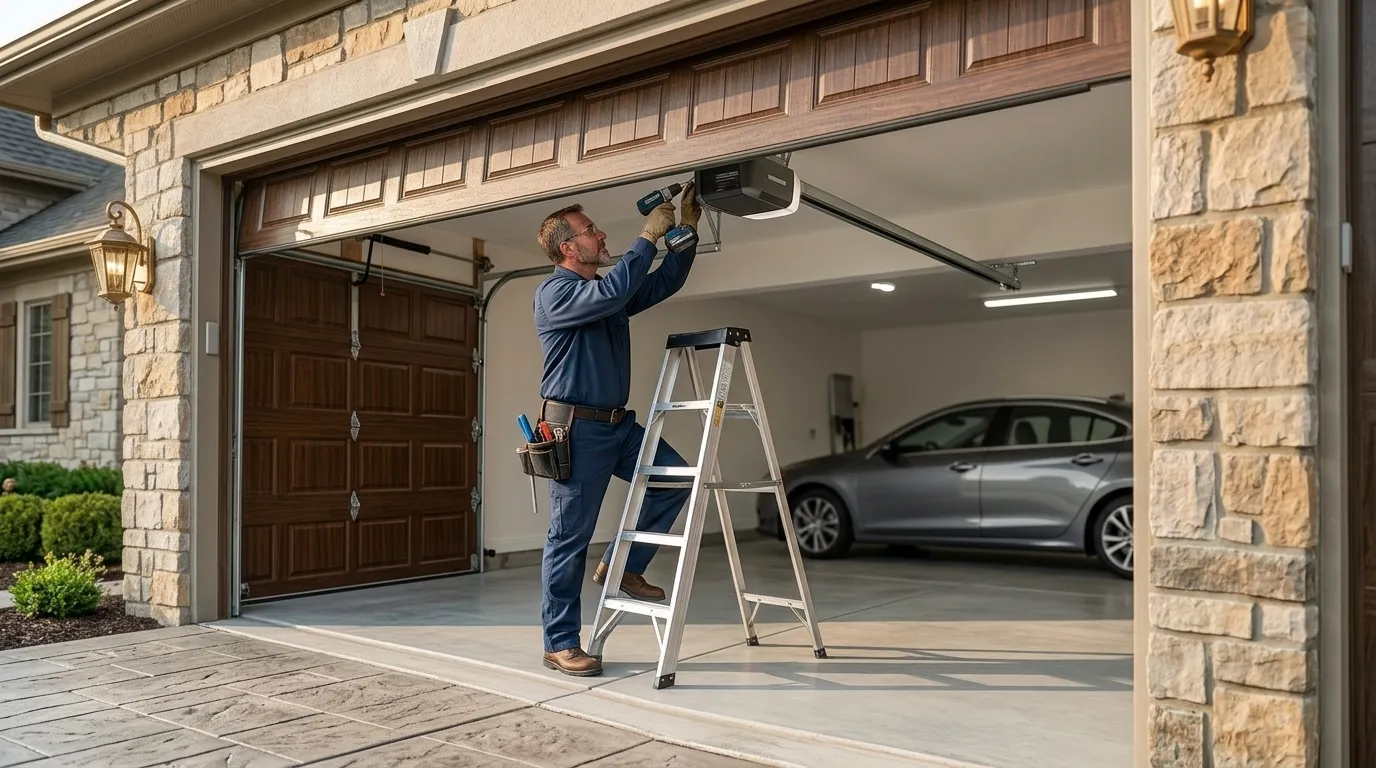
A spring swap or a track realignment on one of these older doors is usually a same-visit job once we're on-site and can see what the original installer used. Where it runs longer is parts: some of the doors from this era used panel sizes or hinge spacing that isn't a stock item anymore, and if a section needs replacing rather than repairing, that can mean a special order instead of something off the truck.
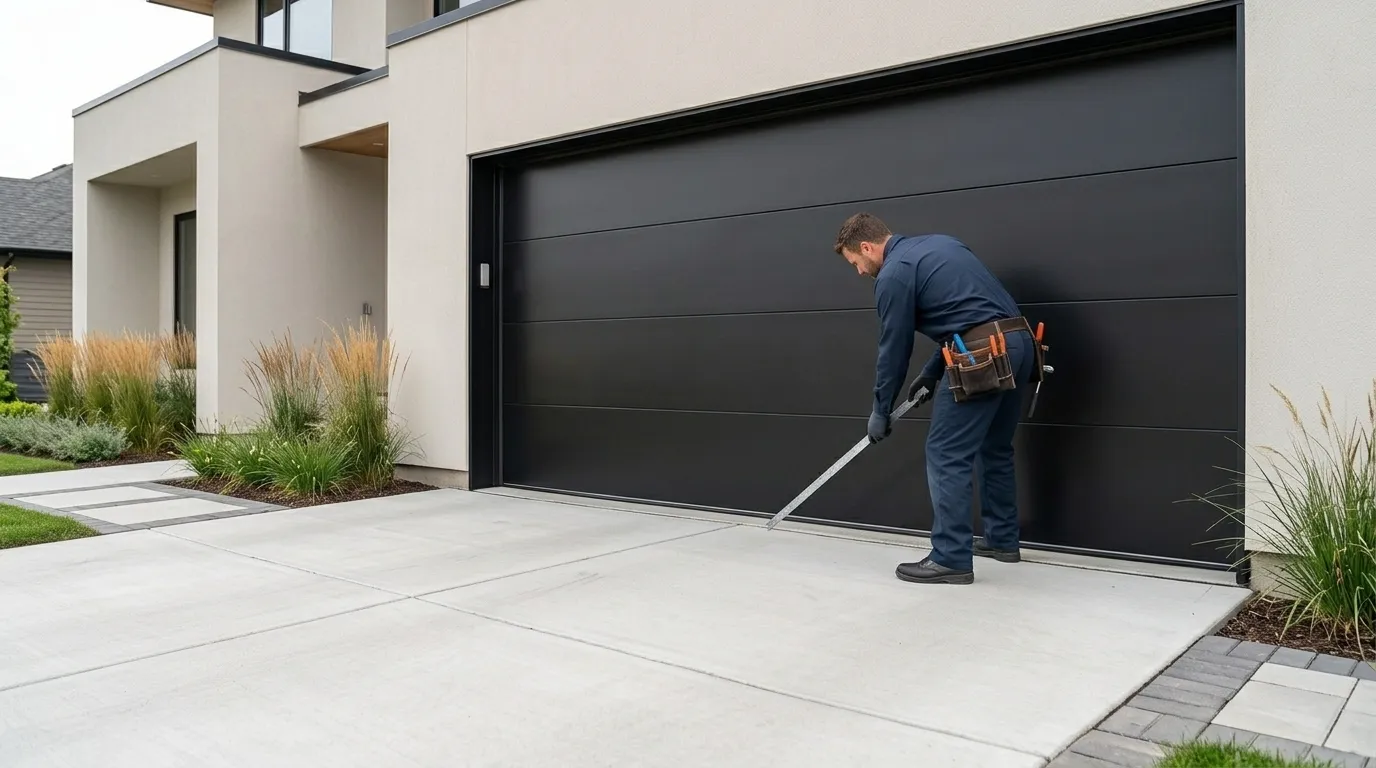
We won't guess at a timeline before we've looked at the door - a bent track is a different job than a broken cable, and a door that's been patched twice already sometimes needs more than one fix to actually hold. What we can tell you upfront is that houses in this age bracket tend to need the same handful of things: spring replacement, track adjustment, and roller swaps, in roughly that order of frequency.
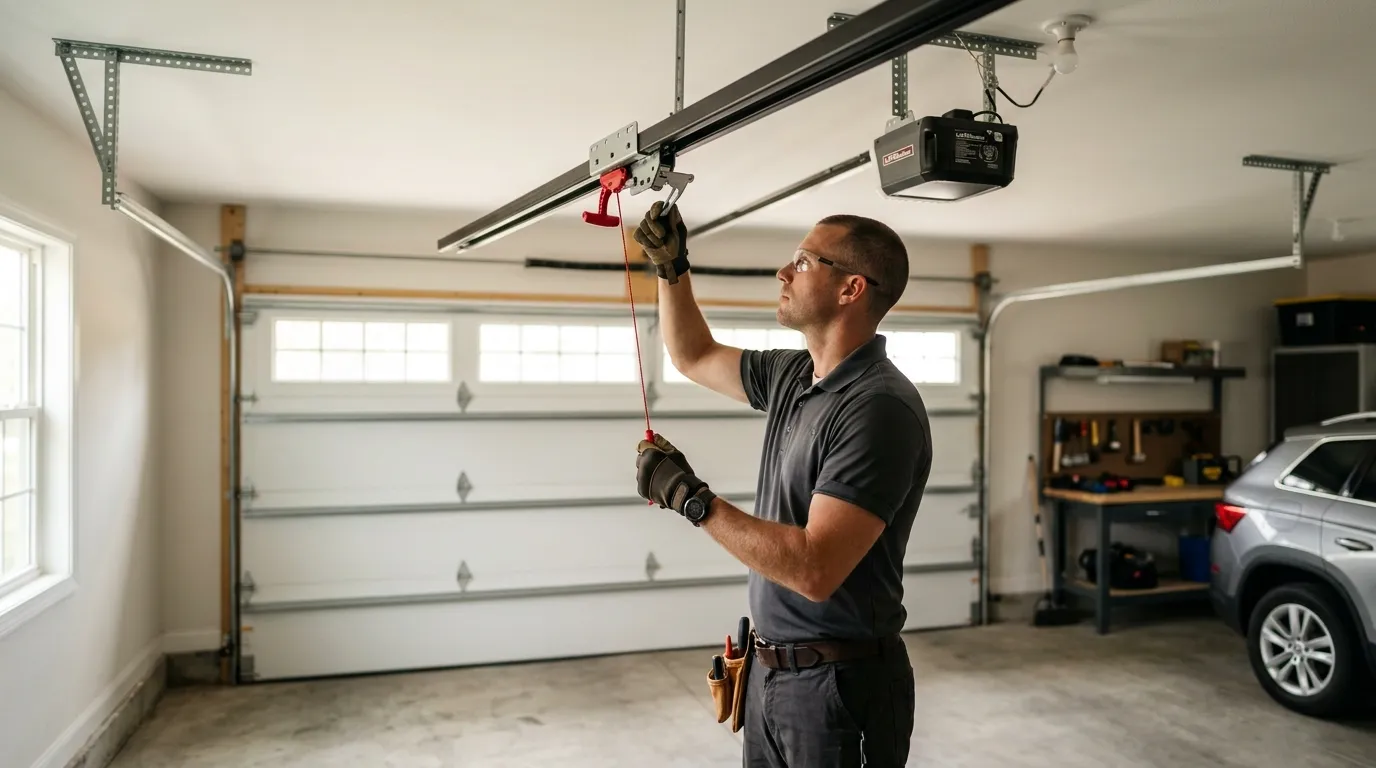
If a door is far enough gone - warped panels, a frame that's racked, an opener bracket that's pulled loose from rotted wood - replacement ends up cheaper than chasing repairs on it piece by piece. We'll say so plainly if that's what we find, rather than billing for a fix that won't hold.
How It Shows Up
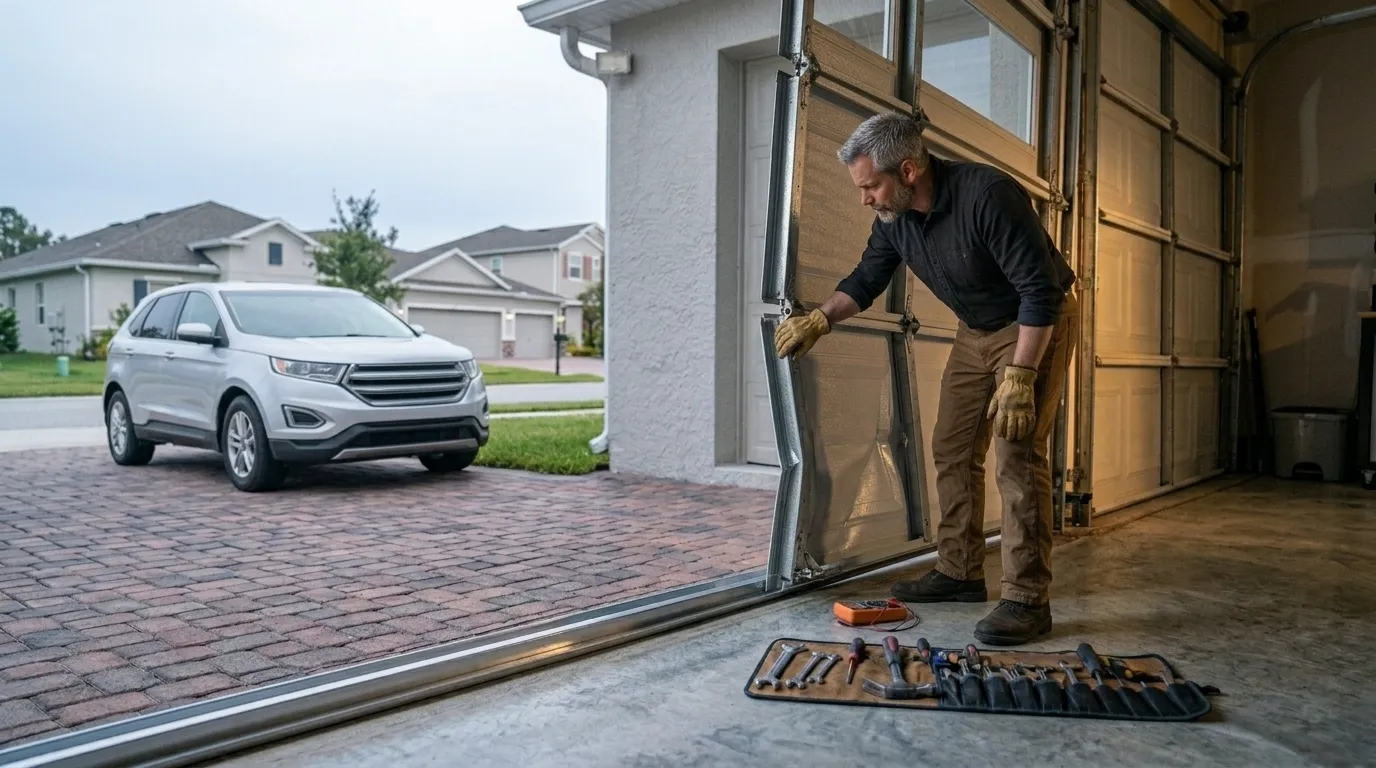
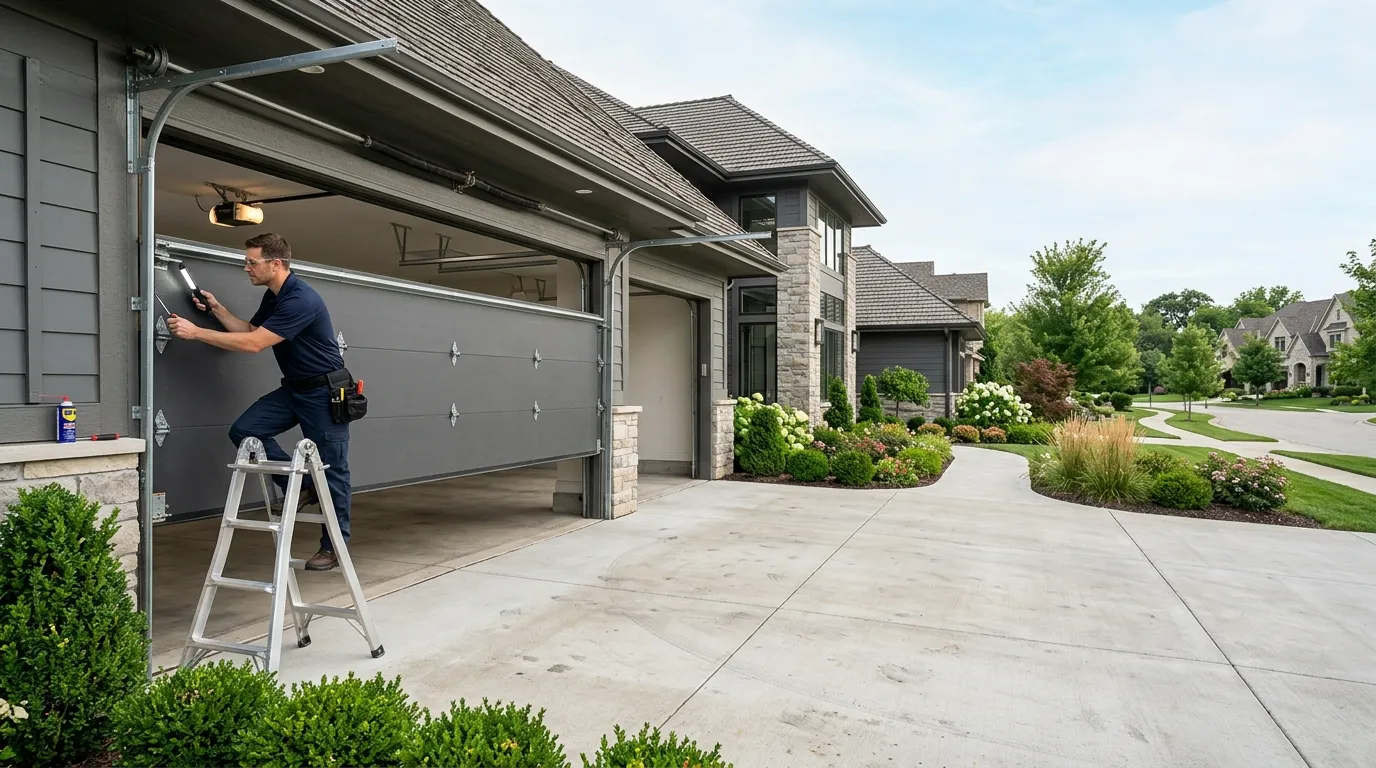
On a house from this era, trouble tends to look the same few ways. The door gets heavy to lift by hand, which is almost always a spring that's lost tension or broken outright. It starts drifting off level as it closes, which points to one cable stretching faster than the other or a roller that's finally worn through. Or it gets loud - not a squeak, but a bang or a scrape partway through the cycle, which usually means a bent track or a hinge that's worked loose from panel steel that's thinner than what's used now.
Some of this shows up gradually enough that homeowners adjust to it without noticing - a door that's always taken a little more muscle to close by hand, until one day it doesn't move at all. If your door is sticking, groaning, or hanging unevenly, that's the spring and track combination on an older setup starting to give out, not something to wait on.
For the full rundown of what we handle and how we work, see our garage door service page for South Wenatchee or the main Wenatchee service page.