What Can Go Wrong
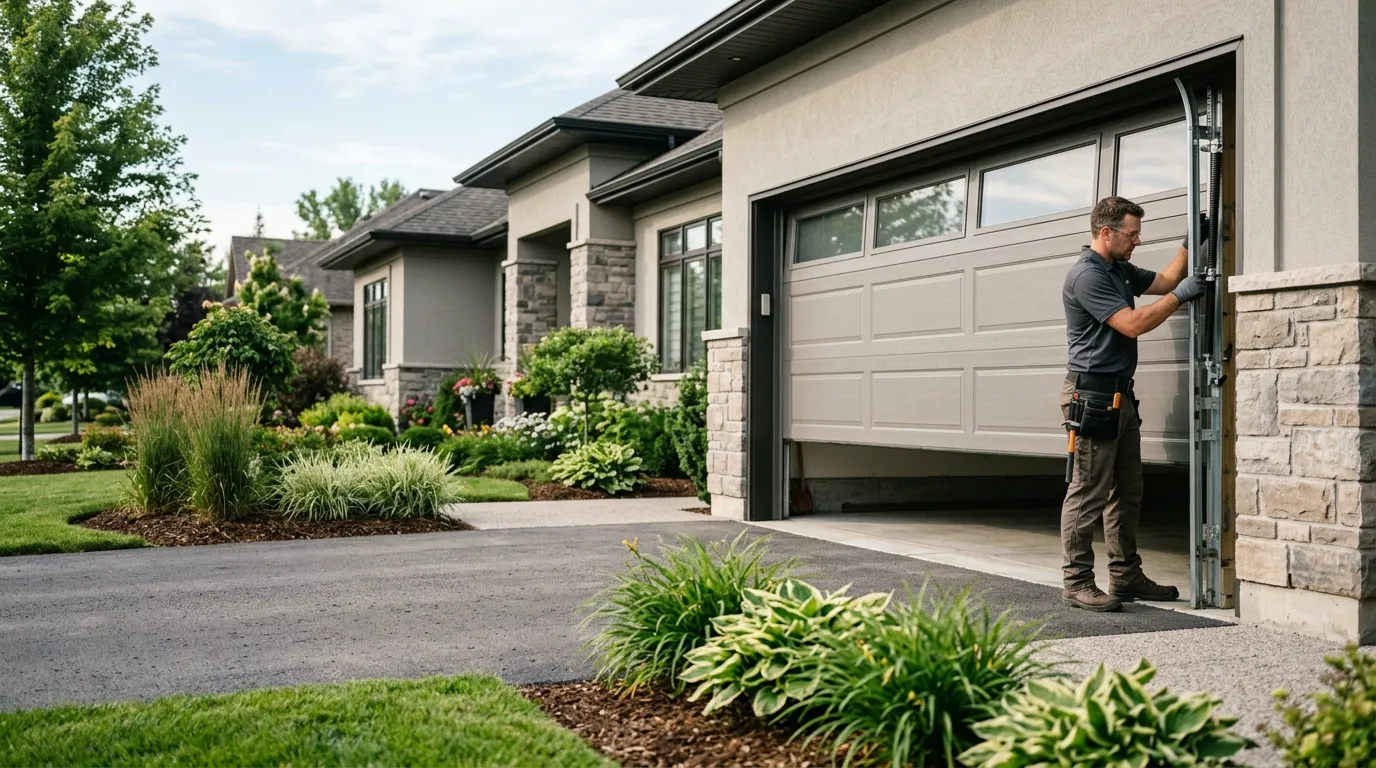
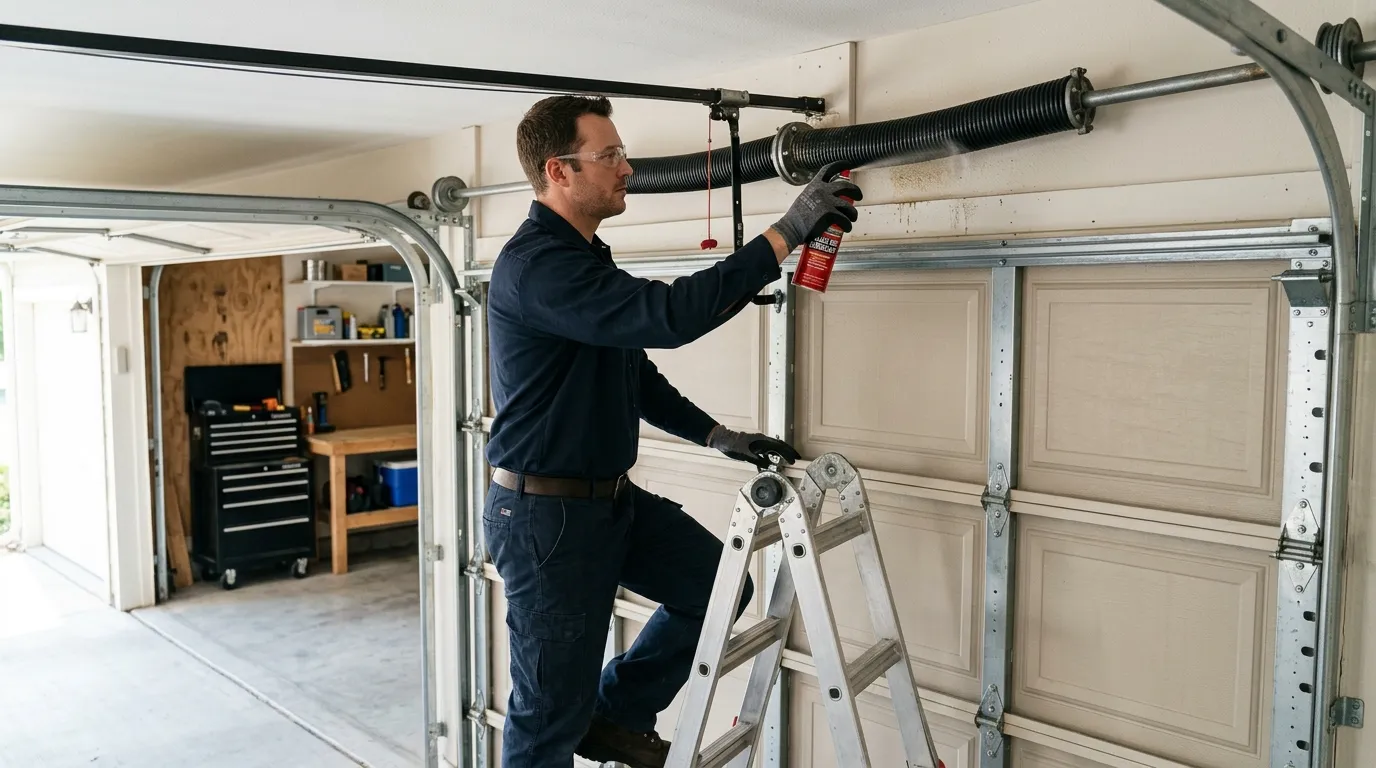
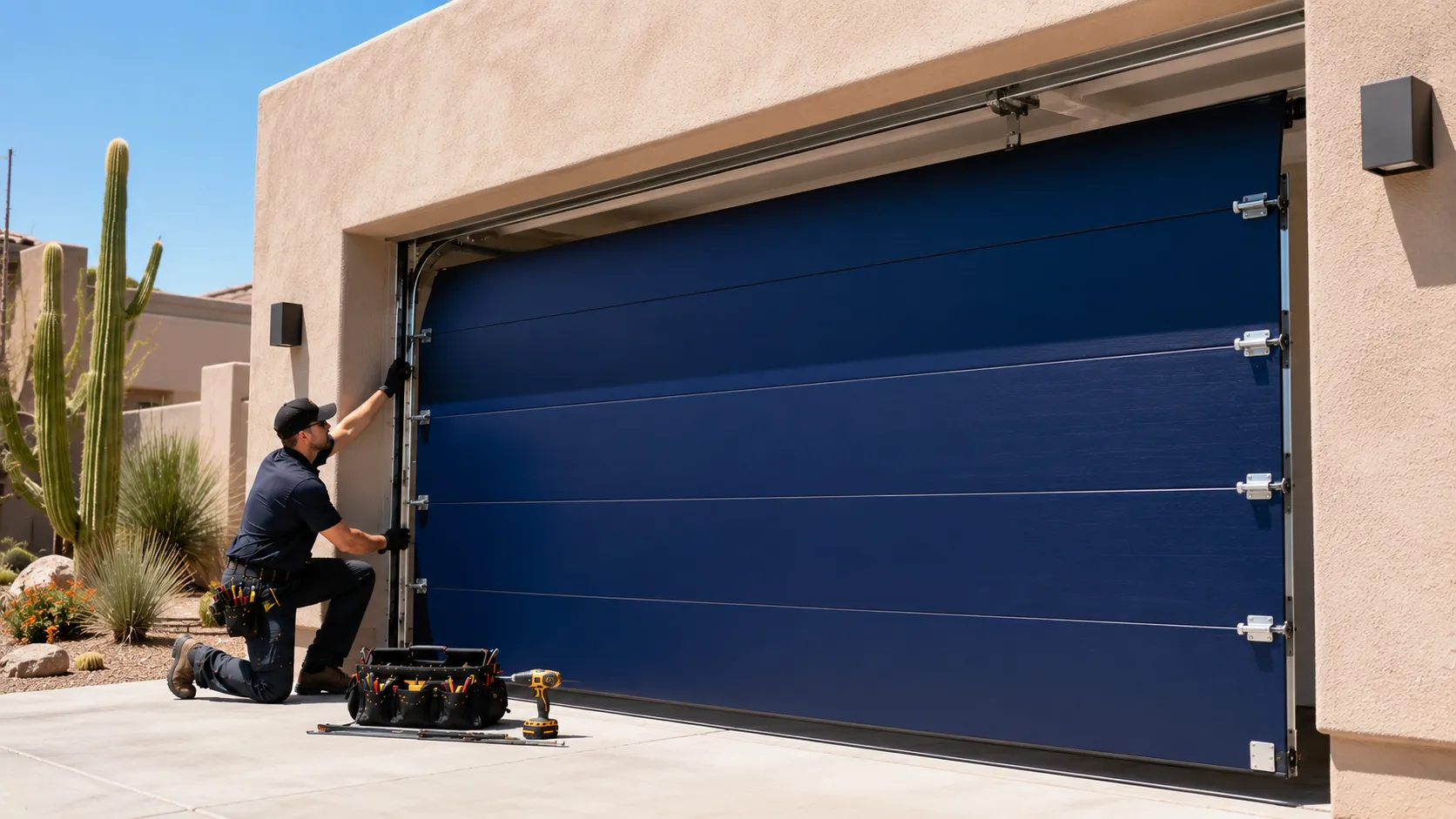
The typical South Wenatchee house went up around 1959, years before a garage door opener was something a builder even considered. That means the door itself was designed to be lifted by hand, and whatever opener is bolted to the ceiling now was added later, sometimes decades later, on a bracket or header that was never sized for the unit hanging off it. We find chain-drive units mounted to a header board that's cracked from age, or a bracket that was shimmed once and never checked again. When we swap in a new opener, we're not just setting a new box on the rail. We're checking whether the door's original hardware - the track, the hinges, the rollers - can even carry a modern opener's force without binding.
The other thing this era of house tends to have is a single panel or early sectional door with no reinforcement strut across the top section. A new opener's motor is stronger than what these doors were built to take, and without a strut kit, a strong opener can flex or crack the top panel over time. We check for that before we mount anything, not after a customer calls back about a bowed panel.
How Long It Takes
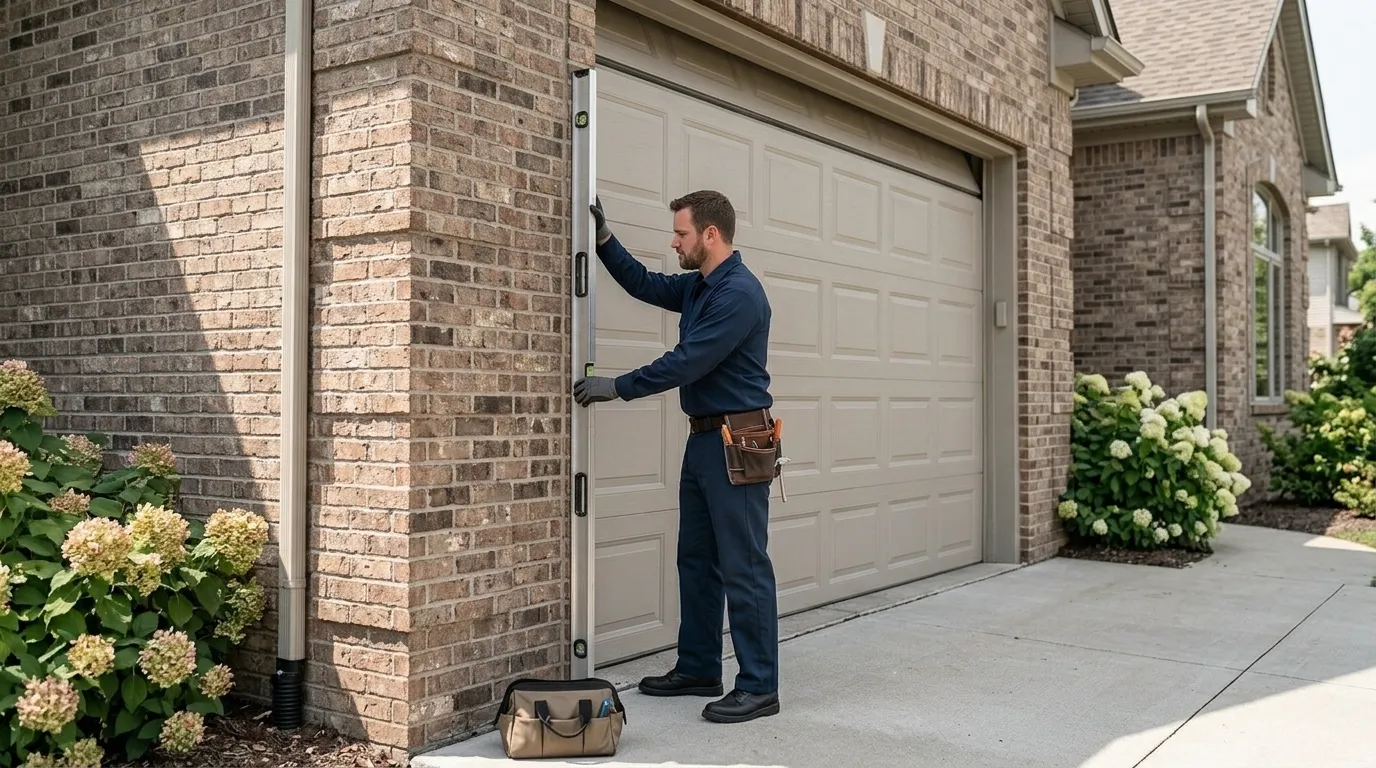
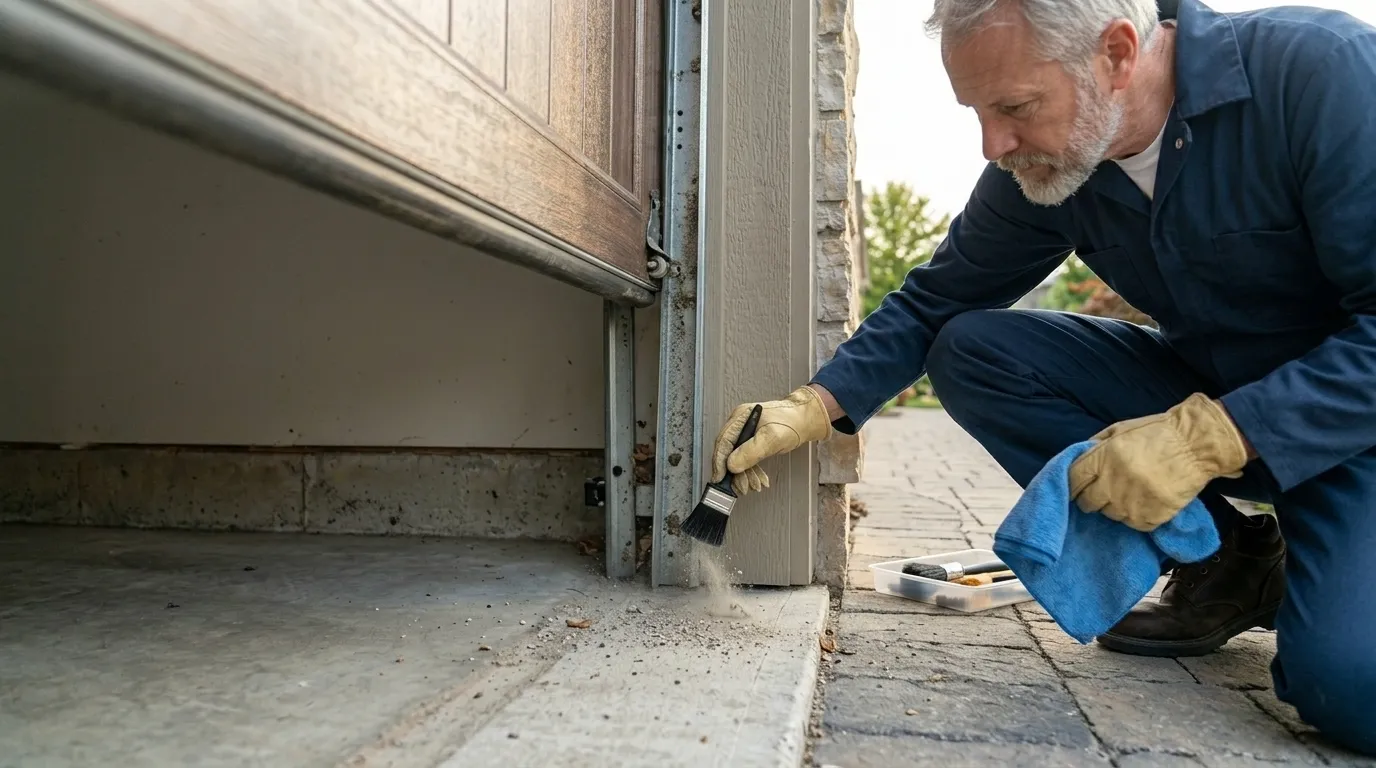
A standard opener swap on a door that already has sound track and header hardware runs about what you'd expect for a straightforward installation - most of a morning or afternoon, done in one visit. Where it runs longer is exactly the situation common in this neighborhood: a header board that needs reinforcing, or track that's out of alignment because the door's been lifted by an undersized opener for years. We won't know which case we're in until we're standing in front of the door, so we look at the header and track condition before we quote a time, not after.
Cold, damp winter mornings here also change how an opener behaves for the first few weeks after install - grease inside the unit stiffens up until it's broken in, which is normal and not a sign of a bad install. We tell customers that up front so a slow-sounding motor in January doesn't turn into a callback.
How It Shows Up
Across this pocket of the valley, household incomes run lower than the wider Wenatchee service area - median income here is about $61,959, against roughly $75,854 across the whole area we cover. That's part of why we spec openers to the house rather than defaulting to the priciest unit: on a 1959 header with older track, a mid-range opener with a properly reinforced top panel outperforms an expensive opener bolted straight onto hardware that was never built for one.
There are only around 431 households in South Wenatchee itself, a small slice of the roughly 10,166 households we serve across the wider area, and a lot of these houses share the same build year and the same original door hardware. So the failure we see on one street tends to repeat a few doors down - same era, same header, same fix.